
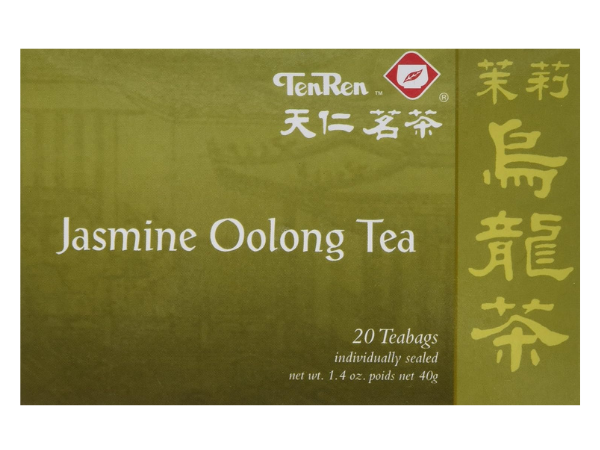
Jasmine Oolong Tea
Caffeine
30–50 mg
Note: Caffeine amounts are based on standard brewed jasmine oolong tea and can vary depending on leaf grade, brewing time, and water temperature.
| Attribute | Value |
|---|---|
| Caffeine Level | Moderate |
| Serving Size | 8 fl oz |
| Serving Size (ml) | 240 ml |
| Caffeine | 30–50 mg |
| Calories | 2–5 kcal |
| Sugar | 0 g |
| Caffeine per fl oz | 4–6 mg/fl oz |
Jasmine oolong tea is a fragrant, semi‑oxidized tea that blends the floral aroma of jasmine blossoms with the smooth complexity of oolong leaves.
What Is Jasmine Oolong Tea? Origins and Unique Blend
Jasmine oolong tea is a hybrid of tradition and artistry. Oolong tea originates from China, particularly Fujian and Guangdong provinces, where semi‑oxidized leaves are prized for their balance between green and black tea.
Defining traits of Jasmine Oolong Tea:
- Semi‑Oxidized Leaves – Oolong sits between green and black tea in oxidation.
- Jasmine Infusion – Blossoms impart a sweet, floral fragrance.
- Chinese Heritage – Rooted in centuries‑old Fujian tea traditions.
- Flavor Profile – Smooth, slightly sweet, with floral notes.
- Versatility – Enjoyed hot, iced, or blended with other teas.
This blend is unique because it marries the complexity of oolong with the soothing aroma of jasmine. It appeals to tea drinkers who want both depth and fragrance.
How Much Caffeine Is in Jasmine Oolong Tea?
Caffeine content in jasmine oolong tea varies depending on leaf grade, oxidation, and brewing time. On average, an 8‑ounce cup contains 30–50 mg of caffeine, placing it between green tea (lower) and black tea (higher).
Factors influencing caffeine levels:
- Oxidation Level – More oxidized oolong tends to have slightly higher caffeine.
- Leaf Size – Smaller, broken leaves release caffeine faster.
- Brewing Time – Longer steeping extracts more caffeine.
- Water Temperature – Hotter water increases caffeine release.
- Serving Size – Larger cups naturally contain more caffeine.
This moderate caffeine level makes jasmine oolong suitable for those who want gentle stimulation without the intensity of coffee.
Health Benefits of Jasmine Oolong Tea Beyond Caffeine
Jasmine oolong tea offers more than just a caffeine boost. Its combination of antioxidants, polyphenols, and aromatic compounds supports wellness in multiple ways.
Key health benefits:
- Rich in Antioxidants – Protects cells from oxidative stress.
- Supports Heart Health – May help regulate cholesterol levels.
- Aids Digestion – Oolong is traditionally consumed after meals.
- Stress Relief – Jasmine aroma promotes relaxation.
- Weight Management – May boost metabolism and fat oxidation.
These benefits make jasmine oolong a holistic beverage. The floral infusion adds calming properties, while oolong’s polyphenols contribute to long‑term health.
Potential Side Effects of Caffeine in Jasmine Oolong Tea
While jasmine oolong tea is generally safe, its caffeine content can cause side effects if consumed excessively.
Possible side effects:
- Insomnia – Drinking late at night may disrupt sleep.
- Anxiety – Sensitive individuals may feel jittery.
- Digestive Issues – Excess caffeine can upset the stomach.
- Dependence – Regular high intake may lead to tolerance.
- Pregnancy Concerns – High caffeine intake is discouraged.
Moderation is key. Most people can safely enjoy 2–3 cups daily without adverse effects.
Because jasmine oolong contains L‑theanine, its caffeine impact is smoother than coffee. Still, individuals sensitive to stimulants should monitor their intake.
Brewing Methods That Influence Caffeine Content in Jasmine Oolong Tea
Brewing plays a major role in caffeine extraction. Adjusting steeping time and temperature can tailor the strength of your cup.
Brewing factors:
- Water Temperature – 185–205°F extracts caffeine efficiently.
- Steeping Time – Longer steeping increases caffeine release.
- Leaf Quantity – More leaves = stronger brew.
- Multiple Infusions – Later steeps contain less caffeine.
- Brewing Style – Gongfu method yields concentrated flavor and caffeine.
By controlling these variables, drinkers can customize their tea experience.
Extra context: For a lighter cup, steep for 2 minutes at lower temperatures. For a stronger brew, extend steeping to 4–5 minutes.
Who Should Drink Jasmine Oolong Tea? Best Practices for Consumption
Jasmine oolong tea suits a wide audience, but certain groups benefit most from its balanced profile.
Best suited for:
- Tea Enthusiasts – Those seeking complex, floral flavors.
- Moderate Caffeine Drinkers – Individuals who want gentle stimulation.
- Health‑Conscious Consumers – People interested in antioxidants and wellness.
- Stress‑Prone Individuals – Jasmine aroma aids relaxation.
- Afternoon Drinkers – Ideal for a mid‑day energy lift.
Best practices include drinking in moderation, avoiding late‑night consumption, and experimenting with brewing methods to suit taste and caffeine tolerance.