
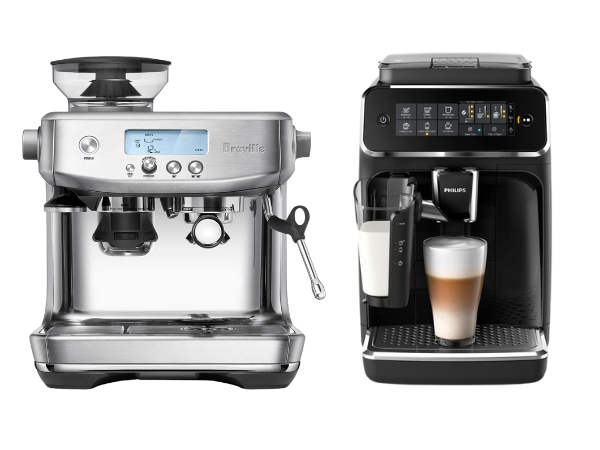
Coffee lovers often debate whether semi-automatic or fully automatic machines deliver the best experience. Both types cater to different lifestyles, brewing preferences, and budgets.
What Is a Semi-Automatic Coffee Machine?
Semi-automatic coffee machines are designed for home baristas who want control over the brewing process. Unlike manual machines, they automate water pressure but leave grind size, tamping, and extraction timing in your hands.
Key traits of semi-automatic machines include:
- Pump-driven pressure – Ensures consistent extraction compared to manual lever machines.
- Manual control – Users decide when to start and stop the shot.
- Requires skill – Proper grinding, tamping, and timing are essential.
- Affordable options – Entry-level models are often cheaper than fully automatic machines.
- Durability – Many models are built with sturdy components for long-term use.
They demand practice but reward users with café-quality espresso tailored to personal taste.
How Fully Automatic Coffee Machines Work
Fully automatic coffee machines simplify the brewing process by handling grinding, tamping, extraction, and even milk frothing at the touch of a button. They are designed for convenience, making them ideal for busy households or offices where speed and consistency matter most.
Defining features of fully automatic machines:
- Built-in grinder – Fresh beans are ground automatically for each cup.
- Programmable settings – Users can select espresso, cappuccino, or latte with presets.
- Automatic milk frothing – Many models include integrated frothers for creamy drinks.
- One-touch operation – Minimal effort required; perfect for beginners.
- Consistent results – Delivers uniform taste across multiple cups.
These machines are essentially “coffee robots,” offering café-style beverages without requiring barista skills.
Semi-Automatic vs Fully Automatic: Key Differences Explained
Choosing between semi-automatic and fully automatic machines depends on how much control you want over brewing. Semi-automatic models give you freedom to adjust grind size, tamping pressure, and shot timing, while fully automatic machines prioritize convenience and consistency.
Main differences include:
- Control – Semi-automatic offers manual input; fully automatic handles everything.
- Skill level – Semi-automatic requires practice; fully automatic is beginner-friendly.
- Customization – Semi-automatic allows flavor experimentation; fully automatic limits adjustments.
- Speed – Fully automatic is faster; semi-automatic takes more time.
- Price range – Semi-automatic often costs less; fully automatic tends to be premium.
Ultimately, semi-automatic machines suit hobbyists who enjoy the artistry of brewing, while fully automatic machines cater to those who want quick, reliable coffee.
Best Semi-Automatic Coffee Machines for Home Baristas
Semi-automatic machines are perfect for coffee enthusiasts who want to refine their skills. They provide flexibility and allow experimentation with different beans, grind sizes, and brewing techniques.
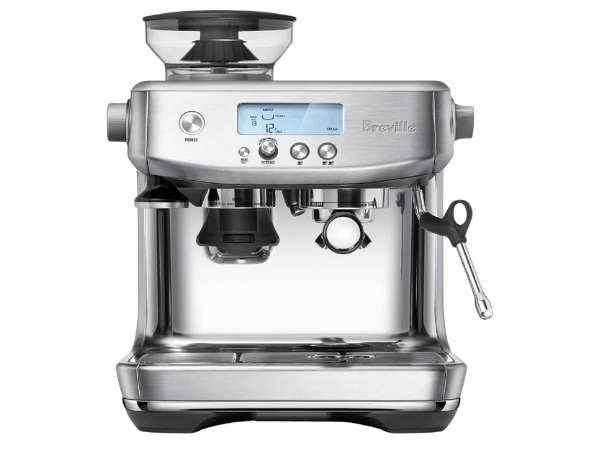
Breville Barista Pro BES878
The Breville Barista Pro BES878 is a premium semi automatic espresso machine designed for speed, precision, and convenience. It features Breville’s advanced ThermoJet heating system, which reaches optimal brewing temperature in just 3 seconds.
Defining features of the Breville Barista Pro BES878:
- ThermoJet Heating System – Heats up in 3 seconds for fast brewing.
- Integrated Conical Burr Grinder – Delivers fresh, consistent grounds on demand.
- LCD Display – Provides clear guidance on brewing and grinding settings.
- 15‑Bar Italian Pump – Ensures rich crema and balanced espresso flavor.
- Steam Wand – Creates silky microfoam for latte art and café‑style drinks.
Its combination of speed, precision, and user‑friendly controls makes it one of the most advanced semi automatic machines available for home use.
Top Fully Automatic Coffee Machines for Convenience Lovers
Fully automatic machines are designed for people who want café-quality drinks without effort. They combine grinding, brewing, and milk frothing into one streamlined process.
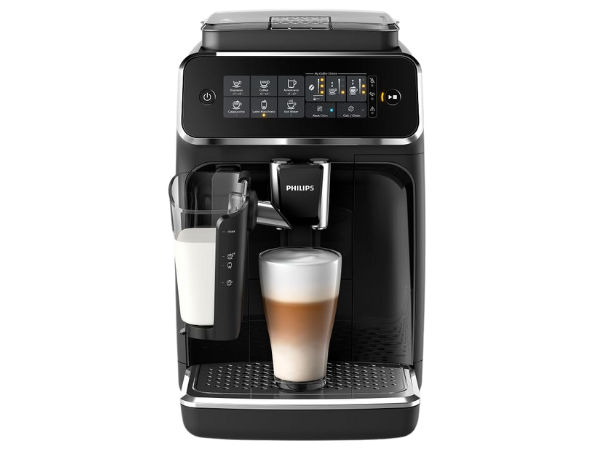
Philips 3200 Series LatteGo
The Philips 3200 Series LatteGo is a user‑friendly bean‑to‑cup machine designed for households that want café‑style drinks without complicated maintenance. Its standout feature is the LatteGo milk system, which froths milk smoothly and cleans in seconds.
Defining features of the Philips 3200 Series LatteGo:
- LatteGo Milk System – Simple two‑part frother that rinses clean in under 15 seconds.
- Ceramic Burr Grinder – Durable grinder ensures consistent flavor extraction.
- 5 Coffee Varieties – Espresso, cappuccino, latte macchiato, Americano, and regular coffee.
- Intuitive Touch Display – Easy customization of strength, volume, and temperature.
- Compact Design – Slim footprint ideal for small kitchens.
The LatteGo system makes milk drinks effortless, while the ceramic grinder ensures every cup is fresh. It’s a budget‑friendly option that still delivers authentic bean‑to‑cup performance.
Ease of Use: Which Coffee Machine Is More Beginner-Friendly?
Ease of use is often the deciding factor for new coffee drinkers. Semi-automatic machines require learning grind size, tamping, and shot timing, while fully automatic machines simplify everything with one-touch brewing.
Ease-of-use comparison:
- Semi-automatic – Demands practice and patience.
- Fully automatic – Intuitive controls and presets.
- Semi-automatic – Greater risk of mistakes.
- Fully automatic – Consistent results every time.
- Semi-automatic – Rewarding for hobbyists.
For beginners, fully automatic machines are more accessible. They remove the guesswork and deliver reliable coffee instantly. Semi-automatic machines, while more challenging, can be rewarding for those willing to learn.
Control and Customization: Manual vs Automated Brewing
Control and customization are where semi-automatic machines shine. They let you adjust grind size, tamping pressure, and extraction time, giving you freedom to experiment with flavor profiles.
Customization highlights:
- Semi-automatic – Full control over brewing variables.
- Fully automatic – Preset drink options.
- Semi-automatic – Ability to experiment with beans and roast levels.
- Fully automatic – Limited adjustments beyond strength and volume.
- Semi-automatic – Appeals to creative coffee lovers.
Semi-automatic machines are best for those who enjoy experimenting, while fully automatic machines suit people who want predictable results.
Cost Comparison: Are Fully Automatic Machines Worth the Price?
Price is a major factor when choosing between semi-automatic and fully automatic machines. Semi-automatic models are generally more affordable, while fully automatic machines command higher prices due to advanced features.
Cost breakdown:
- Semi-automatic entry-level – $200–$500.
- Semi-automatic premium – $600–$1,200.
- Fully automatic mid-range – $700–$1,500.
- Fully automatic high-end – $2,000+.
- Maintenance costs – Higher for fully automatic machines.
While fully automatic machines are expensive, they offer unmatched convenience. Semi-automatic machines provide better value for hobbyists who enjoy hands-on brewing.