
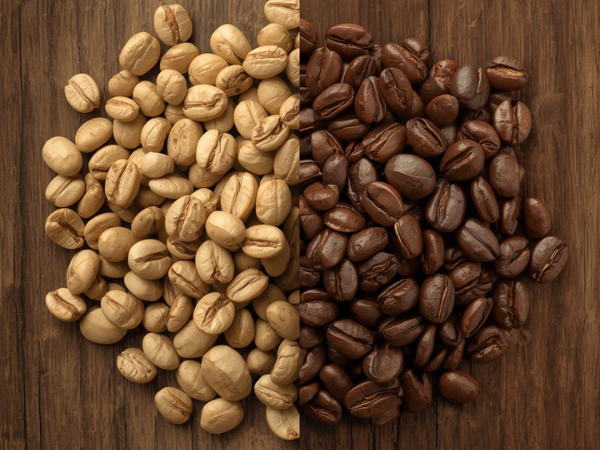
Coffee drinkers often debate whether Arabica or Robusta beans deliver more caffeine, but the truth lies in laboratory analysis rather than marketing claims. Arabica beans are prized for their smooth flavor and delicate aroma, while Robusta beans are known for their bold bitterness and higher caffeine punch.
Arabica vs. Robusta: Understanding the Real Caffeine Difference
Arabica beans typically grow at higher altitudes, producing a smoother, more complex flavor profile with lower bitterness. Robusta beans thrive in warmer climates and are more resistant to pests, thanks in part to their naturally higher caffeine content.
- Arabica beans usually contain 0.8–1.4% caffeine by weight.
- Robusta beans often measure 1.7–3.5% caffeine by weight, nearly double Arabica.
- The difference impacts flavor, bitterness, and physiological effects.
- Arabica is favored for specialty coffee, while Robusta is common in instant blends and espresso for added strength.
- Caffeine acts as a natural pesticide, explaining Robusta’s resilience compared to Arabica.
Ultimately, the caffeine gap between Arabica and Robusta is significant enough to influence both taste and consumer preference.
Lab-Verified Findings: Caffeine Content in Arabica Coffee Beans
Coffea arabica is prized for its complex aroma and smooth cup profile, and its caffeine concentration plays a key role in that reputation. Multiple laboratory analyses using High-Performance Liquid Chromatography (HPLC) — a precise technique for measuring chemical compounds — consistently show that Arabica contains less caffeine than Coffea canephora (Robusta).
Peer-reviewed research supports this range. For instance, a published analytical study available via ResearchGate confirms that Arabica beans typically contain about 0.8% to 1.4% caffeine by dry weight, with an overall average close to 1.2%.
Key Findings at a Glance:
- Typical caffeine range: 0.8–1.4% by weight
- Average content: Approximately 1.2%
- Roast level influence: Lighter roasts tend to preserve marginally more caffeine than darker roasts (measured by bean mass)
- Origin differences: Beans from regions such as Ethiopia and Colombia often fall toward the upper end of the Arabica range
- Brewing variables: Espresso delivers more caffeine per ounce than drip coffee, though total caffeine depends on serving size
Because Arabica naturally contains less caffeine than Robusta, it generally produces a smoother, less bitter cup.
Lab-Verified Findings: Caffeine Content in Robusta Coffee Beans
Coffea canephora — widely known as Robusta — is recognized for its elevated caffeine concentration and bold flavor profile. Laboratory testing using High-Performance Liquid Chromatography (HPLC) and UV-Visible spectrophotometry consistently demonstrates that Robusta beans contain substantially more caffeine than Coffea arabica.
Analytical research published in the journal Food Research International confirms that Robusta typically measures between 2.0% and 2.7% caffeine by dry weight, with some samples testing even higher depending on origin and growing conditions. A detailed compositional analysis available via ResearchGate further supports a broader reported range of approximately 1.7% to 3.5% caffeine (see study: https://www.mdpi.com/2304-8158/10/6/1208).
Key Data Highlights:
- Typical caffeine range: 1.7–3.5% by weight
- Common laboratory average: 2.0–2.7%
- Roast level impact: Lighter roasts retain slightly more caffeine when measured by bean mass; darker roasting reduces density but does not drastically eliminate caffeine
- Regional variation: Robusta cultivated in Vietnam and Indonesia often ranks toward the upper end of the caffeine spectrum
- Brewing influence: Instant coffee and espresso blends made with Robusta tend to produce a more concentrated caffeine effect per serving
Robusta’s higher caffeine level directly contributes to its sharper bitterness and stronger physiological impact.
Why Robusta Contains More Caffeine Than Arabica
The caffeine disparity between Arabica and Robusta is rooted in biology. Robusta plants evolved in harsher climates, where higher caffeine levels act as a natural defense against pests and diseases. Arabica, grown at higher altitudes, faced fewer threats and therefore developed lower caffeine concentrations.
- Natural pesticide effect: caffeine deters insects.
- Altitude factor: Arabica thrives in cooler, pest-free environments.
- Genetic variation: Robusta’s DNA encodes higher caffeine synthesis.
- Flavor consequence: more caffeine equals more bitterness.
- Market impact: Robusta dominates instant coffee, Arabica dominates specialty markets.
Robusta’s resilience and caffeine strength make it a practical choice for mass production, while Arabica remains the bean of choice for gourmet coffee lovers.
Caffeine Percentage Breakdown: Arabica vs. Robusta Compared
When comparing Arabica and Robusta side by side, the numbers speak for themselves. Arabica averages 1.2% caffeine, while Robusta averages 2.4% caffeine. This difference is consistent across multiple lab studies and explains why Robusta packs a stronger punch.
- Arabica: 0.8–1.4% caffeine.
- Robusta: 1.7–3.5% caffeine.
- Espresso blends: often mix both for balance.
- Instant coffee: usually Robusta-heavy for strength.
- Consumer choice: depends on taste preference and caffeine tolerance.
This breakdown highlights why caffeine-sensitive individuals often prefer Arabica, while those needing a stronger boost gravitate toward Robusta.
Does Roast Level Affect Caffeine in Arabica and Robusta?
Roast level plays a subtle but important role in caffeine retention. Contrary to popular belief, darker roasts do not contain more caffeine. In fact, caffeine is relatively stable under heat, but prolonged roasting slightly reduces content.
- Light roast: highest caffeine retention.
- Medium roast: balanced flavor and caffeine.
- Dark roast: slightly less caffeine, stronger flavor.
- Arabica vs. Robusta: both follow the same trend.
- Consumer takeaway: roast choice affects flavor more than caffeine.
Roast level influences taste far more than caffeine concentration, meaning consumers should choose roast based on flavor preference rather than caffeine myths.
Taste, Strength, and Caffeine: What the Lab Results Reveal
Lab-tested results confirm that caffeine levels directly influence taste and strength. Arabica’s lower caffeine content produces a smoother, less bitter cup, while Robusta’s higher caffeine yields boldness and intensity.
- Arabica: smooth, aromatic, lower caffeine.
- Robusta: bitter, bold, higher caffeine.
- Blends: balance flavor and strength.
- Espresso: often Robusta-heavy for crema.
- Consumer choice: depends on desired taste and energy boost.
Ultimately, lab results validate consumer experiences: Arabica is refined and gentle, Robusta is strong and stimulating.
Which Coffee Bean Has More Caffeine — and Which Should You Choose?
The verdict is clear: Robusta contains more caffeine than Arabica. However, the choice depends on personal preference. Arabica offers a smoother, more complex flavor with moderate caffeine, while Robusta delivers intensity and higher stimulation.
- Choose Arabica: if you value flavor, aroma, and gentleness.
- Choose Robusta: if you want strength, bitterness, and energy.
- Blends: provide the best of both worlds.
- Health consideration: moderation is key, regardless of bean type.
- Consumer takeaway: let taste and tolerance guide your choice.
In the end, lab-tested caffeine results confirm what coffee lovers already suspect: Arabica is smooth and subtle, Robusta is bold and powerful. The right bean depends on your palate and your need for caffeine.