
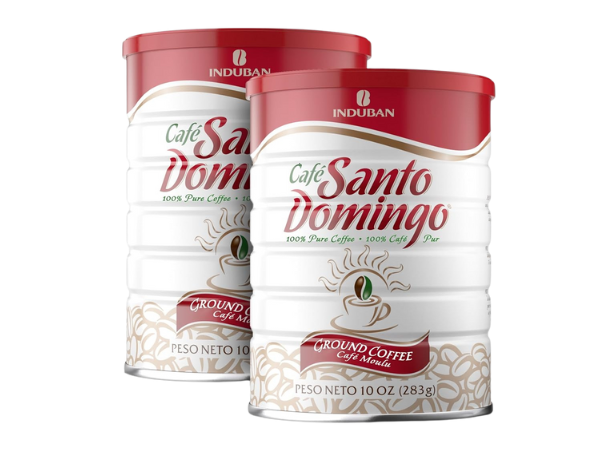
Cafe Santo Domingo Coffee
Caffeine
95 – 125 mg
Note: Caffeine amounts are based on standard brewed Café Santo Domingo coffee (medium roast Arabica beans). Values vary depending on brewing method, grind size, and water temperature.
| Attribute | Value |
|---|---|
| Caffeine Level | Moderate |
| Serving Size | 8 fl oz |
| Serving Size (ml) | 240 ml |
| Caffeine | 95 – 125 mg |
| Calories | 2 kcal |
| Sugar | 0 g |
| Caffeine per fl oz | 12 – 15 mg/fl oz |
Café Santo Domingo is one of the most iconic coffee brands from the Dominican Republic, cherished both locally and internationally. Known for its smooth flavor, balanced roast, and cultural significance, it has become a staple in households across the Caribbean and beyond.
What Is Cafe Santo Domingo Coffee?
Café Santo Domingo is more than just a coffee brand—it is a cultural symbol of the Dominican Republic. Produced by the Perelló family for over 60 years, it has become the most widely consumed coffee in the country. Its reputation extends internationally, with exports reaching North America, Europe, and Latin America.
Key Characteristics of Cafe Santo Domingo Coffee:
- Dominican Origin – Grown in the high-altitude regions of the Dominican Republic, where volcanic soil and tropical climate create ideal coffee-growing conditions.
- Balanced Flavor – Smooth, low-acid taste with notes of chocolate, caramel, nuts, and subtle tropical fruit.
- Versatility – Available in ground and whole bean formats, suitable for drip, French press, espresso, and more.
- Cultural Importance – A household name in the Dominican Republic, often associated with family gatherings and daily rituals.
- Accessibility – Widely available in supermarkets and online, making it easy for consumers worldwide to experience Dominican coffee.
Café Santo Domingo is not just a beverage—it is an experience tied to Dominican identity. Drinking it connects people to the island’s traditions, agricultural heritage, and warm hospitality.
Origins and History of Cafe Santo Domingo
The story of Café Santo Domingo begins in the mid-20th century, when the Perelló family established the brand to bring Dominican coffee to both local and international markets. Over the decades, it has grown into the country’s most recognized coffee, symbolizing national pride.
Historical Highlights:
- 1950s–1960s – Café Santo Domingo is founded by the Perelló family, quickly becoming popular in the Dominican Republic.
- 1970s–1980s – Expansion into international markets begins, introducing Dominican coffee to North America and Europe.
- 1990s–2000s – The brand solidifies its reputation as the Dominican Republic’s leading coffee, with strong domestic loyalty.
- Today – Café Santo Domingo remains a household staple, representing both tradition and modern coffee culture.
The history of Café Santo Domingo is not just about business—it is about identity. For Dominicans, it is the coffee served at breakfast, shared with guests, and enjoyed during quiet moments. Its longevity reflects not only quality but also emotional connection.
Flavor Profile and Roast Level
One of the defining features of Café Santo Domingo is its flavor profile. Unlike highly acidic coffees, Santo Domingo offers a smooth, balanced taste that appeals to a wide range of drinkers.
The beans are typically roasted to a medium level, which preserves natural flavors while adding depth. This roast level makes it versatile, suitable for both casual drinkers and coffee enthusiasts who appreciate complexity.
Flavor Notes of Cafe Santo Domingo:
- Chocolate & Caramel – Rich sweetness that provides a comforting base flavor.
- Nutty Undertones – Subtle hints of roasted nuts add depth and balance.
- Tropical Fruit – A faint brightness, reflecting the Dominican terroir.
- Low Acidity – Gentle on the stomach, making it ideal for daily consumption.
- Smooth Finish – Clean aftertaste without bitterness.
The roast level is carefully chosen to highlight these characteristics. A darker roast would overpower the delicate fruit notes, while a lighter roast might emphasize acidity.
Caffeine Content in Cafe Santo Domingo Ground Coffee
On average, an 8-ounce cup of brewed Café Santo Domingo ground coffee contains between 95–120 mg of caffeine, depending on brewing method and strength.
Factors Influencing Caffeine in Ground Coffee:
- Brewing Method – Drip brewing extracts moderate caffeine, while French press or espresso methods yield higher concentrations.
- Grind Size – Finer grinds increase caffeine extraction, while coarser grinds reduce it.
- Serving Size – Larger cups naturally contain more caffeine.
- Roast Level – Medium roast preserves caffeine better than darker roasts.
Ground coffee is convenient because it is ready to use, saving time while still delivering authentic flavor. For those who want a reliable caffeine boost, Café Santo Domingo ground coffee is an excellent choice.
Caffeine Content in Cafe Santo Domingo Whole Bean
An 8-ounce cup brewed from freshly ground Café Santo Domingo whole beans typically contains 100–125 mg of caffeine, depending on grind size and brewing method.
Advantages of Whole Bean Coffee:
- Freshness – Grinding just before brewing preserves flavor and aroma.
- Control – Allows customization of grind size for different brewing methods.
- Enhanced Extraction – Freshly ground beans often yield more caffeine.
- Longer Shelf Life – Whole beans stay fresh longer than pre-ground coffee.
Whole bean coffee is ideal for enthusiasts who value freshness and control. While it requires more effort, the payoff is a richer, more aromatic cup with slightly higher caffeine content.
Brewing Methods for the Best Taste
Brewing method plays a crucial role in both flavor and caffeine extraction. Café Santo Domingo is versatile, working well across multiple techniques.
Popular Brewing Methods for Cafe Santo Domingo:
- Drip Coffee Maker – Produces a smooth, balanced cup with moderate caffeine.
- French Press – Yields a bold, full-bodied flavor with higher caffeine extraction.
- Espresso Machine – Creates concentrated shots with strong flavor and high caffeine per ounce.
- Pour-Over (Chemex, V60) – Offers clarity and control, highlighting subtle flavor notes.
- Cold Brew – Produces a smooth, low-acid beverage with high caffeine concentration.
Each method brings out different aspects of Café Santo Domingo’s flavor profile. For example, French press emphasizes body and richness, while pour-over highlights fruit and nut notes.