
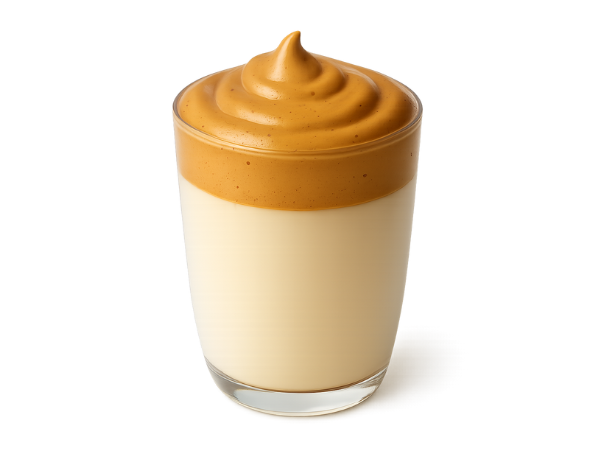
Dalgona Coffee
Caffeine
90–110 mg
Note: Caffeine amounts are based on a standard Dalgona coffee recipe using 2 teaspoons of instant coffee. Values can vary depending on the brand of instant coffee, the amount of sugar added, and the type of milk used.
| Attribute | Value |
|---|---|
| Caffeine Level | Moderate |
| Serving Size | 8 fl oz |
| Serving Size (ml) | 240 ml |
| Caffeine | 90–110 mg |
| Calories | 150 kcal |
| Sugar | 18 g |
| Caffeine per fl oz | 13 mg/fl oz |
Dalgona coffee is more than just a viral sensation—it’s a fascinating blend of culinary creativity and caffeine science. While its frothy appearance makes it look like a dessert, the drink actually delivers a strong caffeine kick.
What Is Dalgona Coffee?
Dalgona coffee is a whipped drink made by combining instant coffee, sugar, and hot water, then layering the frothy mixture over milk. It became globally popular during the COVID‑19 lockdowns in 2020, when people experimented with home recipes.
- Origin: Inspired by Korean street candy “dalgona”
- Ingredients: Instant coffee, sugar, hot water, milk
- Texture: Creamy, foamy topping
- Popularity: Viral on TikTok, Instagram, and YouTube
The name “dalgona” comes from a honeycomb toffee candy in Korea, which has a similar caramelized flavor.
Extra note: Beyond its viral fame, Dalgona coffee represents how food trends can connect cultures. It’s a modern twist on traditional whipped coffee recipes found in Greece (frappé) and India (beaten coffee).
Ingredients That Affect Caffeine Content
The caffeine level in Dalgona coffee is determined by the coffee powder used and the proportions in the recipe.
- Instant coffee brand – Some brands contain more caffeine per teaspoon.
- Amount of coffee used – More coffee powder equals more caffeine.
- Milk type – Whole milk, almond milk, or oat milk don’t change caffeine but affect taste.
- Sugar ratio – Adds sweetness but no caffeine.
Extra note: While sugar and milk don’t alter caffeine, they influence how strong the coffee tastes. A sweeter, creamier version may feel less intense, even though the caffeine content is unchanged.
Caffeine in Instant Coffee vs. Brewed Coffee for Dalgona
Most Dalgona recipes use instant coffee, but brewed coffee can be substituted. The caffeine levels vary significantly.
- Instant coffee – 60–70 mg caffeine per teaspoon
- Brewed coffee concentrate – Can exceed 100 mg per serving
- Espresso powder – Stronger, 80–90 mg per teaspoon
- Decaf instant coffee – 0–5 mg caffeine
Extra note: Instant coffee is preferred because it whips easily, but adventurous coffee lovers sometimes experiment with espresso powder or cold brew concentrate. These variations can make the drink much stronger—or nearly caffeine‑free.
Average Caffeine per Serving of Dalgona Coffee
On average, a serving of Dalgona coffee contains 90–110 mg of caffeine, depending on the recipe.
- Standard recipe: 2 tsp instant coffee → 105 mg caffeine
- Larger servings: Can exceed 150 mg
- Decaf versions: 0–5 mg caffeine
Extra note: This caffeine level makes Dalgona coffee comparable to a medium Starbucks latte or a strong cup of tea. It’s enough to boost alertness, but sensitive drinkers should be cautious.
How Recipe Variations Change Caffeine Levels
Different recipes can drastically change caffeine content, and that’s one of the reasons Dalgona coffee is such a versatile drink. The amount of caffeine isn’t fixed—it depends on how you prepare it, what type of coffee you use, and even the serving size.
- Extra coffee powder – Increases caffeine significantly
- Decaf instant coffee – Nearly eliminates caffeine
- Matcha or cocoa variations – Reduce caffeine levels
- Serving size changes – Larger cups mean more caffeine
Extra note: Recipe creativity is part of Dalgona coffee’s charm. Some people make chocolate or matcha versions, which lower caffeine, while others double the coffee powder for a stronger kick.
Tips to Reduce or Increase Caffeine in Dalgona Coffee
You can easily adjust caffeine levels when making Dalgona coffee, which is one of the reasons this drink is so versatile. Unlike a standard cup of brewed coffee, where the caffeine content is fixed, Dalgona coffee allows you to experiment with ingredients and proportions to suit your personal tolerance and preferences.
- To reduce caffeine:
- Use decaf instant coffee
- Cut coffee powder in half
- Add more milk to dilute strength
- To increase caffeine:
- Use extra coffee powder
- Choose strong instant coffee brands
- Substitute with espresso powder
Extra note: This flexibility makes Dalgona coffee suitable for both caffeine‑sensitive individuals and those seeking a stronger boost. It’s one of the few coffee drinks that can be tailored so easily without losing its signature frothy texture.