
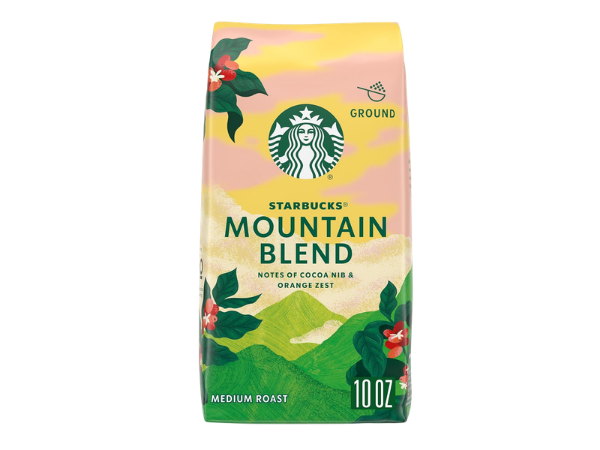
Starbucks Mountain Blend
Caffeine
45 – 115 mg
Note: Caffeine amounts are based on standard brewed Starbucks Mountain Blend coffee and can vary slightly depending on brewing method, grind size, and serving size.
| Attribute | Value |
|---|---|
| Caffeine Level | Moderate |
| Serving Size | 8 – 20 fl oz |
| Serving Size (ml) | 237 – 591 ml |
| Caffeine | 45 – 115 mg |
| Calories | 5 kcal |
| Sugar | – |
| Caffeine per fl oz | 5 – 6 mg/fl oz |
Starbucks Mountain Blend is a limited‑edition medium roast coffee that combines approachable flavor with a balanced caffeine profile.
What is Starbucks Coffee?
Starbucks Coffee is one of the most recognized names in the global coffee industry, known for its wide range of blends, single‑origin offerings, and specialty beverages. The company sources beans from diverse regions, ensuring consistency and quality across its products.
Key traits of Starbucks Coffee:
- Global sourcing from Latin America, Africa, and Asia.
- Wide range of roasts from blonde to dark.
- Seasonal blends like Mountain Blend for unique flavor experiences.
- Strong focus on quality and sustainability.
- Availability in both cafés and retail packaging.
Starbucks Coffee represents more than just a beverage—it’s a lifestyle brand that emphasizes accessibility, consistency, and innovation.
Flavor Profile and Roast Level of Starbucks Mountain Blend
Starbucks Mountain Blend is a medium roast coffee, striking a balance between brightness and body. The roast level ensures that the natural flavors of the beans are preserved while adding a smooth, approachable character.
Flavor highlights:
- Cocoa nib for a rich, chocolate‑like undertone.
- Orange zest for a subtle citrus brightness.
- Smooth and balanced mouthfeel.
- Medium roast for versatility in brewing methods.
- Works well hot or iced.
The medium roast makes it suitable for drip brewing, French press, or pour‑over, ensuring that the flavor remains consistent across different preparation styles.
Caffeine in Starbucks Mountain Blend by Cup Size
Caffeine content in Mountain Blend varies depending on serving size. An 8‑fl oz cup contains approximately 45 mg of caffeine, while a larger 20‑fl oz serving can reach up to 115 mg.
Caffeine by size:
- 8 fl oz: ~45 mg
- 12 fl oz: ~65 mg
- 16 fl oz: ~90 mg
- 20 fl oz: ~115 mg
- Average per fl oz: 5–6 mg
The blend’s reduced caffeine content is achieved by mixing regular beans with decaf, ensuring that flavor remains intact while caffeine levels are moderated.
Caffeine in Starbucks Mountain Blend by Espresso Shot
While Mountain Blend is primarily brewed as drip coffee, it can also be prepared as espresso. A single shot of espresso typically contains 60–75 mg of caffeine, depending on grind size and extraction time.
Espresso caffeine estimates:
- Single shot: ~60–75 mg
- Double shot: ~120–150 mg
- Triple shot: ~180–225 mg
- Variability based on grind and brew method.
- Lower caffeine compared to Starbucks Blonde Espresso.
This makes Mountain Blend espresso a good option for those who enjoy the intensity of espresso but prefer a smoother, less jittery experience.
Caffeine Content per Milliliter (ml)
Breaking down caffeine content per milliliter provides a clearer picture of Mountain Blend’s strength. With an average of 5–6 mg per fl oz, this translates to approximately 0.17–0.20 mg per ml.
Caffeine per ml:
- 1 ml: ~0.17–0.20 mg
- 100 ml: ~17–20 mg
- 250 ml (standard mug): ~45–50 mg
- 500 ml (large tumbler): ~90–100 mg
- Consistent across brewing methods.
Its moderate caffeine density makes it a balanced choice for sustained enjoyment without the sharp spikes associated with stronger brews.
Bean Quality and Sourcing Behind Starbucks Mountain Blend
Starbucks Mountain Blend is crafted from beans sourced in Latin America and Africa, regions known for producing high‑quality coffee with distinctive flavor profiles.
Sourcing highlights:
- Latin America: Bright acidity and nutty undertones.
- Africa: Unique fruit and floral notes.
- Ethical sourcing through Starbucks’ C.A.F.E. Practices.
- Seasonal availability for freshness.
- Blended with decaf beans for moderated caffeine.
Starbucks’ commitment to ethical sourcing also means that the coffee supports sustainable farming practices, reinforcing the brand’s reputation for quality and responsibility.
Factors That Influence Caffeine Levels in Starbucks Mountain Blend
Caffeine levels in Mountain Blend are influenced by several factors, including bean type, roast level, and brewing method. While medium roasts generally retain moderate caffeine, the inclusion of decaf beans further reduces the overall content.
Influencing factors:
- Roast level: Medium roast balances flavor and caffeine.
- Bean blend: Mix of regular and decaf beans.
- Brewing method: Drip, French press, or espresso alters extraction.
- Serving size: Larger cups naturally contain more caffeine.
- Grind size: Finer grinds increase caffeine extraction.
For example, using a French press may yield a slightly stronger cup compared to drip brewing, while espresso concentrates caffeine into smaller servings.
Health Considerations of Starbucks Mountain Blend Ground Coffee
Moderate caffeine intake from Mountain Blend can provide benefits such as improved focus and alertness. However, excessive consumption may lead to side effects like restlessness or disrupted sleep.
Health notes:
- Moderate caffeine supports focus and energy.
- Reduced caffeine lowers risk of jitters.
- Suitable for afternoon or evening consumption.
- Provides antioxidants from coffee beans.
- Should be consumed in moderation for best results.
Starbucks Mountain Blend offers a way to enjoy the ritual of coffee drinking without overloading on caffeine. Its balanced profile makes it a thoughtful option for individuals who want flavor, comfort, and a gentler energy boost.