
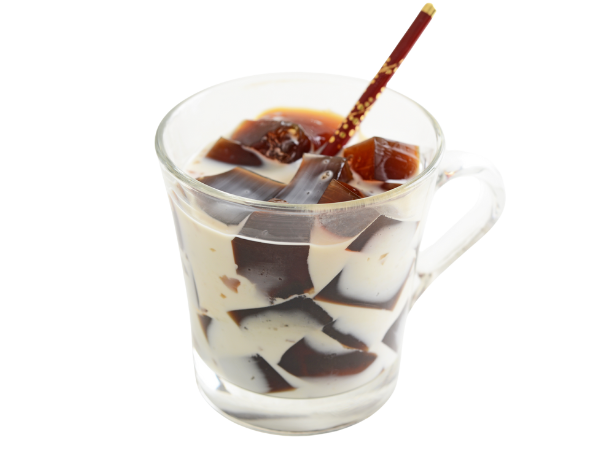
Coffee Jelly
Caffeine
30–70 mg
Note: Caffeine amounts are based on brewed coffee used in standard coffee jelly recipes. Values can vary depending on the strength of the coffee, the type of beans (Arabica vs. Robusta), and whether decaf coffee is used.
| Attribute | Value |
|---|---|
| Caffeine Level | Moderate |
| Serving Size | 8–12 fl oz |
| Serving Size (ml) | 240–355 ml |
| Caffeine | 30–70 mg |
| Calories | 120–180 kcal |
| Sugar | 15–25g |
| Caffeine per fl oz | 3-6 mg/fl oz |
Coffee jelly is a fascinating dessert that blends the bold flavor of coffee with the fun, jiggly texture of gelatin. While it looks like a sweet treat, it also carries caffeine from the coffee used in its preparation.
What Is Coffee Jelly?
Coffee jelly is a Japanese dessert made by mixing brewed coffee with gelatin or agar, then chilling it until firm. It is often served with whipped cream, condensed milk, or ice cream.
- Origin: Japan, popular since the 1960s
- Ingredients: Brewed coffee, sugar, gelatin/agar
- Texture: Soft, jiggly, refreshing
- Serving style: Cubes in cups, parfaits, or bubble tea
Extra note: Coffee jelly combines the cultural love of coffee with Japan’s tradition of light, refreshing desserts. It has also gained popularity worldwide thanks to social media and anime references.
Ingredients That Affect Caffeine Content
The caffeine level in coffee jelly depends on the type and amount of coffee used.
- Coffee type – Arabica beans have less caffeine than Robusta.
- Roast level – Dark roasts have slightly less caffeine than light roasts.
- Brewing strength – Stronger coffee yields more caffeine.
- Gelatin/agar – No caffeine, but affects texture.
- Sugar and cream – Add sweetness and calories, not caffeine.
Extra note: The choice of coffee beans and brewing method is the single biggest factor in caffeine content.
How Much Caffeine Does Coffee Jelly Contain per Serving?
Coffee jelly’s caffeine content depends on the coffee base. A typical serving (about 1 cup or 240 ml) contains 30–70 mg of caffeine.
- Light brew: 30 mg caffeine
- Medium brew: 50 mg caffeine
- Strong brew: 70 mg caffeine
This makes coffee jelly less caffeinated than a full cup of coffee but still enough to provide alertness.
Extra note: Because coffee jelly is often eaten as a dessert, people may underestimate its caffeine. Eating it late at night could still affect sleep.
Average Caffeine per Serving of Coffee Jelly
On average, coffee jelly contains 40–60 mg of caffeine per serving.
- Small serving (100 ml): 20–30 mg caffeine
- Standard serving (240 ml): 40–60 mg caffeine
- Large serving (350 ml): 70–90 mg caffeine
Extra note: This makes coffee jelly comparable to green tea or a small latte in terms of caffeine.
Caffeine in Coffee vs. Coffee Jelly
Coffee jelly contains less caffeine than a standard cup of coffee because it is diluted and served as a dessert.
- Standard brewed coffee (8 oz): 95 mg caffeine
- Coffee jelly (1 cup serving): 30–70 mg caffeine
- Espresso shot (1 oz): 63 mg caffeine
Extra note: Coffee jelly is a gentler way to enjoy coffee flavor without the full stimulant effect of a cup of coffee.
How Recipe Variations Change Caffeine Levels
Different recipes can dramatically change caffeine content, and that’s one of the reasons coffee jelly is such a versatile dessert. The caffeine level isn’t fixed—it depends on how strong the coffee is brewed, whether decaf beans are used, and how much liquid is diluted with gelatin.
- Strong brew coffee jelly – Higher caffeine, up to 70 mg per serving.
- Decaf coffee jelly – Nearly caffeine-free.
- Instant coffee jelly – Moderate caffeine, depending on brand.
- Matcha or cocoa jelly – Lower caffeine than coffee-based versions.
Extra note: Recipe creativity allows coffee jelly to be tailored for caffeine-sensitive individuals or those seeking a stronger boost.
Tips for Reducing or Increasing Caffeine in Coffee Jelly
You can easily adjust caffeine levels when making coffee jelly, which is one of the reasons this dessert is so adaptable.
- To reduce caffeine:
- Use decaf coffee
- Brew weaker coffee
- Add more milk or cream when serving
- To increase caffeine:
- Use strong brewed coffee or espresso
- Choose Robusta beans for higher caffeine
- Reduce dilution by using less gelatin liquid
Extra note: Adjusting caffeine in coffee jelly is not just about health—it also changes flavor. Stronger recipes taste more bitter, while lighter ones taste sweeter and more dessert-like.