
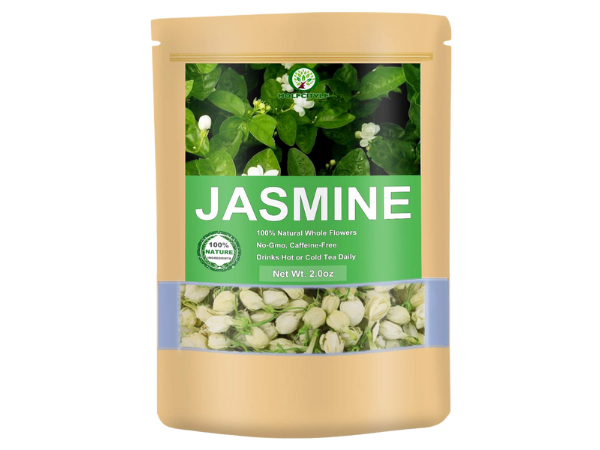
Jasmine Flower Tea
Caffeine
15 – 45 mg
Note: Caffeine amounts are based on jasmine tea brewed with a green tea base and can vary depending on steeping time, water temperature, and tea leaf quality.
| Attribute | Value |
|---|---|
| Caffeine Level | Moderate |
| Serving Size | 6 – 12 fl oz |
| Serving Size (ml) | 180 – 355 ml |
| Caffeine | 15 – 45 mg |
| Calories | 0 – 5 kcal |
| Sugar | 0 g |
| Caffeine per fl oz | 2 – 4 mg/fl oz |
Jasmine flower tea is one of the most beloved floral teas worldwide, known for its delicate aroma and soothing qualities. While many people enjoy it for relaxation, others wonder about its caffeine content and how it compares to other teas.
What Is Jasmine Flower Tea?
Jasmine flower tea is typically made by blending green tea leaves with jasmine blossoms, allowing the flowers to infuse their fragrance into the tea. Some varieties use white or black tea as a base, but green tea is most common.
Defining Traits of Jasmine Flower Tea:
- Traditionally scented with fresh jasmine blossoms
- Usually based on green tea, though white and black versions exist
- Offers a balance of floral aroma and tea flavor
- Consumed hot or iced depending on preference
- Popular in China and across Asia for centuries
Jasmine tea is not purely herbal — because it often uses tea leaves as a base, it contains caffeine. Its unique preparation method makes it both aromatic and energizing, appealing to tea lovers worldwide.
Flavor Profile and Aroma of Jasmine Flower Tea
The flavor of jasmine tea is a delicate blend of floral sweetness and the earthy notes of tea leaves. Its aroma is often described as calming and romantic.
Flavor and Aroma Highlights:
- Sweet, floral fragrance from jasmine blossoms
- Mild grassy or vegetal notes from green tea base
- Smooth, slightly sweet aftertaste
- Light body compared to stronger teas like black tea
- Refreshing aroma that enhances relaxation
This combination of floral and tea flavors makes jasmine tea versatile. It pairs well with light meals or desserts and is often enjoyed as a calming beverage in the evening.
Caffeine Content in Jasmine Flower Tea Explained
The caffeine content in jasmine tea depends on the type of tea leaves used as the base. Green tea typically contains moderate caffeine, while black tea versions have more.
Average Caffeine Levels in Jasmine Tea:
- Green tea base: 20–45 mg per cup
- White tea base: 15–30 mg per cup
- Black tea base: 40–70 mg per cup
- Herbal jasmine infusions (without tea leaves): 0 mg
- Factors like steeping time and leaf quality affect levels
Jasmine tea generally has less caffeine than coffee but more than purely herbal teas. This makes it a good choice for those seeking gentle stimulation without the jitters.
Caffeine in Jasmine Flower Tea by Cup Size
Caffeine levels vary depending on cup size and brewing strength. Larger servings naturally contain more caffeine.
Caffeine by Cup Size:
- Small cup (6 oz): 15–30 mg
- Standard cup (8 oz): 20–45 mg
- Large mug (12 oz): 30–60 mg
- Strong brew (long steeping): Higher caffeine content
- Light brew (short steeping): Lower caffeine content
Understanding caffeine by cup size helps tea drinkers manage intake. For those sensitive to caffeine, smaller servings or shorter steeping times are recommended.
Health Benefits of Jasmine Flower Tea
Jasmine flower tea is more than just a fragrant drink — it’s a source of natural compounds that support overall health. Because it is usually made with green tea leaves scented with jasmine blossoms, it combines the benefits of tea polyphenols with the soothing qualities of jasmine.
Health Benefits of Jasmine Tea:
- Rich in antioxidants that fight free radicals
- Supports heart health and circulation
- May aid digestion and metabolism
- Provides calming effects from floral aroma
- Can boost alertness without overstimulation
Jasmine tea is both a wellness drink and a pleasure beverage. Its combination of antioxidants and soothing fragrance makes it a holistic choice for health and relaxation.
Factors That Influence Caffeine in Jasmine Flower Tea
Since jasmine tea is usually made by scenting green, white, or black tea leaves with jasmine blossoms, the type of tea base plays the biggest role in determining caffeine levels.
Influencing Factors:
- Type of tea base (green, white, black, or herbal)
- Steeping time and water temperature
- Quality and grade of tea leaves
- Serving size of the cup or mug
- Whether loose leaves or tea bags are used
By adjusting these factors, tea drinkers can control caffeine intake. For example, shorter steeping times and cooler water reduce caffeine, while longer brewing increases it.