
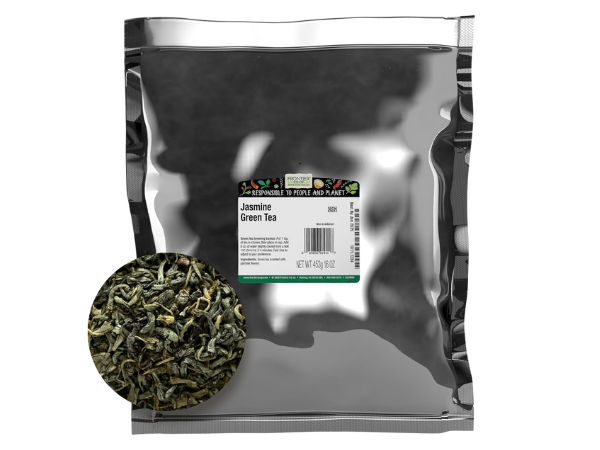
Jasmine Green Tea
Caffeine
20 – 45 mg
Note: Caffeine amounts are based on standard brewed jasmine green tea and can vary depending on leaf grade, brewing time, and water temperature.
| Attribute | Value |
|---|---|
| Caffeine Level | Moderate |
| Serving Size | 8 fl oz |
| Serving Size (ml) | 240 ml |
| Caffeine | 20 – 45 mg |
| Calories | 2 kcal |
| Sugar | 0 |
| Caffeine per fl oz | 2.5 – 5.5 mg/fl oz |
Jasmine green tea is one of the most popular scented teas worldwide, combining the refreshing qualities of green tea with the floral fragrance of jasmine blossoms. It offers a moderate caffeine boost, making it suitable for those who want alertness without the intensity of coffee.
What Is Jasmine Green Tea?
Jasmine green tea is a traditional Chinese tea made by scenting green tea leaves with jasmine flowers. The process dates back over a thousand years, with producers carefully layering blossoms over tea leaves to infuse aroma.
- Origin: China, especially Fujian Province
- Base: Green tea leaves (Camellia sinensis)
- Scenting: Jasmine blossoms layered or blended
- Aroma: Sweet, floral fragrance
- Taste: Smooth, slightly sweet, balanced
This tea is valued for its sensory experience, combining the vegetal notes of green tea with the calming aroma of jasmine. It remains a staple in tea culture worldwide.
Does Jasmine Green Tea Contain Caffeine?
Yes, jasmine green tea contains caffeine because its base is green tea. Jasmine flowers themselves add no caffeine; they only contribute aroma.
- Green tea base provides caffeine
- Jasmine blossoms add fragrance only
- Typical caffeine: 20–45 mg per 8 oz cup
- Lower than coffee (95 mg per 8 oz)
- Similar to or slightly less than plain green tea
This makes jasmine green tea a moderate source of caffeine, offering gentle stimulation without jitters. The presence of L-theanine balances caffeine’s effects, creating a calm alertness.
How Much Caffeine Is in Jasmine Green Tea
The caffeine content varies depending on brewing method, leaf grade, and water temperature. On average, an 8-ounce cup contains 20–45 mg.
- Loose-leaf jasmine tea: 30–45 mg
- Jasmine pearls: 25–30 mg
- Tea bags: 20–25 mg
- Strong brews: higher caffeine
- Light brews: lower caffeine
Compared to coffee, jasmine green tea provides about one-quarter the caffeine. This makes it suitable for those who want a mild energy lift without overstimulation.
Caffeine in Jasmine Green Tea vs Regular Green Tea
Jasmine green tea and regular green tea share the same base — the leaves of Camellia sinensis — but their caffeine levels can differ slightly depending on processing and brewing.
- Jasmine green tea: 20–45 mg per cup
- Regular green tea: 30–50 mg per cup
- Coffee: 95 mg per cup
- Black tea: 40–70 mg per cup
- White tea: 15–30 mg per cup
The scenting process with jasmine flowers does not add caffeine but may slightly reduce extraction depending on leaf rolling. Jasmine pearls, for example, release less caffeine than loose-leaf.
What Affects Caffeine Levels in Jasmine Green Tea
The caffeine content in jasmine green tea is not fixed; it can vary widely depending on how the tea is grown, processed, and brewed. While jasmine flowers themselves do not add caffeine, the green tea base is influenced by several factors that determine how much caffeine ends up in your cup.
- Leaf grade (young buds vs mature leaves)
- Scenting rounds (pearls vs loose-leaf)
- Brewing time (longer = more caffeine)
- Water temperature (hotter = more caffeine)
- Serving size (larger cups = more caffeine)
By adjusting brewing, drinkers can control caffeine intake. Shorter steeping times and cooler water reduce caffeine, while longer, hotter brews increase it.
Health Benefits of Jasmine Green Tea
Jasmine green tea is more than just a fragrant beverage; it combines the antioxidant-rich properties of green tea with the calming aroma of jasmine blossoms. This makes it both a wellness drink and a sensory experience.
- Rich in catechins (EGCG)
- Supports heart health
- May aid weight management
- Provides calming aroma therapy
- Promotes focus and relaxation
The combination of caffeine and L-theanine creates “focused calm,” unlike the sharp stimulation of coffee. Regular consumption may support overall wellness while offering a soothing ritual.
Is Jasmine Green Tea Suitable for Caffeine-Sensitive People?
Jasmine green tea may be suitable for caffeine-sensitive individuals in moderation. Its caffeine content is lower than coffee, but still present.
- Moderate caffeine: 20–45 mg per cup
- Lower than coffee or black tea
- L-theanine balances stimulation
- Decaf versions available
- Best consumed earlier in the day
Those sensitive to caffeine should limit intake to 1–2 cups daily or choose decaffeinated jasmine tea. The floral aroma and antioxidants remain beneficial even without caffeine.