
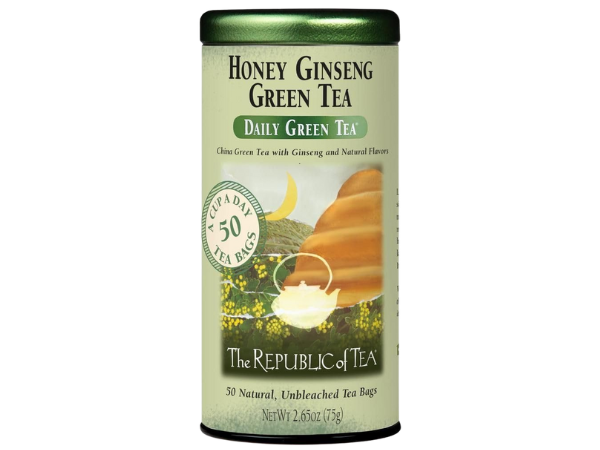
The Republic of Tea
Caffeine
0–60 mg
Note: Caffeine levels are based on standard 8 oz (240 ml) cups brewed for 3–5 minutes. Actual content varies depending on leaf grade, steeping time, and water temperature.
| Attribute | Value |
|---|---|
| Caffeine Level | Low to Moderate |
| Serving Size | 6-8 fl oz |
| Serving Size (ml) | 177–240 ml |
| Caffeine | 0–60 mg |
| Calories | 2 kcal |
| Sugar | 0 g |
| Caffeine per fl oz | 0–10 mg/fl oz |
The Republic of Tea is known for its premium loose‑leaf and bagged teas, offering everything from bold black blends to delicate white teas and soothing herbal infusions. For tea drinkers who want to balance flavor with energy, understanding caffeine levels by cup and flavor type is essential.
What Makes The Republic of Tea Stand Out Among Tea Brands
The Republic of Tea emphasizes quality, sustainability, and variety. Unlike mass‑market brands, it curates teas from around the world and packages them in signature airtight tins to preserve freshness.
- Premium sourcing – High‑quality leaves from trusted growers.
- Variety – Black, green, white, oolong, rooibos, and herbal blends.
- Lifestyle focus – Wellness teas with added botanicals.
- Eco‑friendly packaging – Minimal waste and recyclable tins.
This commitment makes it a favorite among tea enthusiasts who value both taste and ethics.
How Caffeine Is Naturally Present in Tea Leaves
Caffeine is a natural compound found in Camellia sinensis, the plant from which black, green, white, and oolong teas are made. Levels vary depending on:
- Leaf type – Younger leaves often contain more caffeine.
- Processing – Oxidation (black tea) vs. minimal processing (white tea).
- Brewing method – Longer steeping extracts more caffeine.
- Serving size – Larger cups naturally contain more caffeine.
This explains why different teas from The Republic of Tea deliver different energy levels.
Caffeine in Black Tea Varieties from The Republic of Tea
Black teas are the boldest and most caffeinated in the lineup.
- Average caffeine per cup (8 oz / 240 ml): 40–60 mg
- Examples: Earl Greyer, British Breakfast, Darjeeling.
- Flavor profile: Robust, malty, sometimes floral.
Summary: Black teas provide a strong morning boost, comparable to half a cup of coffee.
Caffeine in Green Tea Varieties from The Republic of Tea
Green teas are lighter but still energizing.
- Average caffeine per cup: 25–50 mg
- Examples: People’s Green Tea, Jasmine Green, Matcha Super Green.
- Flavor profile: Fresh, grassy, sometimes sweet.
Summary: Green teas are ideal for sustained energy without jitters.
Caffeine in White Tea Varieties from The Republic of Tea
White teas are the most delicate, with lower caffeine.
- Average caffeine per cup: 15–30 mg
- Examples: Emperor’s White Tea, White Peach.
- Flavor profile: Subtle, floral, lightly sweet.
Summary: White teas are perfect for late afternoon or evening enjoyment.
Caffeine in Herbal and Rooibos Teas (Naturally Caffeine‑Free)
Herbal infusions and rooibos are naturally free of caffeine.
- Caffeine per cup: 0 mg
- Examples: Chamomile, Peppermint, Hibiscus, Red Rooibos.
- Flavor profile: Wide range—floral, fruity, earthy.
Summary: These teas are soothing, making them excellent bedtime choices.
Factors That Influence Caffeine Levels in Different Tea Flavors
Even within the same category, caffeine can vary.
- Steeping time – Longer steeping = more caffeine.
- Leaf grade – Broken leaves release caffeine faster than whole leaves.
- Blends – Added herbs or botanicals may dilute caffeine.
- Serving size – Larger mugs increase total intake.
Summary: Tea drinkers can adjust caffeine levels by brewing style and portion size.