
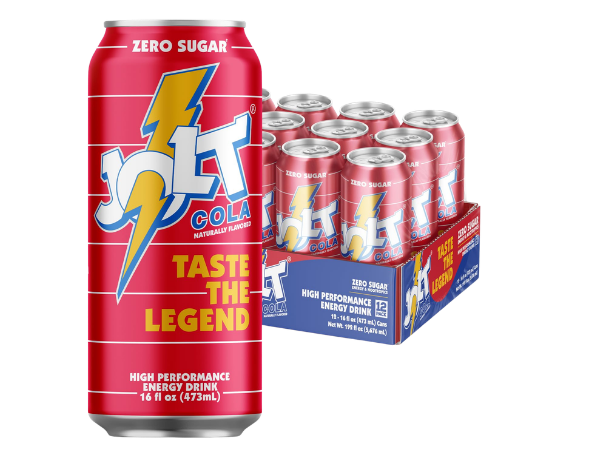
JOLT Cola
Caffeine
160–200 mg
Note: Nutritional values for JOLT Cola can vary depending on the formulation and production batch.
| Attribute | Value |
|---|---|
| Caffeine Level | Very High |
| Total Caffeine | 160–200 mg |
| Serving Size | 16 fl oz |
| Serving Size (ml) | 473 ml |
| Sugar | 50 g |
| Calories | 190 kcal |
| Caffeine per fl oz | 10–12.5 mg/fl oz |
JOLT Cola is not just another soda—it was deliberately designed to stand out in the cola market by offering a stronger kick of caffeine.
What Is JOLT Cola Energy Drink?
JOLT Cola is technically a cola but was marketed as an energy drink long before energy drinks became mainstream. It was introduced in 1985 in the United States and quickly gained attention for its bold slogan and high caffeine content.
- Type: Carbonated soft drink with energy‑drink positioning
- Origin: United States, launched in 1985
- Flavor: Classic cola taste
- Target Audience: Students, professionals, gamers, and night workers
- Marketing Slogan: “All the sugar and twice the caffeine”
By combining a familiar cola flavor with a stimulant‑like effect, JOLT Cola carved out a unique niche. It blurred the line between soda and energy drink, appealing to those who wanted both taste and performance.
How Much Caffeine Is in a Can of JOLT Cola?
JOLT Cola earned its reputation by packing far more caffeine than traditional sodas. While early versions contained about 72 mg per 12‑oz can, later formulations—especially the 16‑oz cans—were reformulated to deliver 160–200 mg of caffeine.
- Caffeine per 12‑oz (original): ~72 mg
- Caffeine per 16‑oz (later formula): 160–200 mg
- Comparison to Coca‑Cola (12‑oz): ~34 mg
- Comparison to Pepsi (12‑oz): ~38 mg
- Comparison to Coffee (8‑oz): ~95 mg
This elevated caffeine level positioned JOLT Cola as more than just a soda—it was a functional stimulant drink.
JOLT Cola Nutrition Facts and Ingredients
Beyond caffeine, JOLT Cola’s nutrition facts reveal a high sugar load, which contributes to its energy‑boosting effect but also raises health concerns. An 8‑oz serving contains about 25 g of sugar and 101 calories.
- Calories (per 8‑oz): 101
- Total Fat: 0 g
- Carbohydrates: 25 g (all sugar)
- Protein: 0 g
- Sodium: 0 mg
- Ingredients: Carbonated water, sugar, caramel color, phosphoric acid, caffeine, citric acid, natural flavor
The combination of sugar and caffeine delivers a rapid energy spike, but the lack of nutrients makes it a purely stimulant beverage rather than a source of sustained nutrition.
Why JOLT Cola Is Known for Its High Caffeine Content
JOLT Cola’s reputation stems from its deliberate branding strategy. At a time when most sodas kept caffeine levels moderate, JOLT doubled down, making caffeine the centerpiece of its identity. Its slogan and marketing campaigns emphasized wakefulness, productivity, and rebellion against “light” or “diet” trends.
- Bold Marketing: “Twice the caffeine” was a direct challenge to mainstream colas.
- Cultural Impact: Popular among students, programmers, and gamers in the 1980s–1990s.
- Functional Appeal: Positioned as a stimulant, not just a refreshment.
This bold approach made JOLT Cola a cultural icon, remembered as one of the first sodas to openly embrace its stimulant properties.
JOLT Cola vs Regular Cola: Caffeine Comparison
When comparing JOLT Cola to regular colas, the difference is clear. JOLT nearly doubles the caffeine content, making it closer to coffee than soda in terms of stimulant effect.
| Beverage | Caffeine (per 12‑oz) |
|---|---|
| JOLT Cola | ~72 mg |
| Coca‑Cola | ~34 mg |
| Pepsi | ~38 mg |
| Dr Pepper | ~41 mg |
This comparison highlights why JOLT Cola was marketed as an energy drink alternative. For consumers who wanted more than refreshment, JOLT provided a functional edge.
Who Should Limit or Avoid Drinking JOLT Cola?
While JOLT Cola can provide a quick energy boost, its high caffeine and sugar levels make it unsuitable for certain groups. Excessive consumption may lead to jitteriness, insomnia, or sugar crashes.
- Children and Adolescents: Sensitive to caffeine and sugar.
- Pregnant Women: Advised to limit caffeine intake.
- Individuals with Heart Conditions: High caffeine may increase heart rate.
- People with Diabetes: High sugar content poses risks.
For healthy adults, occasional consumption may be fine, but moderation is key. JOLT Cola is best seen as an occasional stimulant rather than a daily beverage.