
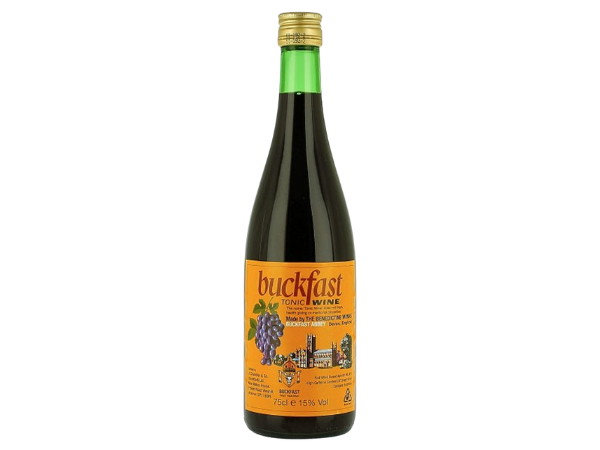
Buckfast Tonic Wine
Caffeine
225-280 mg
Note: Caffeine amounts are based on published figures for Buckfast Tonic Wine. Actual content may vary slightly depending on production batch and market (UK green bottle vs. Ireland brown bottle).
| Attribute | Value |
|---|---|
| Caffeine Level | Moderate |
| Serving Size | 750 ml bottle |
| Caffeine | 225 mg per 750 ml bottle |
| Calories | 150 kcal |
| Sugar | 37 g |
| Caffeine per fl oz | 9 mg/fl oz |
Buckfast Tonic Wine is unlike most alcoholic beverages because it combines alcohol with caffeine. This unusual pairing has made it both popular and controversial, especially in parts of the UK and Ireland.
What Is Buckfast Tonic Wine?
Buckfast Tonic Wine is a fortified wine infused with caffeine, originally developed by Benedictine monks at Buckfast Abbey in Devon, England. Unlike traditional wines, it is marketed as a tonic with added stimulants, giving it a distinctive profile.
Defining Traits of Buckfast Tonic Wine:
- Fortified Wine Base – Made from imported red wine with added alcohol.
- Caffeine Content – Contains stimulant levels unusual for alcoholic drinks.
- Alcohol Strength – Around 15% ABV, stronger than most table wines.
- Distinctive Packaging – Sold in brown or green bottles depending on market.
- Dual Effect – Combines depressant (alcohol) and stimulant (caffeine).
Together, these features make Buckfast a hybrid beverage — part fortified wine, part caffeinated tonic — setting it apart from conventional wines.
The Origins and History of Buckfast
Buckfast was first introduced in the late 19th century as a medicinal tonic. Over time, it evolved into a recreational drink, gaining popularity in Scotland and Ireland. Its reputation has shifted from health remedy to cultural icon.
Historical Highlights:
- 1880s Creation – Developed by Benedictine monks at Buckfast Abbey.
- Medicinal Marketing – Initially sold as a health tonic.
- 20th Century Growth – Became popular in working‑class communities.
- Modern Popularity – Associated with youth culture and nightlife.
- Controversy – Linked to debates about public health and social behavior.
Buckfast’s history reflects its transformation from a monastic tonic to a widely consumed beverage with both loyal fans and vocal critics.
Ingredients and Unique Composition
Buckfast’s formula is distinctive because it blends alcohol with caffeine, something rarely seen in wines. This composition gives it both stimulating and intoxicating effects.
Key Ingredients:
- Red Wine Base – Imported wine forms the foundation.
- Fortification – Extra alcohol added to raise ABV to ~15%.
- Caffeine – Infused to provide stimulant properties.
- Flavoring Agents – Subtle additions for taste balance.
- Packaging Variants – Brown bottles (Ireland) vs. green bottles (UK).
This unusual mix of ingredients makes Buckfast chemically distinct, combining the relaxing qualities of wine with the alertness of caffeine.
How Much Caffeine Does Buckfast Contain?
Buckfast’s caffeine content is one of its most defining features. While most wines contain no caffeine, Buckfast includes levels comparable to everyday beverages.
- Brown Bottle (Ireland) – Contains approximately 280 mg of caffeine per 750 ml bottle, equivalent to about three cups of brewed coffee.
- Green Bottle (UK) – Contains about 225 mg of caffeine per 750 ml bottle, closer to the caffeine content of two and a half cups of coffee or seven cans of Coca‑Cola.
- Unique Position – Few alcoholic drinks contain added caffeine, making Buckfast stand out.
- Dual Impact – The stimulant effect of caffeine can mask alcohol’s sedative qualities, leading drinkers to feel more alert than they actually are.
- Consumer Awareness – Many casual drinkers underestimate the caffeine content, assuming it is similar to wine.
This combination of 15% alcohol by volume (ABV) and 225–280 mg of caffeine per bottle makes Buckfast unusual. The caffeine can reduce the perception of intoxication, encouraging overconsumption and contributing to its controversial reputation.
Health Implications of Buckfast’s Caffeine Content
The combination of alcohol and caffeine raises health concerns. Caffeine can reduce the perception of intoxication, leading to potential overconsumption.
Health Considerations:
- Masked Intoxication – Drinkers may feel more alert than they actually are.
- Cardiovascular Strain – Alcohol and caffeine together stress the heart.
- Risk of Overconsumption – Higher likelihood of binge drinking.
- Sleep Disruption – Caffeine interferes with rest after alcohol intake.
- Public Health Debate – Frequently cited in discussions of alcohol regulation.
While moderate consumption may not pose unusual risks, excessive intake can amplify health problems, making Buckfast a subject of ongoing medical and social concern.
Cultural Impact and Popularity of Buckfast
Buckfast is more than just a drink — it has become a cultural symbol, particularly in Scotland. Its reputation ranges from beloved local staple to controversial social issue.
Cultural Associations:
- Regional Identity – Strong ties to Scottish and Irish communities.
- Youth Culture – Popular among younger demographics.
- Media Coverage – Often portrayed as linked to antisocial behavior.
- Sales Success – Despite controversy, sales continue to rise.
- Symbolic Status – Represents both pride and criticism in public discourse.
Buckfast’s cultural impact demonstrates how a single beverage can embody both tradition and controversy, making it a unique case in the world of alcohol.