
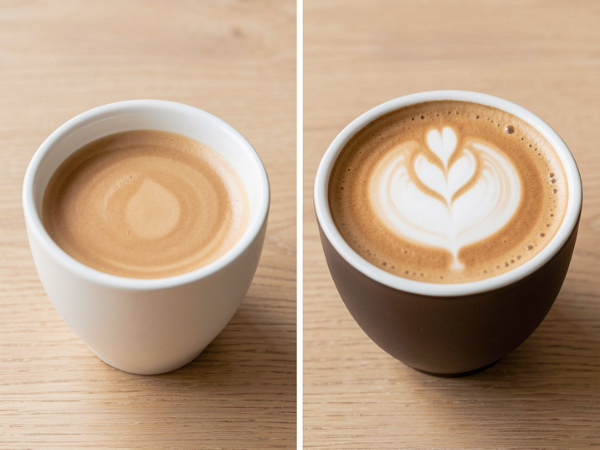
A cortado and a latte both pair espresso with milk, but they deliver distinct experiences: the cortado emphasizes espresso clarity with just enough warm milk to soften acidity, while the latte leans into a creamy, milk-forward texture that stretches a single or double shot into a larger, gentler beverage.
What Is a Cortado?
A cortado is an espresso-based drink that originated in Spain and spread through Latin coffee cultures; its name comes from the Spanish verb cortar, meaning “to cut,” because the espresso is cut with an approximately equal amount of warm milk to reduce acidity and create balance.
- Origin – Spain; popular across Iberia and Latin America.
- Typical size – 4–6 ounces total.
- Espresso shots – Usually one or two short shots.
- Milk style – Warm steamed milk with minimal foam.
- Serving vessel – Small glass, demitasse, or metal cup.
Because the cortado keeps milk and espresso close to a one-to-one balance, it highlights single-origin beans and nuanced roast profiles; baristas often use it to showcase espresso clarity while offering a softer mouthfeel than straight espresso.
What Is a Latte?
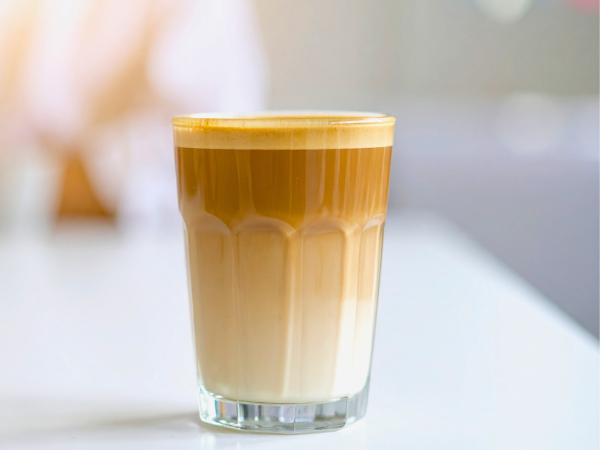
A latte, short for caffè latte (Italian for “milk coffee”), is an espresso-based beverage that emphasizes steamed milk and a velvety texture; it typically contains a single or double shot of espresso topped with a generous amount of steamed milk and a thin layer of microfoam.
- Name origin – Italian phrase meaning “milk coffee.”
- Typical size – 8–16 ounces in many coffee shops.
- Espresso shots – One or two shots depending on size.
- Milk style – Steamed milk with microfoam for texture.
- Serving vessel – Large cup, glass, or mug.
Because lattes contain substantially more milk than cortados, they are often perceived as gentler and more approachable for those who prefer a creamy, less intense coffee experience.
Cortado vs. Latte: Milk-to-Espresso Ratio
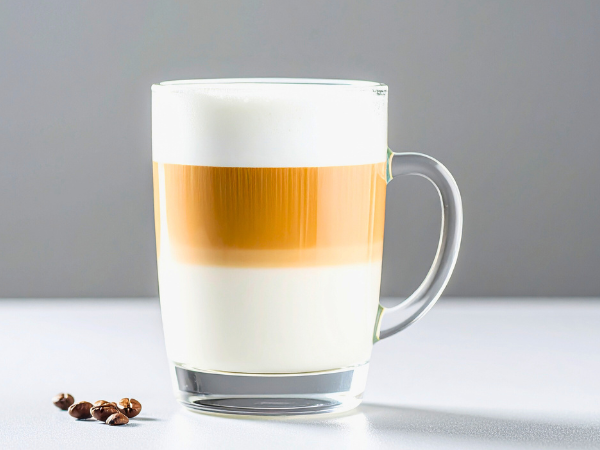
The milk-to-espresso ratio is the single most practical way to distinguish a cortado from a latte: cortados aim for near parity between espresso and milk, while lattes use significantly more milk relative to espresso.
- Cortado ratio – ~1:1 espresso to milk.
- Latte ratio – ~1:3 to 1:4 espresso to milk.
- Effect on flavor – Cortado preserves espresso clarity; latte softens it.
- Effect on texture – Cortado is denser and more balanced; latte is creamier.
- Barista technique – Cortado uses less steamed milk; latte requires more milk and microfoam.
Understanding these ratios helps when ordering or brewing at home: if you want the espresso’s acidity and aromatics to remain central, choose a cortado; if you prefer a smooth, milky cup that stretches a shot into a longer drink, choose a latte.
Flavor Profile: Bold vs. Creamy
Flavor differences between a cortado and a latte stem directly from their milk proportions and serving sizes: the cortado’s near-equal milk-to-espresso ratio preserves the espresso’s brightness, acidity, and nuanced tasting notes, producing a bold, concentrated cup with a clean finish.
- Cortado flavor – Espresso-forward; bright, concentrated, balanced.
- Latte flavor – Milk-forward; creamy, sweet, mellow.
- Acidity – More noticeable in cortado; subdued in latte.
- Sweetness – Perceived sweetness increases with milk in a latte.
- Aroma – Cortado preserves more espresso aroma per sip.
Because cortados concentrate flavor into a smaller volume, they can reveal single-origin bean characteristics—fruity, floral, or chocolatey notes—more clearly than lattes.
Serving Size and Presentation Differences
Serving size and presentation are immediate visual cues that separate cortados from lattes: cortados are compact, often presented in small glasses or demitasse cups that showcase the espresso’s crema and a thin layer of milk, while lattes are poured into larger cups or tall glasses and frequently finished with latte art.
- Cortado size – Small glass; 4–6 ounces.
- Latte size – Larger cup or glass; 8–16 ounces.
- Visual cues – Cortado shows crema and thin milk layer; latte shows foam and art.
- Temperature – Cortado cools faster due to smaller volume; latte stays warm longer.
- Service style – Cortado often served without elaborate garnish; latte commonly features art.
Because presentation affects perception, many cafés use glassware for cortados to highlight the layered look, while lattes are often served in wide-brimmed cups to support latte art and a creamy sip.
Caffeine Strength: Which Packs More Punch?
Caffeine content depends primarily on the number of espresso shots rather than the milk volume, so a cortado and a latte made with the same number of shots will contain similar caffeine. However, because cortados are smaller, the perceived strength per sip is higher, giving the impression of a more potent drink.
- Primary factor – Number of espresso shots determines caffeine.
- Single shot – ~60–80 mg caffeine (varies by bean and extraction).
- Perceived strength – Cortado feels stronger per sip due to concentration.
- Latte perception – Milk dilutes flavor, making caffeine feel milder.
- Customization – Ask for extra shots to increase caffeine regardless of drink.
If your goal is maximum caffeine, order extra shots or a double-shot drink; if you want a gentler lift, choose a latte with a single shot.
Texture and Mouthfeel Compared
Texture and mouthfeel are where cortados and lattes diverge in tactile experience: cortados deliver a denser, silkier mouthfeel because the smaller milk volume integrates tightly with the espresso, producing a smooth but concentrated sip.
- Cortado mouthfeel – Dense, balanced, espresso-forward.
- Latte mouthfeel – Creamy, airy, milk-forward.
- Foam level – Cortado minimal; latte moderate microfoam.
- Temperature sensation – Cortado may feel hotter per sip; latte feels warmer longer.
- Pairing – Cortado pairs with pastries that complement acidity; latte pairs with sweeter items.
Barista technique—how milk is steamed and poured—greatly affects mouthfeel. A cortado benefits from gently steamed milk that integrates without much foam, while a latte relies on well-textured microfoam to create a silky surface and support latte art.
Cortado vs. Latte: Popularity in Coffee Culture
Both cortados and lattes occupy important but different niches in global coffee culture: lattes are ubiquitous in mainstream cafés and are often the default milk‑based espresso drink for many consumers, while cortados have a strong presence in specialty and European-style cafés where espresso clarity and concise servings are prized.
- Mainstream appeal – Latte dominates in many chain and independent cafés.
- Specialty appeal – Cortado favored in craft coffee scenes and tasting menus.
- Customization – Latte widely customized with syrups and milk alternatives.
- Cultural roots – Cortado rooted in Iberian coffee traditions.
- Trends – Micro-roaster and third-wave cafés often highlight cortados.
As coffee culture evolves, both drinks adapt: lattes remain a canvas for seasonal flavors and creative presentations, while cortados are increasingly used to highlight single-origin espresso and precise extraction techniques.
Which Drink Should You Choose?
Choosing between a cortado and a latte comes down to three practical questions: do you want espresso prominence or milk comfort; do you prefer a quick, concentrated sip or a longer, creamier drink; and how much caffeine do you need?
- Choose cortado – For espresso clarity, concentrated flavor, smaller size.
- Choose latte – For creamy texture, larger volume, and flavor customization.
- Customize – Add shots, change milk type, or adjust temperature.
- Consider pairing – Cortado with bright pastries; latte with sweeter treats.
- Try both – Sample each to learn which highlights your favorite bean traits.
Final recommendation: if you’re exploring specialty beans and want to evaluate roast and origin, start with a cortado; if you want a comforting, milky drink to sip slowly or pair with breakfast, order a latte.