
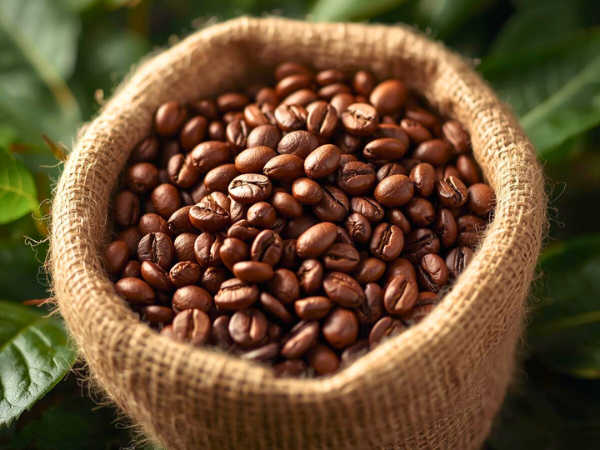
McDonald’s coffee has become a staple for millions of customers worldwide, offering a consistent flavor profile that balances affordability with quality. Let’s break down the beans, roasts, suppliers, and caffeine levels behind McDonald’s coffee.
McDonald’s Coffee: What Beans Do They Use?
McDonald’s uses 100% Arabica beans, chosen for their smoother taste and balanced acidity compared to harsher Robusta beans. These beans are sourced from regions such as Brazil, Colombia, Peru, and Honduras, ensuring a diverse flavor profile.
- 100% Arabica beans – smoother, less bitter taste.
- Sourced globally – Brazil, Colombia, Peru, Honduras.
- Rainforest Alliance certified – sustainable farming.
- Roasted in the U.S. – primarily by Gaviña Gourmet Coffee.
- Consistency focus – flavor maintained across locations.
By relying on Arabica beans, McDonald’s ensures its coffee appeals to everyday drinkers who prefer a mild, approachable flavor.
Is McDonald’s Coffee Arabica or Robusta?
Historically, McDonald’s experimented with blends of Arabica and Robusta beans, but today the chain exclusively uses Arabica beans. Arabica is prized for its smooth flavor, subtle sweetness, and moderate caffeine content, making it more appealing to a wide customer base. Robusta, while stronger and more caffeinated, often carries a bitter, earthy taste that doesn’t align with McDonald’s flavor goals.
- Arabica beans – smooth, slightly sweet, balanced acidity.
- Robusta beans – stronger, bitter, higher caffeine.
- Consumer preference – Arabica dominates global demand.
- McDonald’s choice – exclusively Arabica for consistency.
- Flavor profile – approachable, mild, everyday drink.
By committing to Arabica, McDonald’s positions its coffee as a reliable option for casual drinkers who want a pleasant taste without overwhelming bitterness.
McDonald’s Coffee Roasts: Light, Medium & Dark
McDonald’s offers a range of roast levels, with medium roast being the most common across its menu. Medium roast balances flavor and caffeine, producing a smooth, approachable taste.
- Light roast – mild flavor, higher acidity, slightly more caffeine.
- Medium roast – balanced taste, smooth finish, most popular.
- Dark roast – bold, rich, lower acidity, slightly less caffeine.
- McCafé specialty blends – seasonal roasts and flavored options.
- Consistency – roast levels standardized across locations.
This variety allows McDonald’s to cater to different preferences while maintaining a consistent brand identity.
Who Supplies McDonald’s Coffee Beans?
McDonald’s primary coffee supplier is Gaviña Gourmet Coffee, a family-owned roaster based in Vernon, California. Gaviña has partnered with McDonald’s since the early 1980s, ensuring consistent roasting and flavor quality.
- Gaviña Gourmet Coffee – main supplier since 1983.
- Roasting facility – Vernon, California.
- Global sourcing – Latin America and other regions.
- Sustainability focus – Rainforest Alliance certification.
- Long-term partnership – ensures consistency worldwide.
This partnership highlights McDonald’s commitment to quality control. By working closely with a dedicated supplier, the company ensures that every cup of coffee meets its flavor standards, regardless of location.
McDonald’s McCafé vs. Regular Coffee Explained
McDonald’s offers two main coffee experiences: regular brewed coffee and the McCafé line. Regular coffee is straightforward, brewed fresh with Arabica beans, while McCafé expands into espresso-based drinks like lattes, cappuccinos, and mochas.
- Regular coffee – simple, brewed Arabica, affordable.
- McCafé espresso drinks – lattes, cappuccinos, mochas.
- Customization – milk, syrups, flavors available.
- Target audience – McCafé appeals to specialty coffee drinkers.
- Global expansion – McCafé is a standalone brand in some markets.
McCafé bridges the gap between fast food and specialty coffee, making McDonald’s competitive with chains like Starbucks.
Caffeine Content in McDonald’s Coffee Drinks
McDonald’s caffeine levels vary by size, but they remain moderate compared to specialty coffee chains. A small brewed coffee contains 106–109 mg, a medium has about 145 mg, and a large ranges from 180–185 mg. Espresso-based drinks differ depending on the number of shots used.
- Small coffee – 106–109 mg caffeine.
- Medium coffee – ~145 mg caffeine.
- Large coffee – 180–185 mg caffeine.
- Espresso shot – ~71 mg caffeine each.
- McCafé lattes/cappuccinos – vary by size and milk content.
These levels make McDonald’s coffee a balanced choice for those who want a caffeine boost without the intensity of stronger brews.
Taste Profile: How McDonald’s Coffee Compares
McDonald’s coffee is often described as smooth, mild, and approachable, designed to appeal to a wide audience. Compared to specialty coffee shops, it may lack complexity, but it delivers consistency and affordability.
- Smooth flavor – mild acidity, balanced taste.
- Approachable – designed for everyday drinkers.
- Consistency – same flavor across locations.
- Affordable – lower price point than specialty cafés.
- Comparison – less complex than artisanal roasts, but reliable.
This taste profile reflects McDonald’s strategy: offering coffee that satisfies most customers without alienating those who dislike strong or bitter flavors. It’s a safe, reliable option for daily consumption.
Is McDonald’s Coffee Worth It? Price & Quality
McDonald’s coffee is widely considered good value for money, offering a reliable flavor at a lower price than specialty cafés. While it may not rival artisanal roasters in complexity, it delivers consistency, sustainability, and affordability.
- Affordable pricing – cheaper than Starbucks or Dunkin’.
- Consistent flavor – maintained across global locations.
- Sustainability – Rainforest Alliance certified beans.
- Accessibility – available worldwide, easy to find.
- Balanced choice – good for everyday coffee drinkers.
For customers seeking a dependable cup of coffee without spending extra, McDonald’s coffee is a practical choice. Its combination of sustainability, affordability, and smooth taste makes it a strong competitor in the fast-food coffee market.