
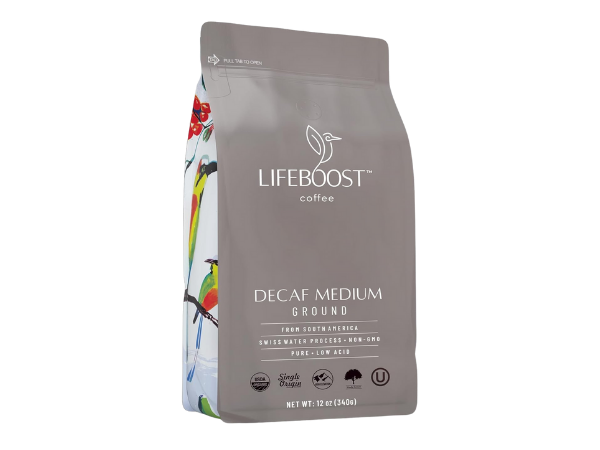
Medium Roast Decaf Coffee
Caffeine
2 – 10 mg
Note: Caffeine amounts are based on standard brewed Lifeboost Medium Roast Decaf using the Swiss Water Process.
| Attribute | Value |
|---|---|
| Caffeine Level | Very Low |
| Serving Size | 8 – 16 fl oz |
| Serving Size (ml) | 240 – 473 ml |
| Caffeine | 2 – 10 mg |
| Calories | 2 kcal |
| Sugar | – |
| Caffeine per fl oz | 0.25 – 0.6 mg/fl oz |
Lifeboost Medium Roast Decaf is a specialty coffee crafted for those who want the taste and aroma of premium coffee without the stimulating effects of caffeine.
What is Lifeboost Coffee?
Lifeboost Coffee is a brand known for producing organic, single‑origin beans grown in the mountains of Nicaragua. The company emphasizes health, sustainability, and purity, making it a popular choice among wellness‑focused coffee drinkers.
Defining traits of Lifeboost Coffee include:
- Single‑origin beans grown at high altitudes in Nicaragua
- Shade‑grown and hand‑picked for quality
- Certified organic and non‑GMO
- Low‑acid profile for sensitive stomachs
- Swiss Water Process decaffeination for chemical‑free caffeine removal
Together, these qualities make Lifeboost Coffee stand out in the specialty market. It’s not just about taste—it’s about producing coffee that aligns with health and sustainability values.
Flavor Profile and Roast Level of Lifeboost Medium Roast Decaf
Lifeboost Medium Roast Decaf is designed to deliver the balanced flavor of a medium roast while minimizing caffeine. Its roast level highlights the natural sweetness of the beans without overpowering bitterness.
Flavor notes include:
- Smooth, balanced body with mild acidity
- Hints of chocolate and caramel sweetness
- Subtle nutty undertones
- Clean finish without lingering bitterness
- Medium roast profile that preserves bean character
This flavor profile makes Lifeboost Medium Roast Decaf enjoyable for both casual drinkers and coffee enthusiasts.
Caffeine in Lifeboost Medium Roast Decaf Coffee by Cup Size
Decaf coffee isn’t completely caffeine‑free. Lifeboost Medium Roast Decaf contains trace amounts that vary depending on cup size and brewing strength.
Approximate caffeine content by cup size:
- 8 oz cup: 2–5 mg caffeine
- 12 oz cup: 3–7 mg caffeine
- 16 oz cup: 5–10 mg caffeine
- 20 oz cup: 7–12 mg caffeine
- 24 oz cup: 10–15 mg caffeine
These amounts are significantly lower than regular coffee, which averages 95 mg per 8 oz cup. For most people, the caffeine in Lifeboost Decaf is negligible, making it suitable for evening consumption or for those sensitive to caffeine.
Caffeine in Lifeboost Medium Roast Decaf Coffee by Espresso Shot
Espresso brewing concentrates caffeine, even in decaf beans. Lifeboost Medium Roast Decaf espresso shots contain slightly higher caffeine levels compared to drip servings.
Approximate caffeine content per shot:
- Single shot (1 oz): 3–6 mg caffeine
- Double shot (2 oz): 6–12 mg caffeine
- Triple shot (3 oz): 9–18 mg caffeine
While these numbers are small compared to regular espresso (which averages 63 mg per shot), they can add up if multiple shots are consumed.
Caffeine Content per Milliliter (ml)
Breaking caffeine down by milliliter helps illustrate how trace amounts scale with serving size. Lifeboost Medium Roast Decaf averages about 0.3–0.6 mg of caffeine per milliliter, depending on brew strength.
Approximate caffeine per ml:
- 1 ml: 0.3–0.6 mg
- 30 ml (espresso shot): 9–18 mg
- 240 ml (8 oz cup): 2–5 mg
- 355 ml (12 oz cup): 3–7 mg
- 473 ml (16 oz cup): 5–10 mg
Even at larger volumes, the caffeine content is far below that of regular coffee. For those tracking intake closely, this per‑ml perspective provides clarity and reassurance.
Bean Quality and Sourcing Behind Lifeboost Medium Roast Decaf
The caffeine content and flavor of Lifeboost Medium Roast Decaf are influenced by the quality and sourcing of its beans. Lifeboost emphasizes ethical and sustainable practices.
Bean quality highlights include:
- Grown at high altitudes for dense, flavorful beans
- Shade‑grown to preserve biodiversity
- Hand‑picked for ripeness and quality
- Swiss Water Process decaffeination for chemical‑free caffeine removal
- Certified organic and fair‑trade practices
The Swiss Water Process is particularly important, as it removes 99% of caffeine without altering taste.
Factors That Influence Caffeine Levels in Lifeboost Medium Roast Decaf
Even decaf coffee can vary in caffeine content depending on several factors. Lifeboost Medium Roast Decaf is no exception.
Influencing factors include:
- Decaffeination method – Swiss Water Process removes most caffeine but leaves trace amounts.
- Roast level – Medium roasts retain more bean character, which can slightly affect caffeine levels.
- Brewing method – Espresso concentrates caffeine more than drip brewing.
- Serving size – Larger cups naturally contain more caffeine.
- Bean density – High‑altitude beans may retain trace caffeine differently than lower‑altitude beans.
Understanding these factors helps consumers manage expectations. While Lifeboost Decaf is extremely low in caffeine, it’s not completely caffeine‑free.