
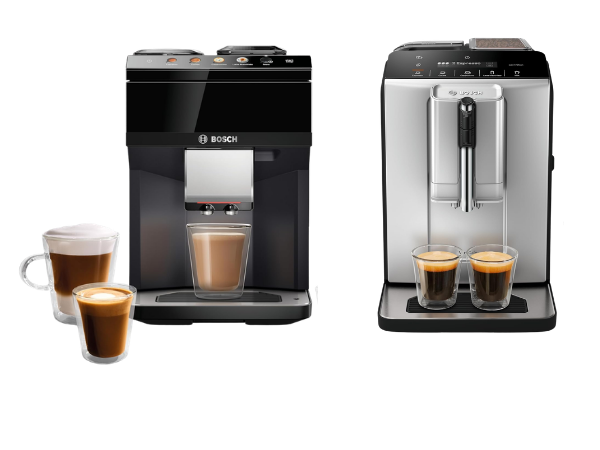
Bosch’s fully automatic espresso machines are designed to bring German engineering and convenience into the kitchen. The 300 and 500 Series models are popular choices for coffee enthusiasts who want reliable performance without stepping into the premium 800 Series.
Overview of Bosch 300 vs 500 Espresso Machines
The Bosch 300 Series is designed as an accessible entry point into bean-to-cup automation. It emphasizes simplicity, compactness, and affordability, making it suitable for beginners or households with limited space.
- Bosch 300 Series – Compact, affordable, basic automation.
- Bosch 500 Series – Larger capacity, more drink options, advanced features.
- Target Audience – 300 for beginners, 500 for balanced enthusiasts.
- Price Range – 300 is budget-friendly, 500 is mid-tier.
Ultimately, the 300 is best for simplicity seekers, while the 500 appeals to those who want more control without stepping into the premium 800 Series.
Key Differences Between Bosch 300 and 500 Series Explained
The differences between the Bosch 300 and 500 Series go beyond price. They reflect Bosch’s tiered approach to espresso automation. The 300 focuses on essential functionality, while the 500 introduces more customization and convenience.
- Capacity – 500 has larger water and bean containers.
- Automation – 500 offers more one-touch drink options.
- Customization – 500 allows finer adjustments to strength and volume.
- Design – 500 has a more modern interface compared to the 300.
These distinctions make the 500 a better fit for households with multiple coffee drinkers or those who enjoy experimenting with different beverages.
Design and Build Quality Comparison
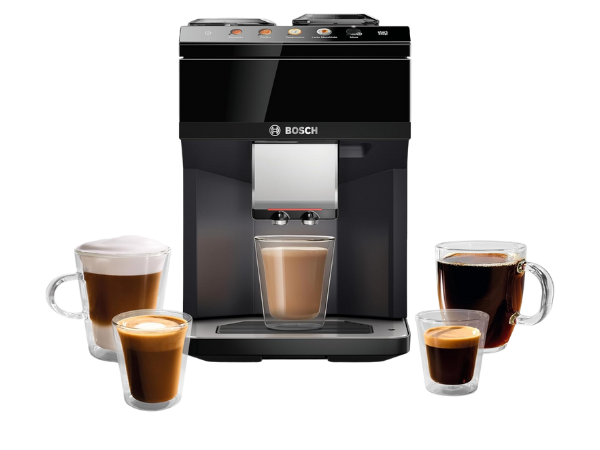
Bosch machines are known for their durability and sleek aesthetics. The 300 Series is compact, with a minimalist design that fits small kitchens. The 500 Series is slightly larger, with a more refined finish and improved interface.
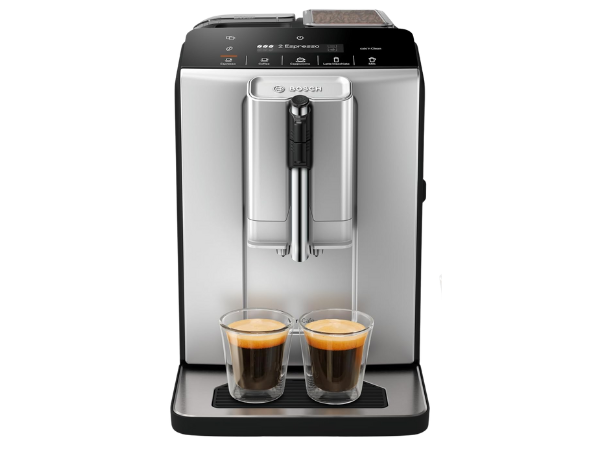
- Bosch 300 – Compact footprint, simple controls, durable plastic housing.
- Bosch 500 – Larger build, modern design, enhanced display.
- Build Quality – Both use Bosch’s reliable engineering standards.
The 500’s design feels more premium, making it a better fit for modern kitchens, while the 300 prioritizes practicality and space-saving.
Brewing Technology and Coffee Quality
The 300 Series uses Bosch’s standard brewing system, which ensures reliable espresso shots with balanced crema and aroma. It is designed for everyday use, focusing on simplicity and consistency rather than advanced customization.
- Bosch 300 Brewing System – Standard extraction process, reliable crema, consistent espresso quality.
- Bosch 500 Brewing System – Advanced temperature and pressure control, richer flavor extraction.
- Coffee Quality – 300 delivers dependable results, while 500 offers more nuanced taste.
- User Experience – 300 is beginner-friendly, 500 appeals to enthusiasts who want more control.
The 500’s ability to fine-tune brewing parameters makes it more appealing to coffee enthusiasts who want to experiment with strength and aroma.
Grinder Settings and Customization Options
One of the most important aspects of any espresso machine is its grinder, as grind size directly influences flavor, aroma, and crema quality. The Bosch 300 Series provides a straightforward grinder system with a limited number of settings, designed for ease of use and consistency.
- Bosch 300 Grinder – Basic grind settings, simple operation, consistent results.
- Bosch 500 Grinder – Wider range of grind adjustments, better control over flavor extraction.
- Customization Options – 500 allows personalization of strength, volume, and grind size.
- User Experience – 300 is beginner‑friendly, 500 appeals to enthusiasts who enjoy experimenting.
For users who enjoy tailoring their coffee, the 500 provides more flexibility, while the 300 keeps things simple.
Milk System Comparison: In-Cup Frother vs Milk Container
Milk preparation is one of the defining features that separates the Bosch 300 from the Bosch 500 Series. The Bosch 300 relies on a basic in‑cup frother, which requires the user to manually froth milk directly into the cup.
- Bosch 300 Milk System – Simple in‑cup frother, manual milk handling, compact design.
- Bosch 500 Milk System – Integrated milk container, automatic frothing, one‑touch cappuccinos and lattes.
- Convenience – 300 requires manual effort, 500 offers seamless automation.
- Target Audience – 300 suits black coffee drinkers, 500 is ideal for latte and cappuccino lovers.
While the Bosch 300’s frother is adequate for occasional milk drinks, it lacks the consistency and convenience of the 500’s container system.
Drink Variety and One-Touch Features
The Bosch 300 focuses on essential beverages such as espresso, lungo, and basic milk drinks, making it a straightforward option for users who primarily enjoy classic coffee styles. The Bosch 500 expands this selection significantly, offering a wider range of specialty drinks like cappuccino, latte macchiato, and flat white—all available at the touch of a button.
- Bosch 300 Drink Options – Espresso, lungo, black coffee, basic milk drinks.
- Bosch 500 Drink Options – Espresso, cappuccino, latte macchiato, flat white, and more specialty beverages.
- One‑Touch Features – 300 has limited automation, 500 offers expanded one‑touch menu for milk‑based drinks.
- User Experience – 300 suits minimalists, 500 caters to families or enthusiasts with varied preferences.
The Bosch 300 is ideal for those who value simplicity and primarily drink espresso or Americano. Meanwhile, the Bosch 500 elevates the coffee experience by offering café‑style drinks at the press of a button, saving time and ensuring consistency.
Ease of Use, Cleaning, and Maintenance
Bosch espresso machines are designed with user convenience in mind, but the 300 and 500 Series differ in how they handle daily operation and upkeep. The Bosch 300 emphasizes simplicity, with a straightforward interface and basic cleaning cycles.
- Bosch 300 Ease of Use – Simple buttons, beginner‑friendly interface, quick access to basic drinks.
- Bosch 500 Ease of Use – Modern touch display, streamlined navigation, more intuitive controls.
- Cleaning Features – 300 offers basic rinsing cycles, 500 adds automated milk system cleaning.
- Maintenance – Both require descaling and filter changes, but the 500 minimizes manual intervention.
For everyday use, the Bosch 300 is perfect for those who want a no‑fuss machine that delivers consistent coffee with minimal upkeep.
Price Comparison, Pros & Cons, and Final Verdict
Price is often the deciding factor when choosing between the Bosch 300 and 500 Series espresso machines. The Bosch 300 is positioned as the more affordable option, making it attractive to beginners or households that want reliable coffee without a large investment.
- Bosch 300 Pros – Affordable price, compact design, beginner‑friendly operation, consistent espresso quality.
- Bosch 300 Cons – Limited drink variety, basic milk frother, fewer customization options.
- Bosch 500 Pros – Wider beverage menu, automatic milk container system, advanced grinder settings, modern interface.
- Bosch 500 Cons – Higher cost, larger footprint, more complex for absolute beginners.
- Price Range – 300 is budget‑friendly, 500 sits in the mid‑tier bracket.
In conclusion, the Bosch 300 is the right choice for those who value simplicity, affordability, and compactness. It is perfect for espresso lovers who don’t need a wide range of milk‑based drinks.