
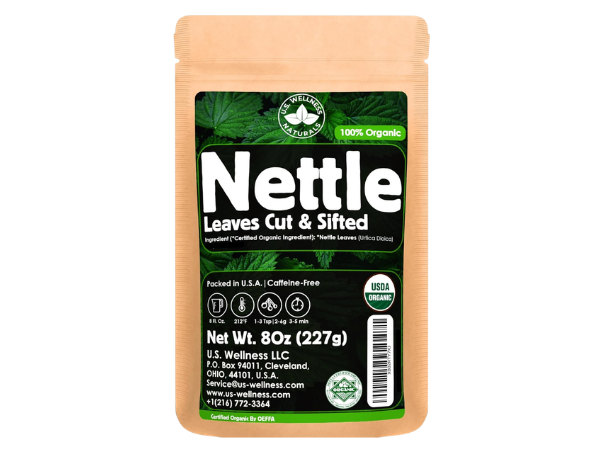
Nettle Tea – 100% USDA Certified ORGANIC
Caffeine
Free
Note: Nettle tea is naturally caffeine-free, unlike green or black tea. Nutritional values such as calories and sugar apply to plain brewed nettle tea without added sweeteners.
| Attribute | Value |
|---|---|
| Caffeine Level | Free |
| Serving Size | 1 cup (8 fl oz) |
| Serving Size (ml) | 240 ml |
| Caffeine | Free |
| Calories | 2–5 kcal |
| Sugar | 0 g |
| Ingredients | 100% USDA Organic Stinging Nettle Leaves (Urtica dioica) |
Nettle tea is one of the most respected herbal infusions in traditional medicine and modern wellness circles.
What Is Nettle Tea? Understanding This Herbal Infusion
Nettle tea is a herbal drink prepared from dried nettle leaves, often cut and sifted for easy brewing. Unlike black or green tea, which comes from the Camellia sinensis plant, nettle tea is purely herbal and does not contain caffeine.
- Botanical name: Urtica dioica
- Type: Herbal infusion, not true tea
- Origin: Traditionally harvested in Europe and North America
- Form: Loose leaves, cut & sifted
- Flavor: Smooth, mild, slightly grassy
Nettle tea stands out because it is both nourishing and gentle. It is often recommended for people who want a calming beverage that supports hydration without overstimulating the nervous system.
Does Nettle Tea Contain Caffeine or Is It Naturally Caffeine-Free?
One of the most important features of nettle tea is that it is naturally caffeine-free. Unlike green tea, black tea, or coffee, nettle leaves do not contain caffeine or related stimulants.
- Caffeine content: 0 mg
- Comparison: Coffee (95 mg per cup), Green tea (30–40 mg per cup)
- Benefits: No jitters, no insomnia, gentle on the stomach
- Suitable for: Pregnant women, children, caffeine-sensitive individuals
Because nettle tea is caffeine-free, it can be consumed throughout the day without concern for overstimulation. Many people enjoy it as a relaxing evening beverage or as a hydrating herbal drink during the day.
Nettle Tea Ingredients: What’s Inside Organic Stinging Nettle Leaves
The only ingredient in authentic nettle tea is dried nettle leaves. When sourced from USDA-certified organic farms or wild harvests, these leaves are free from pesticides, additives, and artificial flavorings.
- Ingredient: 100% nettle leaves (Urtica dioica)
- Form: Cut & sifted loose leaves
- Specialty: USDA Organic, plant-based, herbal
- Flavor profile: Mild, earthy, smooth
This single-ingredient composition highlights nettle tea’s authenticity. Unlike blended herbal teas, nettle tea is straightforward and unadulterated, allowing its natural properties to shine.
How Nettle Tea Is Made: From Wild Harvest to Loose Leaf
Nettle tea production often begins with wild harvesting in pristine environments. Co-op networks of local pickers carefully collect young nettle plants by hand, ensuring sustainability and quality. These harvests are then dried, cut, and sifted to create loose-leaf tea suitable for brewing.
- Harvest method: Hand-picked young nettle plants
- Processing: Drying, cutting, and sifting
- Certification: Inspected by Swiss Bio-Inspecta, USDA accredited
- Packaging: Loose-leaf form for optimal freshness
Ethical sourcing also supports local communities, providing guaranteed markets for co-op families. The result is a tea that embodies both tradition and modern quality standards.
Health Benefits of Nettle Tea: Why People Drink It
Nettle tea is consumed not only for its taste but also for its potential health benefits. Herbalists and wellness enthusiasts often recommend it for its anti-inflammatory, detoxifying, and immune-supporting properties.
- Anti-inflammatory: May help with joint pain and arthritis
- Detoxifying: Supports kidney and urinary tract health
- Immune support: Rich in antioxidants and vitamins
- Digestive aid: Gentle on the stomach, supports gut health
While scientific studies continue to explore nettle’s full potential, traditional use suggests that it can be a valuable addition to a balanced lifestyle. Many drinkers appreciate its soothing qualities and its role in natural wellness routines.
Nutritional Profile of Nettle Tea: Vitamins, Minerals, and Compounds
Nettle leaves are packed with nutrients, making nettle tea a nourishing beverage. They contain essential vitamins, minerals, and plant compounds that contribute to overall health.
- Vitamins: A, C, K, and several B vitamins
- Minerals: Iron, calcium, magnesium, potassium
- Plant compounds: Polyphenols, flavonoids, chlorophyll
- Benefits: Supports bone health, boosts energy, aids immunity
This nutritional richness sets nettle tea apart from many other herbal infusions. Drinking nettle tea can complement a balanced diet, providing trace nutrients that support wellness naturally.
Nettle Tea Taste and Flavor: What to Expect from Each Cup
Nettle tea has a distinctive flavor that is often described as smooth, mellow, and slightly grassy. Unlike bitter green teas or strong black teas, nettle tea offers a gentle taste experience.
- Flavor notes: Earthy, herbal, mild sweetness
- Texture: Milky smooth, soothing mouthfeel
- Best for: Relaxation, evening consumption, pairing with light meals
Its flavor profile makes nettle tea approachable for new herbal tea drinkers. The smoothness comes from its wild-harvest origins, where high-altitude environments contribute to its unique taste.
How to Brew Nettle Tea for Maximum Flavor and Benefits
Brewing nettle tea is simple but requires attention to detail to maximize flavor and health benefits.
- Water temperature: 200°F (just below boiling)
- Steeping time: 5–7 minutes
- Serving: 1–2 teaspoons of loose leaves per cup
- Enhancements: Add honey, lemon, or mint for variety
Proper brewing ensures that the tea retains its smooth flavor and nutrient content. Longer steeping times may intensify the flavor, while shorter times keep it lighter. Nettle tea can also be enjoyed iced, making it versatile for different preferences.
Potential Side Effects and Safety of Drinking Nettle Tea
Although nettle tea is generally safe, some individuals should exercise caution.
- Possible side effects: Mild stomach upset, allergic reactions
- Precautions: Consult a doctor if pregnant, breastfeeding, or on medication
- Safety: Avoid excessive consumption; moderation is key
- General advice: Always source from certified organic suppliers
For most people, nettle tea is a safe and beneficial beverage. However, like any herbal product, it should be consumed responsibly. Ensuring that the tea is sourced from reputable suppliers adds an extra layer of safety.