
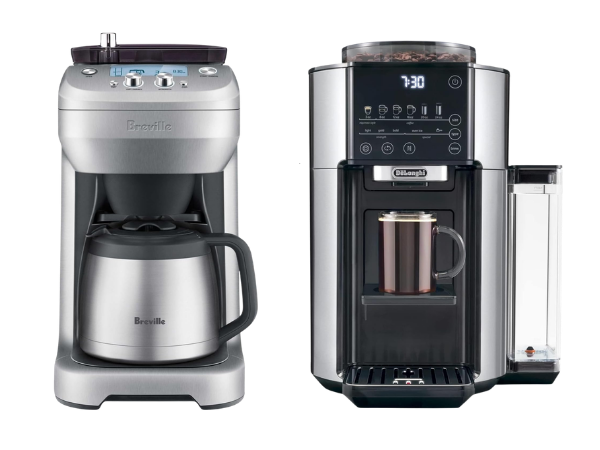
When choosing between the Breville Grind Control and the DeLonghi TrueBrew, coffee lovers are essentially deciding between two premium bean‑to‑cup machines designed for convenience, customization, and consistent flavor.
Breville Grind Control vs DeLonghi TrueBrew: Key Differences at a Glance
The Breville Grind Control emphasizes precision grinding and adjustable brew strength, while the DeLonghi TrueBrew focuses on automation and simplicity. Each machine appeals to a slightly different type of user.
- Breville Grind Control – Known for its stainless steel burr grinder, multiple strength settings, and programmable options.
- DeLonghi TrueBrew – Designed for effortless brewing with automatic adjustments, integrated cleaning cycles, and a sleek modern interface.
- Customization – Breville offers more manual control, whereas DeLonghi prioritizes consistency with minimal input.
Ultimately, the choice depends on whether you value control or convenience. Breville rewards experimentation, while DeLonghi ensures reliability with minimal effort.
Design, Build Quality, and Ease of Use
Both machines are built with durability in mind, but their design philosophies differ. Breville leans toward a professional, stainless‑steel aesthetic, while DeLonghi emphasizes sleek lines and modern minimalism.
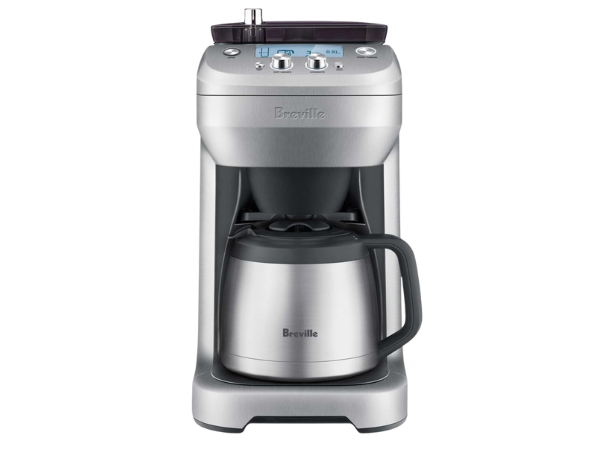
- Breville Design – Heavy stainless steel body, tactile buttons, and a clear LCD screen.
- DeLonghi Design – Compact footprint, touch controls, and a futuristic look.
- Ease of Use – Breville requires more manual input, while DeLonghi simplifies the process with automation.
- Durability – Both are built to last, but Breville’s heavier construction feels more industrial.
In practice, Breville appeals to users who enjoy a hands‑on approach, while DeLonghi TrueBrew is ideal for those who want a stylish machine that does most of the work automatically.
Brewing Technology and Coffee Quality Compared
Breville emphasizes precision and user control, while DeLonghi focuses on automation and consistency. Understanding these contrasts helps clarify which machine better suits different brewing preferences.
- Breville Brewing – Utilizes a burr grinder and adjustable pre‑infusion to maximize flavor extraction.
- DeLonghi Brewing – Employs proprietary TrueBrew technology that automatically adjusts grind size, water temperature, and brew time.
- Flavor Profile – Breville produces bold, customizable brews, while DeLonghi delivers smooth, balanced cups.
- Consistency – DeLonghi excels in repeatability, while Breville allows variation depending on user input.
Coffee quality is excellent in both cases, but Breville caters to those who want to experiment with flavor nuances, while DeLonghi guarantees a reliable cup every time.
Grinder Performance and Bean-to-Cup Brewing Experience
Breville emphasizes adjustability and precision, while DeLonghi prioritizes automation and quiet operation. These differences shape not only the brewing process but also the overall user experience.
- Breville Grinder – Stainless steel burr grinder with adjustable grind sizes.
- DeLonghi Grinder – Integrated grinder optimized for automation, less customizable.
- Noise Levels – Breville’s grinder is slightly louder, while DeLonghi’s is engineered for quieter operation.
- Bean-to-Cup Experience – Breville feels more manual, while DeLonghi delivers a seamless one‑touch process.
Breville’s grinder appeals to enthusiasts who want control over grind size, while DeLonghi’s system is perfect for those who prefer simplicity without sacrificing quality.

Brew Size Options, Strength Settings, and Customization
reville Grind Control and DeLonghi TrueBrew both offer customization, but they approach it differently. Breville emphasizes manual control and variety, while DeLonghi focuses on simplicity and consistency. This makes them suitable for different types of coffee drinkers.
- Breville Options – Multiple brew sizes, strength settings, and programmable features.
- DeLonghi Options – Limited customization but highly consistent results.
- Strength Control – Breville allows fine‑tuning, while DeLonghi offers preset strength levels.
- User Experience – Breville rewards experimentation, while DeLonghi simplifies decision‑making.
If you enjoy tailoring every cup to your mood, Breville is the better choice. If you prefer pressing one button and getting the same great result every time, DeLonghi wins.
Water Reservoir, Bean Hopper Capacity, and Maintenance
Breville Grind Control and DeLonghi TrueBrew differ in these areas, reflecting their design philosophies. Breville prioritizes larger capacity and flexibility, while DeLonghi emphasizes convenience and automation.
- Breville Reservoir – Large water tank suitable for multiple brews.
- DeLonghi Reservoir – Smaller but sufficient for single‑serve brewing.
- Bean Hopper – Breville offers a larger hopper, while DeLonghi’s is compact.
- Convenience Factor – DeLonghi reduces user effort, while Breville demands more involvement.
In practice, Breville Grind Control is better suited for families or workplaces where multiple cups are brewed daily, thanks to its larger reservoir and hopper.
Cleaning, Descaling, and Long-Term Maintenance Costs
Proper cleaning and descaling are essential for keeping any bean‑to‑cup machine running smoothly, and both Breville Grind Control and DeLonghi TrueBrew take different approaches to this.
- Breville Cleaning – Requires manual descaling and regular cleaning of grinder parts.
- DeLonghi Cleaning – Automated cleaning cycles reduce user effort.
- Cost of Maintenance – Breville may incur higher costs due to manual upkeep, while DeLonghi’s automation reduces expenses.
- Ease of Care – DeLonghi clearly wins in convenience, while Breville demands more attention.
For users who dislike maintenance, DeLonghi is the better option. Breville requires more effort but rewards with deeper control over the brewing process.
Which Coffee Maker Should You Buy? Final Verdict
Choosing between Breville Grind Control and DeLonghi TrueBrew depends on your priorities. Breville is perfect for coffee enthusiasts who enjoy experimenting with grind size, brew strength, and customization. DeLonghi TrueBrew is ideal for those who want a stylish, automated machine that delivers consistent results with minimal effort.
- Choose Breville – Best for households, enthusiasts, and those who value control.
- Choose DeLonghi – Best for individuals, busy professionals, and those who prefer convenience.
- Value Proposition – Breville offers flexibility at a lower long‑term cost, while DeLonghi provides premium automation.
- Final Thought – Both machines are excellent, but your lifestyle and brewing preferences should guide the decision.
If you want to experiment and fine‑tune every cup, Breville Grind Control is your match. If you want effortless, reliable coffee every morning, DeLonghi TrueBrew is the smarter investment.