
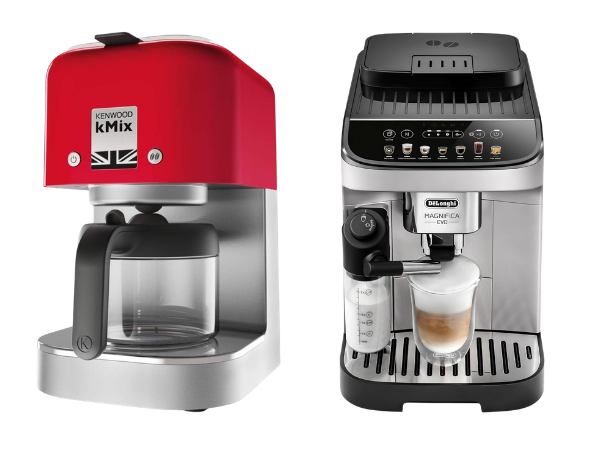
Kenwood, once known for its mechanical espresso machines, has largely faded from the modern market after DeLonghi acquired its small appliance division in 2018.
Kenwood vs DeLonghi Coffee Machines: An Overview
Kenwood machines are now mostly found secondhand, with models like the KM600 and KES020 prized for their tactile lever pulls and repairable design. DeLonghi, however, offers modern convenience with bean-to-cup systems, thermoblock heating, and automatic milk frothing.
- Kenwood Heritage – Mechanical designs, lever pulls, brass portafilters.
- DeLonghi Range – Fully automatic, semi-automatic, and capsule machines.
- Market Presence – DeLonghi dominates retail; Kenwood is niche.
- User Appeal – Kenwood for enthusiasts, DeLonghi for convenience seekers.
Kenwood appeals to purists who value tradition, while DeLonghi caters to modern households needing consistency and ease of use.
Difference 1: Coffee Machine Types and Brewing Systems
Kenwood’s machines are primarily manual or semi-automatic, requiring skill to achieve consistent results. DeLonghi offers thermoblock and dual-boiler systems, ensuring stable temperatures and programmable brewing.
- Kenwood Manual Systems – Lever-based, thermoblock heating, hands-on brewing.
- DeLonghi Automatic Systems – Bean-to-cup, PID temperature control, programmable shots.
- Hybrid Options – DeLonghi Flex models with manual overrides.
- Consistency – DeLonghi excels in thermal stability; Kenwood fluctuates.
Kenwood machines demand skill but reward with tactile brewing. DeLonghi ensures repeatable results with minimal effort, making them better suited for busy households.

Difference 2: Coffee Quality and Brewing Performance
Kenwood machines can produce excellent espresso when handled correctly, but lack modern PID controls. DeLonghi’s models deliver consistent extraction, meeting Specialty Coffee Association standards.
- Kenwood Flavor Profile – Rich crema, but variable shot quality.
- DeLonghi Performance – Stable pressure, consistent taste.
- Extraction Consistency – DeLonghi maintains ±1°C stability.
- User Experience – Kenwood requires skill; DeLonghi is beginner-friendly.
Kenwood appeals to those who enjoy experimenting, while DeLonghi guarantees café-quality results without the learning curve.
Difference 3: Milk Frothing and Drink Options
Kenwood’s older models typically feature a manual steam wand, which requires the user to master frothing techniques. DeLonghi, however, has invested heavily in automation, offering systems like LatteCrema that deliver consistent microfoam at the touch of a button.
- Kenwood Steam Wands – Manual frothing, skill-dependent.
- DeLonghi LatteCrema – Automatic frothing, microfoam consistency.
- Drink Variety – DeLonghi supports cappuccino, latte, macchiato.
- User Skill – Kenwood requires barista technique.
DeLonghi clearly wins for milk-based drinks, offering convenience and variety, while Kenwood appeals to purists who enjoy manual frothing.
Difference 4: Controls and Ease of Use
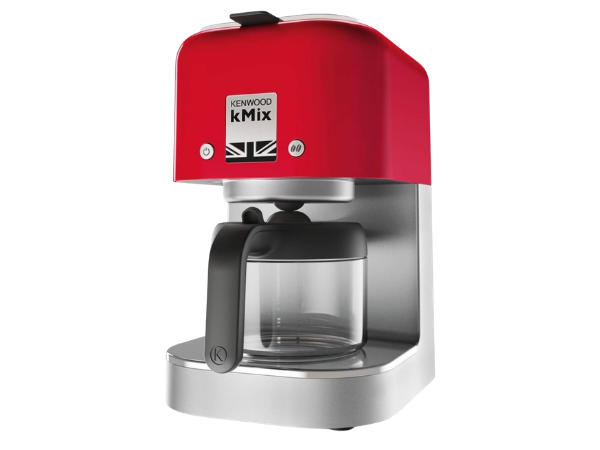
Kenwood’s older espresso machines rely on mechanical knobs, switches, and levers, which give users a tactile, hands-on brewing experience. DeLonghi, however, has embraced modern technology, offering digital displays, programmable menus, and even app connectivity in some models.
- Kenwood Controls – Mechanical, tactile, minimal automation.
- DeLonghi Interfaces – Digital displays, programmable menus.
- Ease of Use – DeLonghi is beginner-friendly.
- Learning Curve – Kenwood requires practice.
Kenwood offers a nostalgic, hands-on feel, while DeLonghi prioritizes convenience and accessibility.
Difference 5: Design, Size, and Build Quality
Kenwood’s older espresso machines were built with heavy-duty metals like brass and stainless steel, giving them a rugged, industrial feel. DeLonghi, by contrast, emphasizes sleek, modern aesthetics with a mix of stainless steel and durable plastics.
- Kenwood Build – Brass, steel, durable.
- DeLonghi Design – Compact, stylish, modern.
- Size Comparison – Kenwood bulky; DeLonghi space-efficient.
- Durability – Kenwood lasts decades; DeLonghi optimized for modern use.
Kenwood machines appeal to enthusiasts who appreciate vintage craftsmanship and don’t mind the extra space they occupy.
Difference 6: Cleaning and Maintenance
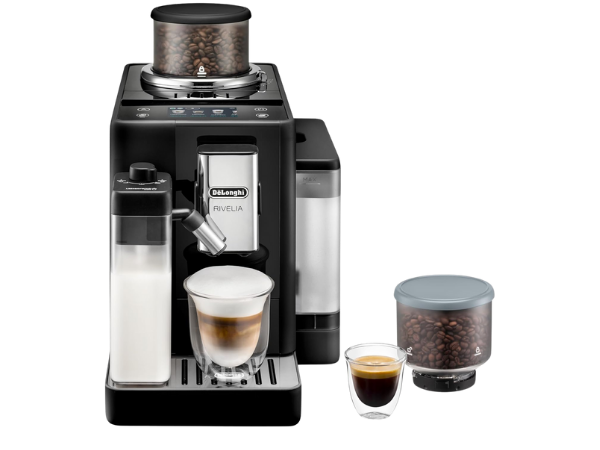
Kenwood’s older models, built with heavy-duty metals, require manual upkeep. DeLonghi, on the other hand, has prioritized convenience by integrating automatic cleaning cycles, removable drip trays, and dishwasher-safe components.
- Kenwood Maintenance – Manual descaling, part replacement.
- DeLonghi Cleaning – Automatic rinsing, dishwasher-safe parts.
- Ease of Care – DeLonghi is simpler.
- Longevity – Kenwood lasts longer if maintained.
Kenwood’s machines reward careful owners with exceptional longevity, often lasting decades if properly maintained. However, they demand dedication and mechanical awareness.
Difference 7: Price, Features, and Overall Value
Price and overall value are often the deciding factors when choosing between Kenwood and DeLonghi coffee machines. Kenwood’s machines, being mostly vintage or discontinued, are typically found secondhand at affordable prices.
- Kenwood Pricing – Affordable secondhand, limited availability.
- DeLonghi Pricing – $399–$2290 depending on model.
- Feature Range – Automatic frothing, programmable brewing.
- Value Comparison – DeLonghi offers modern convenience; Kenwood offers nostalgia.
Kenwood machines are best for those who appreciate vintage engineering and don’t mind manual brewing. Their affordability makes them attractive to collectors, but they require effort and skill.