
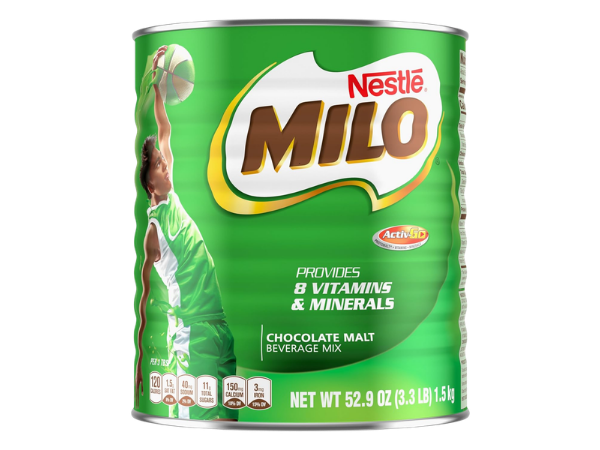
Caffeine
2.2–4.8 mg
Note: Caffeine amounts are based on the cocoa content in Milo powder and can vary slightly depending on preparation method (hot vs. cold, milk vs. water).
| Attribute | Value |
|---|---|
| Caffeine Level | Very Low |
| Serving Size | 20 g powder |
| Serving Size (ml) | 200–250 ml |
| Total Caffeine | 2.2–4.8 mg |
| Calories | 80–110 kcal |
| Sugar | 8–12 g |
Milo Chocolate Milk by Nestlé is a globally recognized malted chocolate drink that has been enjoyed for decades by children and adults alike.
What Is Milo Chocolate Milk?
Milo is a malted chocolate powder created by Nestlé in 1934 in Australia. It was designed to provide energy and nutrition to children during the Great Depression. Today, Milo is sold in over 40 countries and is often prepared by mixing the powder with hot or cold milk or water.
- Cocoa base – Provides chocolate flavor and small amounts of caffeine.
- Malted barley – Adds a nutty, roasted taste and contributes to energy.
- Milk solids – Boosts protein and calcium content.
- Sugar content – Enhances sweetness and energy supply.
- Global popularity – Consumed in Asia, Africa, Australia, and beyond.
Milo is more than just a chocolate drink; it is a cultural staple in many countries, often associated with sports, school lunches, and family traditions.
How Much Caffeine Is in Milo Chocolate Milk?
Milo contains a modest amount of caffeine, primarily from its cocoa content. A standard serving of 20 g of Milo powder mixed with water or milk provides approximately 2.2–4.8 mg of caffeine.
- Serving size – 20 g of powder per cup.
- Caffeine range – 2.2–4.8 mg per serving.
- Comparison to coffee – Coffee averages 95 mg per cup.
- Comparison to tea – Tea averages 30–50 mg per cup.
- Comparison to soda – Cola averages 30–40 mg per can.
Because Milo’s caffeine content is minimal, it does not pose the same risks of overstimulation as stronger caffeinated beverages.
Milo Nutrition Facts: Calories, Sugar, and Protein Breakdown
Beyond caffeine, Milo’s nutritional profile is what makes it popular among families. It provides energy through carbohydrates and sugar, while also offering protein and vitamins when prepared with milk.
- Calories – Around 80–110 calories per serving (depending on preparation).
- Sugar – Approximately 8–12 g per serving.
- Protein – 2–3 g per serving, higher when mixed with milk.
- Vitamins – Fortified with B vitamins for energy metabolism.
- Minerals – Contains calcium, iron, and magnesium.
Milo is often marketed as a nutritious drink for active children, but its sugar content should be considered. When paired with milk, Milo becomes a more balanced beverage, offering protein and calcium alongside its sweet flavor.
Does Milo Contain Caffeine from Cocoa and Barley Malt?
The caffeine in Milo comes primarily from cocoa, while barley malt contributes flavor and energy but not caffeine. Cocoa naturally contains small amounts of caffeine and theobromine, both mild stimulants.
- Cocoa caffeine – Main source of caffeine in Milo.
- Barley malt – Adds carbohydrates and flavor, not caffeine.
- Theobromine – A mild stimulant found in cocoa.
- Flavor balance – Cocoa and malt create Milo’s signature taste.
- Nutritional synergy – Cocoa and malt together provide energy.
This combination makes Milo unique compared to pure cocoa drinks or malted beverages. It delivers a mild stimulant effect without being overwhelming, making it suitable for daily consumption.
How Milo’s Caffeine Content Affects Kids and Teens
Children and teenagers are more sensitive to caffeine than adults. Milo’s low caffeine content makes it a safer choice compared to sodas or energy drinks, but sugar intake should still be monitored.
- Safe caffeine levels – Recommended under 45 mg/day for children.
- Milo’s contribution – Only 2–5 mg per serving.
- Sugar impact – Excess sugar can affect energy and mood.
- Balanced nutrition – Adding milk improves protein and calcium intake.
- Parental guidance – Moderation is key for healthy habits.
Milo can be part of a balanced diet for kids and teens, especially when consumed with milk. However, parents should ensure it does not replace water or healthier snacks.
Milo Hot vs. Cold: Does Preparation Change Caffeine Levels?
Whether Milo is prepared hot or cold, its caffeine content remains the same. The difference lies in taste, texture, and how the body absorbs the drink.
- Hot Milo – Comforting, often consumed in the morning or evening.
- Cold Milo – Refreshing, popular in tropical climates.
- Caffeine stability – Heat does not alter caffeine levels.
- Flavor differences – Hot Milo tastes richer, cold Milo lighter.
- Cultural preferences – Hot Milo is common in Australia, cold Milo in Southeast Asia.
The choice between hot and cold Milo is more about personal preference than nutrition. Both versions deliver the same mild caffeine boost and nutritional benefits.
Is Milo a High-Caffeine Drink or Low-Stimulant Beverage?
Compared to coffee, tea, and sodas, Milo is clearly a low-stimulant beverage. Its caffeine levels are minimal, making it more of a nutritional drink than a stimulant.
- Low caffeine – Only 2–5 mg per serving.
- Comparison to coffee – Coffee has 20x more caffeine.
- Comparison to energy drinks – Energy drinks can exceed 100 mg.
- Nutritional focus – Milo emphasizes vitamins and minerals.
- Safe for kids – Suitable for children when consumed moderately.
Milo should be considered a low-stimulant, family-friendly beverage. Its appeal lies in taste, nutrition, and cultural significance rather than caffeine content.