
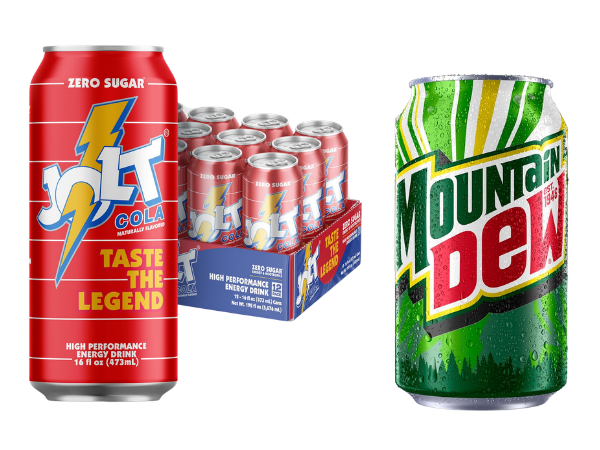
While Mountain Dew is a mainstream soda produced by PepsiCo, Jolt Cola gained notoriety in the 1980s and 1990s for its extreme caffeine content and marketing slogan “All the sugar and twice the caffeine.”
Key Differences Between Mountain Dew and Jolt
Mountain Dew and Jolt Cola differ in branding, formulation, and consumer perception. Mountain Dew is marketed as a citrus-flavored soda with a youthful, adventurous image, while Jolt Cola was positioned as a rebellious, high-caffeine alternative to traditional colas.
Key distinctions include:
- Flavor Profile – Mountain Dew has a citrus-forward taste, while Jolt is closer to a classic cola flavor.
- Brand Identity – Mountain Dew emphasizes extreme sports and youth culture; Jolt focused on caffeine intensity.
- Market Reach – Mountain Dew is globally distributed; Jolt was niche and cult-like.
Together, these differences show how each drink carved out its own identity in the beverage market, appealing to distinct consumer groups.
Caffeine Content in Mountain Dew vs. Jolt
Caffeine is the defining element that separates Mountain Dew and Jolt Cola in the minds of consumers. Both drinks are designed to provide stimulation, but their caffeine levels differ in ways that affect how people experience them.
Caffeine comparison highlights:
- Mountain Dew caffeine – ~54 mg per 12 fl oz, moderate but above average for sodas.
- Jolt Cola caffeine – ~71 mg per 12 fl oz, marketed as “twice the caffeine” of regular colas.
- Energy impact – Jolt provides a sharper stimulant effect, while Mountain Dew balances flavor with energy.
- Consumer perception – Mountain Dew is seen as adventurous and fun; Jolt as intense and utilitarian.
This difference means that Jolt Cola was often chosen by those who wanted maximum alertness, while Mountain Dew appealed to a broader audience who valued taste and lifestyle branding alongside a caffeine kick.
Sugar Content Compared
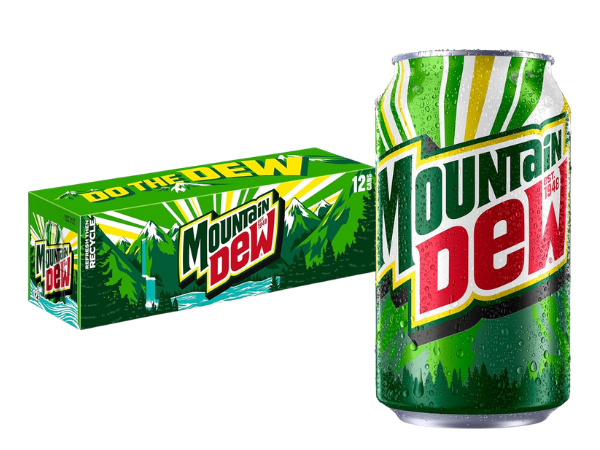
Mountain Dew is known for its sweetness, containing about 46 grams of sugar per 12 fl oz, which makes it one of the highest-sugar sodas on the market. Jolt Cola, while still sweet, has slightly less at 37 grams per 12 fl oz.
Sugar comparison highlights:
- Mountain Dew sugar – ~46 g per 12 fl oz, contributing to its bold sweetness.
- Jolt Cola sugar – ~37 g per 12 fl oz, still high but less than Mountain Dew.
- Flavor impact – Mountain Dew’s higher sugar makes it taste more intense and citrusy.
- Energy crash risk – Higher sugar can lead to faster energy drops after consumption.
This means Mountain Dew delivers a sweeter, more calorie-dense experience, while Jolt Cola provides a slightly lighter sugar load with stronger caffeine.
Calories and Serving Size Compared
Mountain Dew contains about 170 calories per 12 fl oz, largely due to its higher sugar content. Jolt Cola, on the other hand, has approximately 150 calories per 12 fl oz, making it slightly lighter in terms of caloric load.
Calories and serving size highlights:
- Mountain Dew calories – ~170 per 12 fl oz, higher due to sugar.
- Jolt Cola calories – ~150 per 12 fl oz, slightly lower overall.
- Serving variety – Mountain Dew offers more packaging options, including large bottles and fountain drinks.
- Portion impact – Larger servings increase calorie intake quickly, especially with Mountain Dew.
This comparison shows that while both sodas are indulgent, Mountain Dew tends to be more calorie-heavy, especially when consumed in larger portions.
Mountain Dew vs. Jolt: Ingredients and Formulas
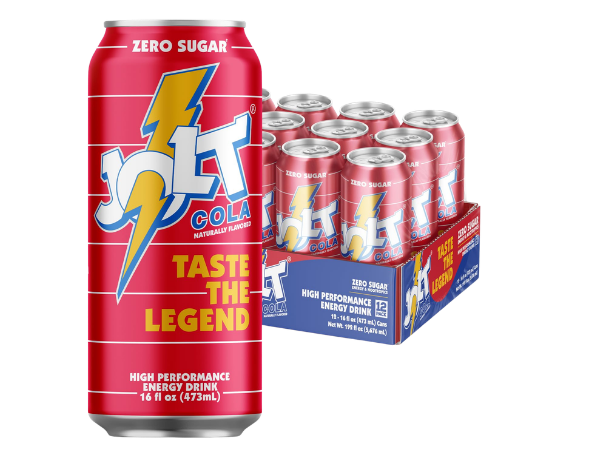
Mountain Dew includes carbonated water, high fructose corn syrup, citric acid, natural flavors, sodium benzoate, caffeine, and Yellow 5 dye. Jolt Cola’s formula was more straightforward, with carbonated water, sugar, caramel color, phosphoric acid, caffeine, and natural flavors.
Ingredient highlights:
- Mountain Dew formula – Known for Yellow 5 dye and citrus flavoring
- Jolt Cola formula – Classic cola base with higher caffeine
- Additives – Mountain Dew uses more artificial coloring and flavoring
This comparison shows that Mountain Dew’s formula is designed to stand out visually and taste-wise, with its neon color and bold citrus notes. Jolt Cola, by contrast, focused on delivering a straightforward cola flavor with a caffeine punch.
Which Drink Has More Caffeine and Sugar?
Jolt Cola clearly wins in terms of caffeine strength, offering about 71 mg per 12 fl oz, while Mountain Dew provides 54 mg per 12 fl oz. This makes Jolt the stronger stimulant, appealing to those who want maximum alertness.
Caffeine and sugar comparison:
- Caffeine winner – Jolt Cola, with ~30% more caffeine per serving.
- Sugar winner – Mountain Dew, with ~25% more sugar per serving.
- Energy effect – Jolt delivers sharper stimulation; Mountain Dew provides sweetness-driven energy spikes.
- Consumer choice – Those seeking caffeine intensity lean toward Jolt, while flavor enthusiasts prefer Mountain Dew.
In summary, Jolt Cola is the stronger option for caffeine, making it ideal for those who need a quick boost in focus or wakefulness.
Mountain Dew vs. Jolt: Nutrition Comparison Chart
Nutrition comparisons help highlight the differences between Mountain Dew and Jolt Cola beyond taste and branding. Both drinks deliver energy through caffeine and sugar, but their nutritional profiles show distinct strengths and weaknesses.
| Drink | Caffeine (mg/12 fl oz) | Sugar (g/12 fl oz) | Calories (per 12 fl oz) |
|---|---|---|---|
| Mountain Dew | 54 | 46 | 170 |
| Jolt Cola | 71 | 37 | 150 |
This chart makes it clear: Jolt Cola is the stronger stimulant with more caffeine, while Mountain Dew is sweeter and more calorie-dense. Consumers who prioritize energy intensity may prefer Jolt, while those who enjoy bold citrus flavor and don’t mind extra sugar lean toward Mountain Dew.