
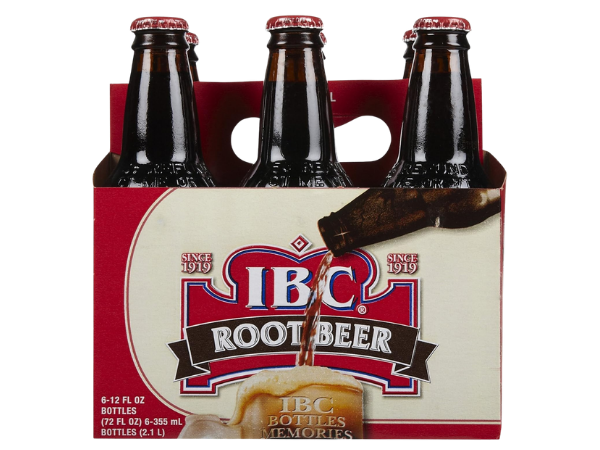
Caffeine
Free
Note: Nutrition values are based on a standard 12 fl oz bottle of IBC Root Beer. Actual amounts may vary slightly depending on bottling location and formulation.
| Attribute | Value |
|---|---|
| Caffeine Level | Free |
| Serving Size | 12 fl oz |
| Serving Size (ml) | 355 ml |
| Sodium | 65 mg |
| Sugar | 40 g |
| Calories | 160 kcal |
IBC Root Beer is one of the most iconic American soft drinks, known for its nostalgic glass bottles and smooth, creamy flavor.
What Is IBC Root Beer? A Brief Brand Overview
IBC Root Beer was first introduced in 1919 by the Independent Breweries Company in St. Louis, Missouri. Its old-fashioned glass bottles and rich flavor quickly made it a favorite among soda lovers.
- Founded in 1919 – Originated in St. Louis, Missouri.
- Classic glass bottles – Distinctive packaging that enhances the vintage appeal.
- Owned by Keurig Dr Pepper – Part of a major beverage portfolio today.
- Traditional recipe – Focuses on creamy vanilla and sassafras-inspired notes.
- Diet version available – Offers a sugar-free alternative.
This brand overview highlights why IBC Root Beer remains popular more than a century later. Its heritage, combined with a smooth taste and iconic presentation, makes it stand out in the crowded soda market.
Does IBC Root Beer Contain Caffeine?
The short answer is no—IBC Root Beer does not contain caffeine. This applies to both the regular and diet versions. Unlike colas, which rely on caffeine from kola nuts or added stimulants, root beer recipes are traditionally caffeine-free.
- Regular IBC Root Beer – 0 mg caffeine per 12 fl oz bottle.
- Diet IBC Root Beer – Also caffeine-free.
- Comparison with Barq’s – Barq’s contains ~20 mg caffeine, unlike IBC.
- Safe for kids – No stimulant effects.
- Good for sensitive individuals – Suitable for those avoiding caffeine.
The absence of caffeine in IBC Root Beer is not just a marketing choice but a continuation of root beer’s heritage as a family-friendly, herbal-inspired soda.
Why Most Root Beers Are Naturally Caffeine-Free
Root beer’s origins lie in herbal tonics made from sassafras root and other botanicals. These ingredients provided flavor and aroma but not caffeine. Unlike colas, which were designed to deliver stimulation, root beer was meant to be refreshing and soothing.
- Herbal roots – Sassafras and sarsaparilla were traditional flavor bases.
- Vanilla and spices – Added for creaminess and complexity.
- No kola nut – Root beer recipes never included caffeine sources.
- Family-friendly tradition – Marketed as a wholesome alternative to alcohol.
- Modern continuation – Most brands still avoid caffeine today.
This historical context explains why IBC and many other root beers remain caffeine-free. It’s part of the drink’s identity as a sweet, nostalgic soda rather than a stimulant beverage.
Ingredients Found in IBC Root Beer
IBC Root Beer is crafted to deliver a smooth, creamy taste that feels nostalgic yet refreshing. Its formula is simple compared to colas or energy drinks, but each ingredient plays a specific role in shaping the flavor, texture, and appearance.
- Carbonated water – Provides fizz and refreshment.
- High fructose corn syrup – Main sweetener in regular IBC.
- Caramel color – Gives the drink its deep brown hue.
- Natural and artificial flavors – Vanilla, spices, and herbal notes.
- Preservatives – Maintain freshness and shelf life.
Together, these ingredients create the signature taste of IBC Root Beer: smooth, sweet, and slightly creamy, perfect for enjoying on its own or in a float.
IBC Root Beer Nutrition Facts and Health Considerations
IBC Root Beer is a nostalgic soda that delivers flavor without caffeine, but its nutrition profile is important to understand for anyone mindful of health. While it avoids stimulants, the drink is still a sweetened beverage, meaning sugar and calories are the primary concerns.
- Calories – About 160 per 12 fl oz bottle.
- Sugar – Roughly 40 g per serving.
- Sodium – Around 65 mg per bottle.
- No fat or protein – Purely carbohydrate-based.
- Diet version – Lower calories, sugar-free.
Health-conscious consumers should be aware of the sugar load, but the caffeine-free nature makes it safer for children and those avoiding stimulants.
How Much Sugar Is in IBC Root Beer?
Sugar is the most significant nutritional factor in IBC Root Beer. While the drink is caffeine-free, it contains a substantial amount of sweetness that contributes to its rich, creamy flavor. For those monitoring sugar intake, this is the key detail to pay attention to.
- 40 g sugar – Equivalent to ~10 teaspoons.
- High fructose corn syrup – Primary sweetener.
- Diet alternative – Uses artificial sweeteners instead.
- Comparison with colas – Similar sugar levels to Coke or Pepsi.
- Moderation advised – Excess sugar linked to health risks.
This makes IBC Root Beer a treat rather than an everyday beverage. Choosing the diet version can help reduce sugar intake while still enjoying the flavor.
Can Kids and Sensitive Individuals Drink IBC Root Beer?
Yes, IBC Root Beer is safe for children and people sensitive to caffeine. Its caffeine-free formula ensures no stimulant effects, making it a family-friendly soda.
- Safe for kids – No caffeine, but watch sugar intake.
- Good for sensitive individuals – No risk of jitters or insomnia.
- Diet option – Lower sugar alternative.
- Root beer floats – Fun treat for children.
- Moderation – Important due to sugar content.
In summary, IBC Root Beer is a family-friendly soda that avoids the downsides of caffeine, making it suitable for kids, teens, and adults who want a sweet drink without the buzz. The only nutritional consideration is sugar, which means moderation is key.