
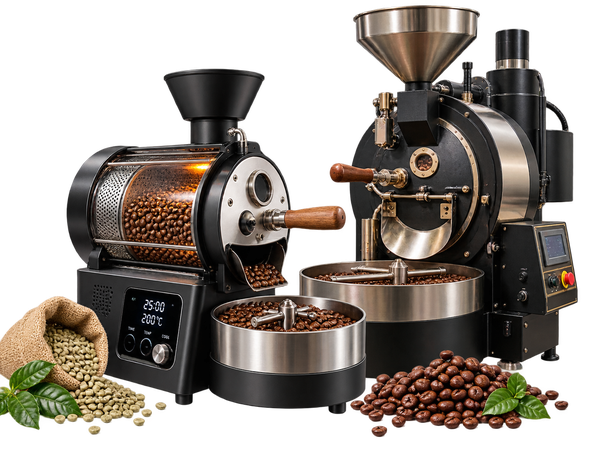
A coffee roaster machine turns green coffee beans into roasted beans by applying controlled heat. The right machine depends on where you roast, how much coffee you need, and how much control you want over the roast.
What Is a Coffee Roaster Machine and How Does It Work?
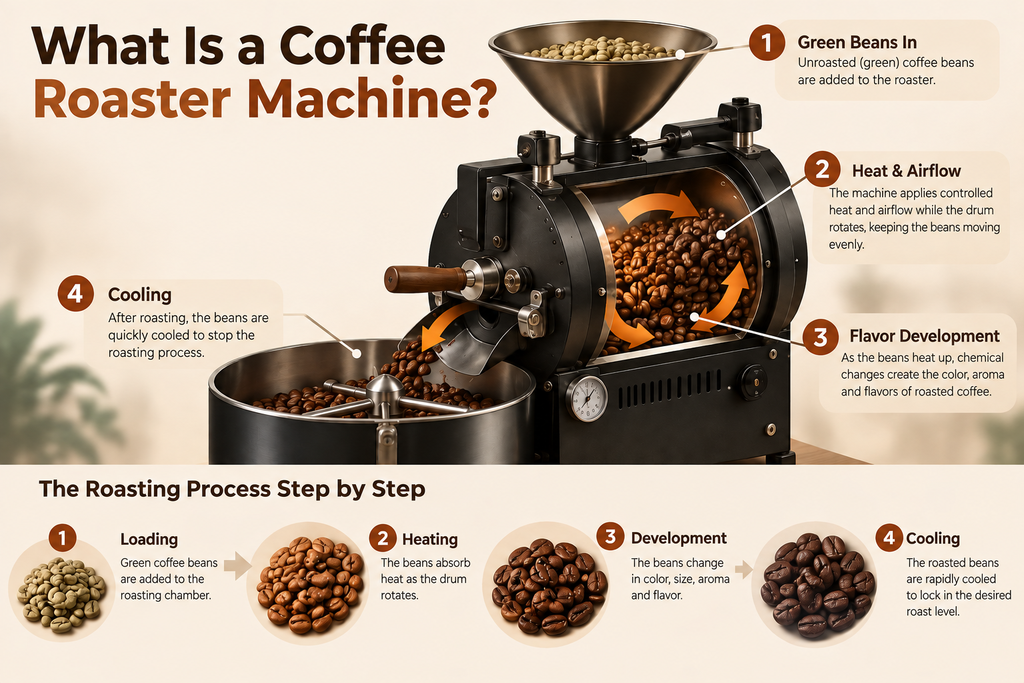
A coffee roaster machine heats green coffee beans while moving them through the roasting chamber. As the beans heat up, they change in color, size, aroma, and flavor.
The basic roasting process includes:
- Loading – Green coffee beans are added to the roasting chamber.
- Heating – The beans gradually absorb heat.
- Development – Chemical reactions create the color and flavors associated with roasted coffee.
- Cooling – The roasted beans are rapidly cooled to stop the roasting process.
The amount of control available varies considerably between home, small-business, and commercial machines.
Coffee Roaster Machine Guide by User and Business Type
The best coffee roaster is largely determined by how you plan to use it. A compact home machine does not need the same capacity or construction as a commercial roaster.
Coffee Roaster Machine for Home
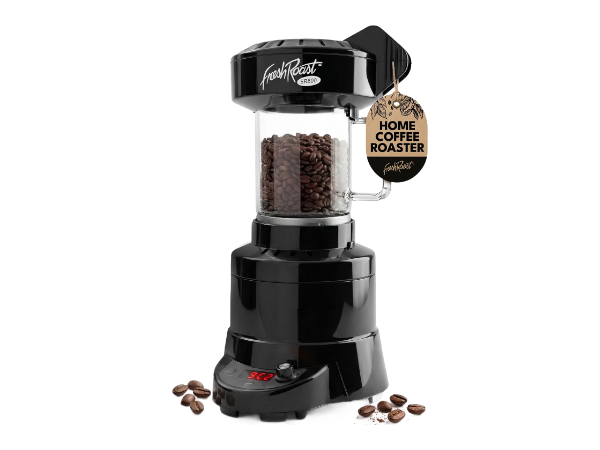
Home coffee roasters are designed for smaller batches and convenient operation. Compact electric models are often practical when space and ventilation are limited.
Look for:
- Small batch capacity
- Straightforward temperature controls
- Easy cleaning
- Compact dimensions
- A reliable cooling system
A home roaster is a good choice for experimenting with different beans and roast levels without investing in commercial equipment.
Coffee Roaster Machine for Small Business
Small-business roasting requires more capacity and consistency than typical home roasting. The machine should be capable of handling repeated batches without making the process unnecessarily complicated.
Important factors include batch capacity, temperature control, cooling performance, durability, and the ability to repeat roast profiles.
For a growing coffee business, choosing a machine with some additional capacity can also provide room for future production.
Coffee Roaster Machine for Commercial Use
Commercial coffee roasters are designed for higher production volumes and frequent use. They generally require more space, stronger ventilation, and a suitable electrical or gas setup.
Commercial buyers should consider:
- Batch capacity
- Heating system
- Airflow control
- Roast repeatability
- Cooling speed
- Ventilation requirements
- Maintenance and service
The right capacity depends on your expected production rather than simply choosing the largest machine available.
Coffee Roaster Machine for Beginners
Beginners usually benefit from a machine that makes the roasting process easier to understand. Complex controls can be useful later, but they may make the learning curve steeper.
A beginner-friendly roaster should offer clear temperature control, simple operation, good visibility, and manageable batch sizes.
Coffee Roaster Machine Types: Electric, Gas & Drum
Coffee roasters use different heating and roasting systems. Electric and gas models are the most common categories, while drum roasting describes the way beans are moved and heated inside the machine.
Electric Coffee Roasters
Electric machines use heating elements and are often convenient for home and small-scale roasting.
Advantages:
- Easy installation compared with many gas systems
- Precise electronic controls on some models
- Suitable for smaller spaces
- Convenient for home use
Gas Coffee Roasters
Gas roasters use a burner as their primary heat source. They are common in larger roasting setups where higher output is required.
Advantages:
- High heat output
- Suitable for larger batches
- Greater flexibility for some roasting applications
They may require appropriate gas connections and ventilation, so installation requirements should be checked before purchase.
Drum Coffee Roasters
Drum roasters use a rotating drum to keep the beans moving while they roast. This design is widely used across different machine sizes.
A drum system can provide consistent bean movement and allows the roaster to manage the progression of the roast through temperature and airflow adjustments.
What Coffee Roaster Size Do You Need?
Roaster capacity should match your typical batch size and production needs. Buying a machine that is significantly larger than necessary can increase cost and space requirements, while a machine that is too small may require excessive batches.
| Roaster Size | Suitable For |
|---|---|
| Small batch | Home roasting and testing |
| Around 1 kg | Serious home users and small production |
| 2–5 kg | Small businesses and growing roasting operations |
| 5 kg+ | Higher-volume commercial roasting |
When comparing capacities, check whether the manufacturer’s stated capacity represents the recommended roasting load or the maximum capacity.
Key Features to Look for in a Coffee Roaster
A good coffee roaster should provide enough control for your experience level and production requirements. The most important features include:
Temperature Control
Accurate temperature control helps you manage the roast from the initial heating stage through development.
Airflow Control
Airflow affects heat transfer, smoke removal, and the progression of the roast. More advanced machines may provide independent airflow adjustments.
Batch Capacity
Choose a capacity that fits your normal roasting volume. Consider both your current needs and potential growth.
Cooling System
Fast and effective cooling is important because roasting continues while the beans remain hot. A dedicated cooling system can help stop the roast at the desired point.
Roast Profile Control
Some machines allow you to save or reproduce roast profiles. This can be particularly useful for small businesses that need consistent results across batches.
Ease of Cleaning
Coffee roasting produces chaff and residue. A machine with accessible components and straightforward cleaning requirements can save time over the long term.
Ventilation Requirements
Before buying a roaster, check its ventilation, exhaust, electrical, or gas requirements. These can be especially important for indoor and commercial installations.