
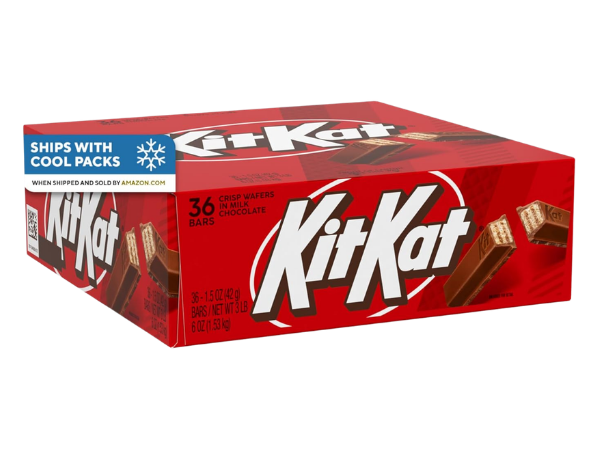
Caffeine
6 mg
Note: Caffeine amounts are based on the cocoa solids present in KIT KAT Milk Chocolate. Levels may vary slightly depending on manufacturing batches and serving size.
| Attribute | Value |
|---|---|
| Caffeine Level | Low |
| Serving Size | 1.5 oz bar |
| Serving Size (grams) | 42 g |
| Total Caffeine | 6 mg |
| Calories | 210 kcal |
| Sugar | 22 g |
KIT KAT Milk Chocolate Wafer Bars are one of the most iconic chocolate treats worldwide, loved for their crisp wafer layers and smooth milk chocolate coating.
What Is KIT KAT Milk Chocolate Made Of?
KIT KAT Milk Chocolate Wafer Bars are crafted from a blend of chocolate and crunchy wafers, making them both creamy and crisp. The ingredients reveal why the bar is sweet, smooth, and lightly energizing.
- Sugar – Provides sweetness and energy.
- Cocoa Butter – Adds creaminess and texture.
- Chocolate – Contains cocoa solids, the source of caffeine.
- Milk Ingredients – Lactose, skim milk, and milk fat balance flavor.
- Vegetable Oils – Palm oil and palm kernel oil help with texture.
- Flavor Additives – Vanillin and PGPR enhance taste and consistency.
While cocoa is present, the relatively low percentage of cocoa solids explains why caffeine levels remain modest compared to dark chocolate.
How Much Caffeine Is in a KIT KAT Bar?
KIT KAT Milk Chocolate contains a small amount of caffeine, derived from cocoa solids. A standard 1.5 oz (42 g) bar has about 6 mg of caffeine, which is far less than a cup of coffee.
- 1.5 oz KIT KAT – ~6 mg caffeine.
- Snack Size Bar – ~2 mg caffeine.
- King Size Bar – ~12 mg caffeine.
- Miniatures – ~1 mg caffeine each.
This means even if you enjoy multiple KIT KAT bars, your caffeine intake remains relatively low compared to coffee, tea, or energy drinks.
Why Milk Chocolate Contains Less Caffeine Than Expected
Milk chocolate has significantly less caffeine than dark chocolate because it contains fewer cocoa solids. KIT KAT Milk Chocolate is blended with sugar, milk, and fats, diluting the cocoa content.
- Cocoa Solids – The main source of caffeine.
- Milk Additions – Reduce cocoa concentration.
- Sugar Content – Adds sweetness but no caffeine.
- Fat Content – Creates creaminess, lowering cocoa ratio.
- Flavor Enhancers – Improve taste without affecting caffeine.
This balance makes milk chocolate smoother and sweeter but less energizing. Dark chocolate, with higher cocoa percentages, can contain 20–40 mg of caffeine per ounce, while KIT KAT Milk Chocolate remains at only 6 mg per bar.
How Serving Size Affects KIT KAT Caffeine Intake
Caffeine intake from KIT KAT depends on how much you eat. Since each bar has a modest amount, larger servings increase caffeine proportionally.
- Mini Bar – ~1 mg caffeine.
- Standard Bar – ~6 mg caffeine.
- King Size – ~12 mg caffeine.
- Multiple Bars – Add up quickly if consumed in bulk.
- Comparison to Coffee – Still far lower than a single cup.
This means enjoying a KIT KAT as a snack won’t significantly raise caffeine intake, but eating several bars could add up. Still, even multiple KIT KATs remain below the caffeine levels of a single serving of coffee or energy drink.
KIT KAT Milk Chocolate Nutrition: Sugar, Calories, and Ingredients
KIT KAT Milk Chocolate Wafer Bars are more than just a sweet snack; they are a carefully balanced product combining chocolate, wafers, and flavor enhancers. Understanding their nutrition profile helps explain why they are delicious but also why moderation is important.
- Calories – ~210 per 1.5 oz bar.
- Sugar – ~22 g per bar.
- Fat – ~11 g, mostly from cocoa butter and milk fat.
- Protein – ~3 g per serving.
- Carbohydrates – ~28 g, primarily from sugar and flour.
While KIT KAT provides quick energy through sugar, it is not a significant source of protein or fiber. Moderation is key, especially for those monitoring sugar intake.
Can KIT KAT Milk Chocolate Affect Energy Levels?
KIT KAT Milk Chocolate Wafer Bars contain both sugar and a small amount of caffeine, which together influence energy levels. While the caffeine content is minimal compared to coffee or tea, the sugar provides a quick burst of energy.
- Caffeine Boost – Mild, almost negligible compared to coffee.
- Sugar Spike – Quick energy followed by fatigue.
- Mood Enhancement – Chocolate can trigger serotonin release.
- Best Consumption Times – Afternoon snack or dessert.
- Impact on Sleep – Minimal caffeine, but sugar may disrupt rest.
Overall, KIT KAT Milk Chocolate is more of a comfort snack than a functional energy booster. Its caffeine levels are too low to make a difference, but its sugar content can provide a short‑lived energy surge.