
Caffeine
8–10 mg
Note: Caffeine amounts are based on the natural cocoa content in Kinder Bueno’s milk chocolate coating. Levels may vary slightly depending on production batches and regional recipes.
| Attribute | Value |
|---|---|
| Total Caffeine | 8–10 mg |
| Caffeine Level | Very Low |
| Serving Size | 43–50g |
| Sugar | 21g |
| Calories | 240 kcal |
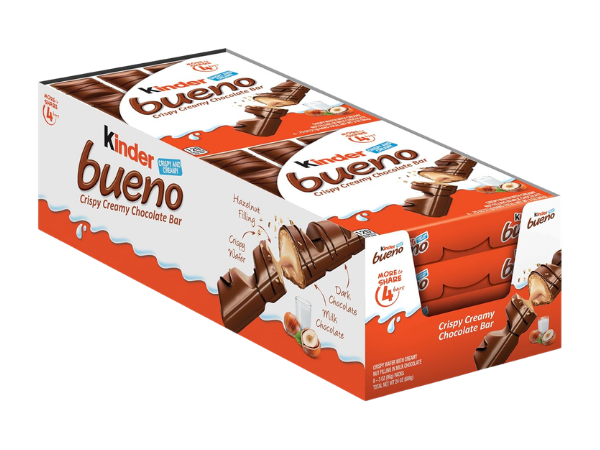
Kinder Bueno is one of Ferrero’s most beloved chocolate bars, known for its creamy hazelnut filling, crispy wafer layers, and smooth milk chocolate coating.
What Is a Kinder Bueno Chocolate Bar?
Kinder Bueno is a confectionery product created by Ferrero, the Italian company famous for Ferrero Rocher and Nutella. It was first launched in 1990 and has since become a global favorite.
- Wafer Layers – Light and crunchy, giving the bar its signature crisp bite.
- Hazelnut Cream – A velvety filling made with hazelnuts, milk, and sugar.
- Milk Chocolate – Smooth coating that balances sweetness with cocoa richness.
- Dark Chocolate Stripes – Decorative accents that add a slight bitterness.
Together, these elements make Kinder Bueno a unique chocolate bar that appeals to both children and adults.
How Much Caffeine Is in a Kinder Bueno Chocolate Bar?
Chocolate contains caffeine because cocoa beans naturally produce it. However, the amount in Kinder Bueno is relatively low compared to coffee or energy drinks. A standard 50g serving of Kinder Bueno contains approximately 8–10 mg of caffeine, which is similar to the caffeine content in a small piece of milk chocolate.
- Caffeine Amount – About 8–10 mg per 50g bar.
- Comparison to Coffee – A cup of coffee has 95–120 mg, far higher than Kinder Bueno.
- Comparison to Tea – A cup of black tea has 40–60 mg, still much more than Kinder Bueno.
- Comparison to Soda – A can of cola has 30–40 mg, several times Kinder Bueno’s amount.
This means Kinder Bueno is not a significant source of caffeine. For most people, eating one or two bars will not noticeably affect energy levels or sleep patterns.
Why Does Kinder Bueno Contain Caffeine?
The caffeine in Kinder Bueno is not added artificially—it comes naturally from the cocoa used in its chocolate coating. Cocoa beans contain both caffeine and theobromine, two stimulants that contribute to the mild energizing effect of chocolate.
- Cocoa Beans – Natural source of caffeine and theobromine.
- Milk Chocolate – Contains less caffeine than dark chocolate due to lower cocoa content.
- Flavor Balance – Cocoa provides depth and richness to the sweetness.
- No Added Caffeine – Ferrero does not fortify Kinder Bueno with extra stimulants.
- Natural Occurrence – Present in all chocolate-based products.
Thus, Kinder Bueno contains caffeine simply because it is made with real cocoa. The amount is small enough that it is considered safe for most consumers, including children, when eaten in moderation.
Kinder Bueno Nutrition Facts: Calories, Sugar & Fat
Kinder Bueno is a treat, and like most chocolate bars, it is relatively high in calories, sugar, and fat. A standard 43g bar (two fingers) provides around 240 calories.
- Calories – About 240 kcal per bar.
- Sugar – Roughly 21g of sugar, contributing to its sweetness.
- Fat – Around 16g of fat, including saturated fat.
- Protein – Provides about 4g of protein from milk and hazelnuts.
- Carbohydrates – Approximately 22g, mainly from sugar and wafer.
While Kinder Bueno is delicious, it should be enjoyed as an occasional indulgence rather than a daily snack. Its nutritional profile is similar to other chocolate bars, meaning moderation is key.
Kinder Bueno Ingredients: What’s Inside the Chocolate Bar?
Kinder Bueno’s irresistible taste comes from a carefully balanced mix of ingredients that create its signature texture and flavor. Each component plays a distinct role, from the creamy hazelnut filling to the crunchy wafer shell and smooth chocolate coating.
- Milk Chocolate – Sugar, cocoa butter, cocoa mass, skim milk powder, and emulsifiers.
- Hazelnut Cream – Hazelnuts, vegetable oils, sugar, milk powder, and flavorings.
- Wafer Shell – Wheat flour, sugar, vegetable oils, and leavening agents.
- Dark Chocolate Decoration – Cocoa mass and sugar for contrast.
- Emulsifiers – Such as lecithin, to stabilize texture.
These ingredients combine to deliver the layered experience Kinder Bueno is known for. The hazelnut cream is the star, giving the bar its nutty, creamy flavor, while the wafer adds crunch and the chocolate provides sweetness.
Is Kinder Bueno Safe for Children and People Sensitive to Caffeine?
Kinder Bueno contains only a small amount of caffeine, making it generally safe for children and people sensitive to stimulants. However, its sugar and fat content should be considered.
- Children – Safe in moderation, but high sugar intake should be limited.
- Sensitive Individuals – The caffeine amount is unlikely to cause issues.
- Pregnant Women – Safe if consumed occasionally, within daily caffeine limits.
- Health Balance – Best enjoyed as part of a balanced diet.
- Moderation – Important for all age groups due to sugar and fat.
In conclusion, Kinder Bueno is a safe and enjoyable treat for most people. Its caffeine content is minimal, but like any chocolate bar, it should be consumed responsibly to avoid excessive sugar and calorie intake.