
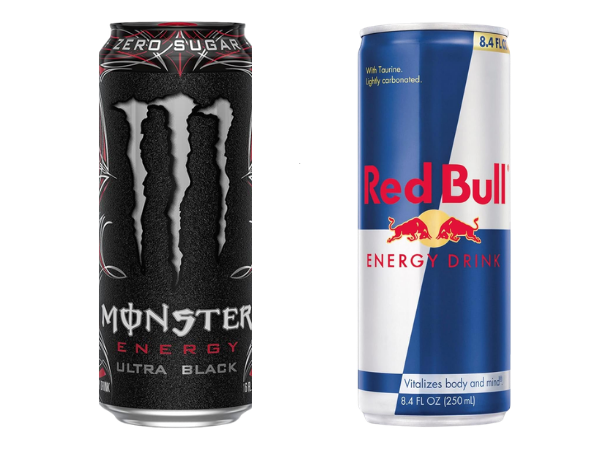
Both brands promise a quick boost of energy, sharper focus, and enhanced performance, but they achieve these goals with slightly different formulas, serving sizes, and marketing strategies.
Red Bull vs Monster: At a Glance
When comparing Red Bull and Monster, the first thing to note is their distinct identities. Red Bull is often seen as a compact, functional energy shot, while Monster positions itself as a larger, lifestyle-oriented drink.
- Red Bull – Compact 8.4 fl oz can, iconic slogan “Gives You Wings.”
- Monster – Larger 16 fl oz can, bold branding with the claw logo.
- Target Audience – Red Bull appeals to quick energy seekers, Monster to those who want more volume and variety.
- Global Reach – Both brands are sold in over 100 countries.
- Nutritional Focus – Red Bull emphasizes functional energy, Monster emphasizes flavor and lifestyle.
Overall, Red Bull is about efficiency and portability, while Monster is about size, variety, and boldness. This sets the stage for their differences in caffeine, sugar, and calories.
Difference #1: Caffeine Content
Caffeine is the primary active ingredient in both drinks, responsible for stimulating alertness and reducing fatigue. Red Bull contains about 80 mg of caffeine per 8.4 fl oz can, while Monster packs around 160 mg per 16 fl oz can.
- Red Bull caffeine – 80 mg per can, moderate boost.
- Monster caffeine – 160 mg per can, stronger kick.
- Serving Size Impact – Monster doubles Red Bull’s caffeine because of its larger can.
- Comparison to Coffee – A standard cup of coffee has 95–120 mg, making Red Bull closer to tea and Monster closer to coffee.
In conclusion, Red Bull offers a lighter caffeine dose suitable for quick focus, while Monster delivers a stronger punch for those needing prolonged energy.
Difference #2: Calories and Sugar
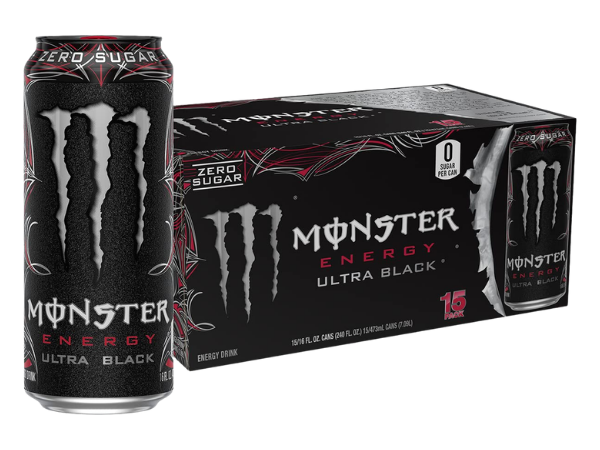
Calories and sugar are critical factors for health-conscious consumers. Red Bull contains about 110 calories and 27 grams of sugar per can, while Monster has around 210 calories and 54 grams of sugar per can.
- Red Bull sugar – 27 g per can, similar to soda.
- Monster sugar – 54 g per can, nearly double Red Bull.
- Calorie Count – Red Bull: 110 calories; Monster: 210 calories.
- Sugar-Free Options – Both brands offer sugar-free versions with artificial sweeteners.
- Health Impact – Excess sugar contributes to weight gain, insulin spikes, and dental issues.
Ultimately, Red Bull is lighter in calories and sugar, while Monster is more indulgent. Choosing between them depends on whether you prioritize taste or calorie control.
Difference #3: Ingredients and Nutritional Value
Beyond caffeine and sugar, both drinks contain added ingredients designed to enhance performance. Red Bull includes taurine, B-vitamins, and simple sugars, while Monster adds ginseng, L-carnitine, and additional flavor enhancers.
- Red Bull ingredients – Taurine, sucrose, glucose, caffeine, B‑vitamins (B3, B5, B6, B12).
- Monster ingredients – Taurine, ginseng, L-carnitine, B-vitamins.
- Functional Additives – Both include compounds linked to energy metabolism.
- Nutritional Differences – Monster’s formula is more complex, Red Bull’s is more straightforward.
This makes Red Bull easier to evaluate for those who want a clean, functional energy boost, whereas Monster appeals to consumers interested in extra supplements and variety.
Difference #4: Serving Size and Energy per Can
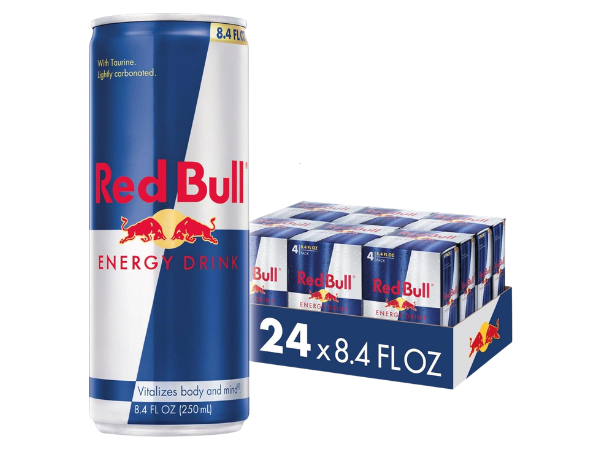
Red Bull is packaged in a compact 8.4 fl oz can, designed for quick consumption and portability. Monster, on the other hand, comes in a much larger 16 fl oz can, offering nearly double the liquid volume and, as a result, double the caffeine and sugar content.
- Red Bull serving size – Compact, easy to consume quickly.
- Monster serving size – Larger, designed for longer sipping.
- Energy Density – Red Bull delivers concentrated energy in a small package.
- Monster’s Appeal – Bigger can means more caffeine, sugar, and flavor.
- Lifestyle Fit – Red Bull suits quick breaks, Monster suits extended activities.
Consumers who want a quick boost may prefer Red Bull, while those who enjoy sipping a larger drink with more flavor options may lean toward Monster.
Difference #5: Flavors and Variety
One of the biggest distinctions between Red Bull and Monster lies in their approach to flavors. Red Bull has traditionally kept its lineup simple, focusing on a handful of core options that maintain brand consistency.
- Red Bull flavors – Original, Sugar-Free, Tropical, Blue Edition.
- Monster flavors – Original, Ultra Zero, Juice Monster, Rehab, Java Monster.
- Special Editions – Monster frequently releases seasonal flavors.
- Consumer Appeal – Flavor diversity attracts younger audiences.
- Red Bull’s Strategy – Keeps its lineup simple and recognizable.
In summary, Red Bull offers a streamlined flavor experience that reinforces its iconic brand identity, while Monster provides a playground of options for those who want more than just energy — they want taste variety and novelty.
Difference #6: Price and Overall Value
Price is a practical factor that often influences consumer choice between Red Bull and Monster. While both are positioned as premium energy drinks, their pricing strategies differ. Red Bull is typically more expensive per ounce, reflecting its branding as a compact, high‑quality product.
- Red Bull price ($34) – Higher cost per ounce.
- Monster price ($30) – Lower cost per ounce, better bulk value.
- Market Positioning – Red Bull as premium, Monster as value-driven.
- Consumer Perception – Red Bull seen as elite, Monster as accessible.
- Budget Choice – Monster offers more energy for less money.
In summary, Red Bull appeals to consumers who value brand prestige and a compact serving size, while Monster attracts those who prioritize quantity and affordability.
Difference #7: Taste, Best Uses and Who Each Drink Is For
Taste is often the deciding factor for many energy drink consumers, and Red Bull and Monster differ significantly in this area. Red Bull is known for its sharp, slightly medicinal flavor that emphasizes function over indulgence.
- Red Bull taste – Tart, sharp, functional.
- Monster taste – Sweet, smooth, soda-like.
- Best Uses – Red Bull for quick focus, Monster for extended energy.
- Target Groups – Red Bull appeals to professionals and athletes, Monster to students and gamers.
- Lifestyle Fit – Red Bull is about efficiency, Monster about enjoyment.
In summary, Red Bull is chosen by those who prioritize function and quick energy, while Monster is favored by those who want a more enjoyable flavor and longer‑lasting energy.
Final Verdict: Should You Choose Red Bull or Monster?
After comparing caffeine, calories, sugar, ingredients, serving size, flavors, price, and taste, it’s clear that Red Bull and Monster serve different consumer needs. Red Bull is compact, efficient, and lighter in calories, making it ideal for professionals, athletes, or anyone who wants a quick energy boost without overindulging.
- Choose Red Bull – If you value portability, fewer calories, and a straightforward formula.
- Choose Monster – If you want stronger caffeine, more flavor options, and better value per ounce.
- Moderation Reminder – Both drinks contain high sugar and caffeine levels, so responsible consumption is key.
In conclusion, neither drink is universally “better” — the choice depends on your lifestyle, taste preferences, and energy needs. Red Bull is about efficiency and prestige, while Monster is about variety and volume.