
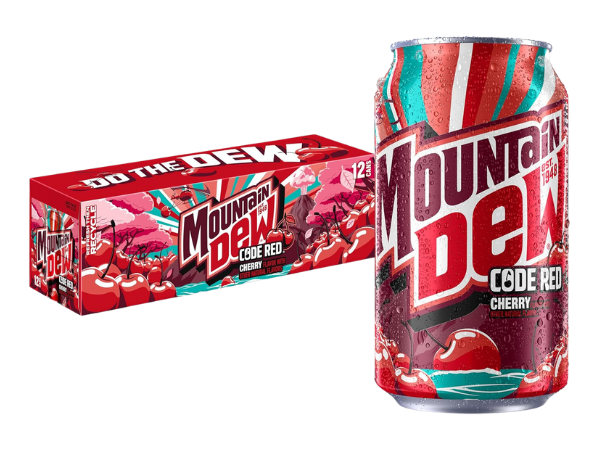
Caffeine
54 mg
Note: Nutrition and caffeine values are based on PepsiCo’s standard formulation for Mountain Dew Code Red in the U.S.
| Attribute | Value |
|---|---|
| Caffeine Level | Moderate |
| Serving Size | 12 fl oz |
| Serving Size (ml) | 355 ml |
| Caffeine | 54 mg |
| Calories | 170 kcal |
| Sugar | 46 g |
Mountain Dew Code Red is a cherry‑flavored soda from PepsiCo that combines the bold citrus base of Mountain Dew with a sweet, fruity twist.
What Is Mountain Dew Code Red Soda?
Mountain Dew Code Red was first introduced in 2001 as a cherry‑flavored extension of the original Mountain Dew lineup. It quickly gained popularity among younger audiences, especially gamers and soda enthusiasts, thanks to its bold flavor and striking red appearance.
- Launch Year – 2001, as a permanent flavor addition.
- Manufacturer – PepsiCo, under the Mountain Dew brand.
- Target Audience – Gamers, teens, and soda lovers seeking variety.
- Flavor Identity – Cherry mixed with citrus undertones.
- Packaging – Available in cans, bottles, and multipacks.
Together, these traits make Code Red more than just a soda—it’s a cultural product tied to gaming, youth marketing, and brand experimentation.
Flavor Profile of Code Red Soda
The defining characteristic of Mountain Dew Code Red is its cherry‑infused flavor. While the base remains citrusy like regular Mountain Dew, the cherry note dominates, giving it a sweeter and smoother taste.
- Cherry Dominance – Strong upfront cherry flavor.
- Citrus Undertone – Retains Mountain Dew’s lemon‑lime base.
- Sweetness Level – Higher than regular Mountain Dew.
- Texture – Smooth carbonation, moderate fizz.
- Visual Appeal – Bright red color, instantly recognizable.
This flavor profile makes Code Red distinct from other sodas. It appeals to those who enjoy sweeter drinks but still want the caffeine boost of Mountain Dew.
How Much Caffeine Is in a Can of Mountain Dew Code Red?
Caffeine is one of the most important aspects of Mountain Dew Code Red. A 12‑oz can contains 54 mg of caffeine, which is considered moderate compared to energy drinks but higher than many colas.
- Per 12‑oz Can – 54 mg caffeine.
- Per 20‑oz Bottle – About 91 mg caffeine.
- Comparison to Coca‑Cola – Coke has ~34 mg per 12 oz.
- Comparison to Red Bull – Red Bull has ~80 mg per 8.4 oz.
- Comparison to Coffee – A small coffee averages 95 mg per 8 oz.
This caffeine content makes Code Red appealing to those who want a boost without the intensity of energy drinks.
Mountain Dew Code Red Soda Nutrition Facts
Each serving of Code Red delivers calories primarily from sugar. A 12‑oz can has about 166–170 calories, all from carbohydrates.
- Calories – 166–170 per 12 oz.
- Total Fat – 0 g.
- Sodium – ~104–105 mg.
- Carbohydrates – 44–46 g.
- Sugars – 44–46 g.
- Protein – 0 g.
Its nutritional profile is similar to other sodas, but the sugar content is particularly high, contributing to nearly 90% of the daily recommended limit for added sugars in just one can.
How Many Calories and How Much Sugar Are in Mountain Dew Code Red?
Calories and sugar are the biggest nutritional concerns with Code Red. At 170 calories and 46 g of sugar per can, it delivers a heavy dose of quick energy but little nutritional value.
- Calories – 170 per 12 oz.
- Sugar – 46 g (about 11 teaspoons).
- Daily Value Impact – 91% of recommended added sugar intake.
- Comparison to Candy – Equivalent to ~2 Snickers bars in sugar.
- Weight Management – High sugar makes it unsuitable for diets.
This makes Code Red a drink best enjoyed occasionally rather than daily. The sugar spike can lead to energy crashes and long‑term health concerns if consumed excessively.
Mountain Dew Code Red Soda Ingredients Explained
Mountain Dew Code Red is more than just carbonated water and sugar—it’s a carefully engineered formula designed to deliver sweetness, tang, and visual appeal.
- Carbonated Water – Base of the soda.
- High Fructose Corn Syrup – Primary sweetener.
- Orange Juice Concentrate – Adds citrus notes.
- Citric Acid – Provides tartness.
- Sodium Benzoate & Polyphosphates – Preserve freshness.
- Natural Flavor – Enhances cherry taste.
- Caffeine – Provides energy boost.
- Food Dyes (Red 40, Yellow 5, Blue 1) – Create signature red color.
These ingredients combine to deliver the sweet, tangy, and visually striking soda that fans recognize. While effective for taste, the reliance on artificial dyes and high fructose corn syrup raises health concerns.
Health Considerations and Side Effects
Mountain Dew Code Red is a flavorful soda, but its nutritional profile raises several health concerns when consumed regularly. The combination of high sugar, moderate caffeine, and artificial additives means that moderation is key.
- High Sugar Intake – Linked to obesity, diabetes, and tooth decay.
- Moderate Caffeine – Can cause jitters or sleep issues in sensitive individuals.
- Artificial Colors – Some studies raise concerns about hyperactivity in children.
- Empty Calories – Provides energy but no nutrients.
- Hydration Impact – Soda is not a substitute for water.
In moderation, Code Red can be part of an occasional treat. However, frequent consumption may contribute to long‑term health problems.