
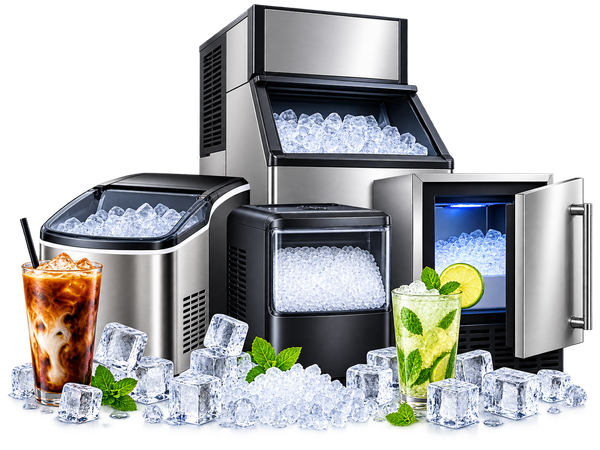
An ice machine can be useful far beyond restaurants and bars. A compact model can keep a home freezer stocked with fresh ice, while larger machines can produce enough ice for coffee shops, restaurants, and other businesses.
What Is an Ice Machine and How Does It Work?
An ice machine is an appliance designed to produce ice automatically. Unlike a standard freezer ice tray, it can make multiple batches throughout the day and is available in sizes ranging from small countertop units to large commercial systems.
Most machines follow a simple process:
- Water enters a reservoir or is connected through a water line.
- The machine moves water over or into an ice-making system.
- A cooling system freezes the water into ice.
- The finished ice is released into a storage bin.
- The cycle repeats when more ice is needed.
The exact process varies by model, but the result is the same: a consistent supply of ready-to-use ice.
Best Ice Machines for Every Need
Different environments require different types of ice machines. A countertop unit may be ideal for a kitchen, while a coffee shop or restaurant usually needs a machine with greater production capacity.
Ice Machine for Coffee Shop
A coffee shop serving iced coffee, cold brew, frappes, and other chilled drinks typically needs 50–150 lb of ice per day. Smaller cafés may need less, while busy locations can require 200–300 lb or more. Estimate daily drink volume and add 20–30% extra capacity for peak hours.
Ice Machines for Home
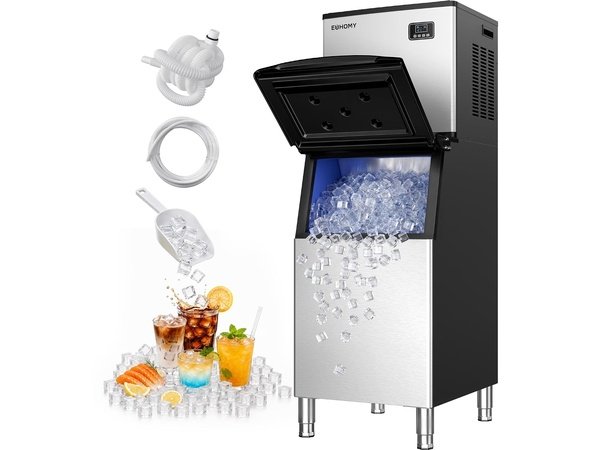
Home users generally do not need the production capacity of a commercial machine. For a household of 2–5 people, an ice maker producing around 20–40 lb of ice per day is usually enough for everyday drinks, iced coffee, and occasional entertaining.
Commercial Ice Machines
Commercial ice machines are designed for businesses that need a dependable supply of ice throughout the day. Production can range from around 100 lb to more than 1,000 lb of ice per 24 hours, depending on the model and application.
Countertop Ice Machines
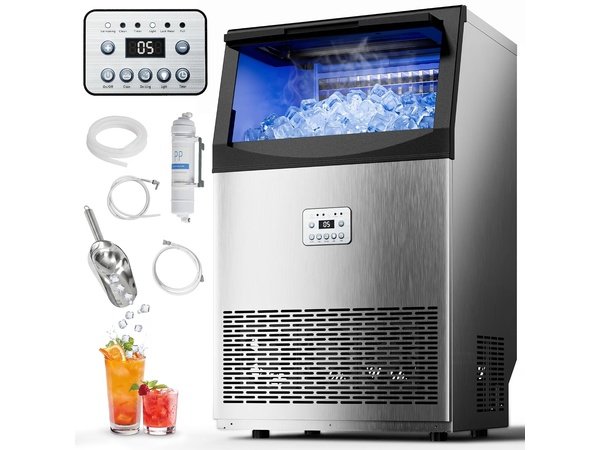
Countertop ice machines are a practical choice when floor and installation space are limited. Many compact models produce approximately 20–50 lb of ice per day, making them suitable for kitchens, offices, small cafés, and home bars.
Nugget Ice Machines
Nugget ice is soft, porous, and easy to chew, which makes it popular for soft drinks, iced beverages, and home use. Nugget machines are available in compact countertop versions as well as larger models designed for higher-volume use.
Undercounter Ice Machines
Undercounter ice machines are designed to fit beneath a counter, making them useful for bars, kitchens, coffee shops, and other spaces where a freestanding countertop unit is not ideal. Many models combine the ice-making system and storage bin in one appliance.
Ice Makers for Restaurants
Restaurants can have significantly higher ice requirements because ice may be used for beverages, food presentation, salad bars, and other applications. A small restaurant may need 100–300 lb of ice per day, while busy establishments can require 300–500 lb or more.
Ice Machines for Iced Coffee
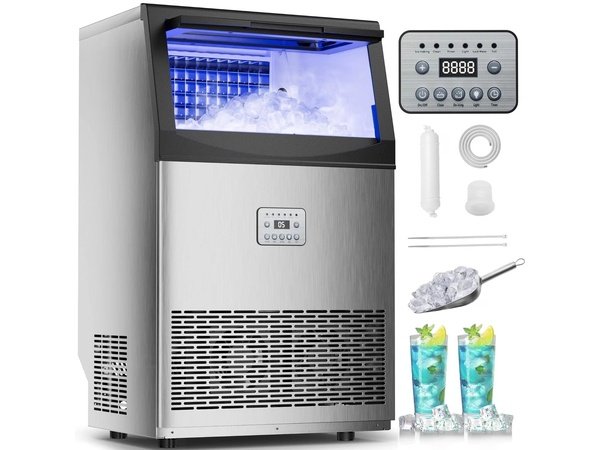
Iced coffee requires a consistent supply of ice, particularly during warmer months and busy service periods. If a drink uses about 0.5 lb of ice, serving 100 iced coffees can require approximately 50 lb of ice before accounting for other beverages or waste.
Ice Machines for Small Businesses
Small businesses such as cafés, offices, food trucks, salons, and small bars often need more ice than a household but less than a large restaurant. A machine producing around 50–150 lb per day can be suitable for many lower-volume operations, depending on how ice is used.
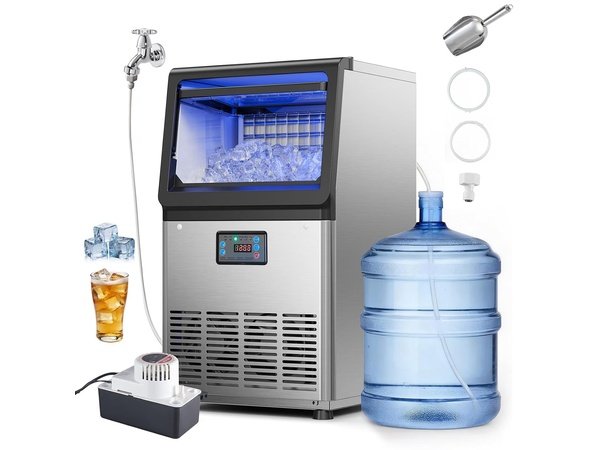
How Much Ice Do You Need? Choosing the Right Capacity
Capacity is one of the most important factors when choosing an ice machine. Home users generally need far less ice than a busy coffee shop or restaurant.
As a general guide:
| 1–2 people at home | 10–20 lb/day | Occasional cold drinks |
| 3–5 people at home | 20–40 lb/day | Daily drinks and entertaining |
| Home bar or frequent entertaining | 30–50 lb/day | Cocktails, iced coffee, parties |
| Small coffee shop | 50–150 lb/day | Iced coffee and cold beverages |
| Busy coffee shop | 150–300 lb/day | High-volume drink service |
| Small restaurant | 100–300 lb/day | Drinks and food service |
| Busy restaurant | 300–500+ lb/day | Heavy daily demand |
For example, if a coffee shop serves 100 iced drinks per day and each drink uses approximately 1/2 pound of ice, the business may need around 50 lb of ice per day just for those drinks.
For commercial use, choosing a machine with 20–30% more daily production than your estimated requirement can provide a practical buffer. A business expecting to use 150 lb of ice per day, for example, could look for a machine producing around 180–200 lb per day.
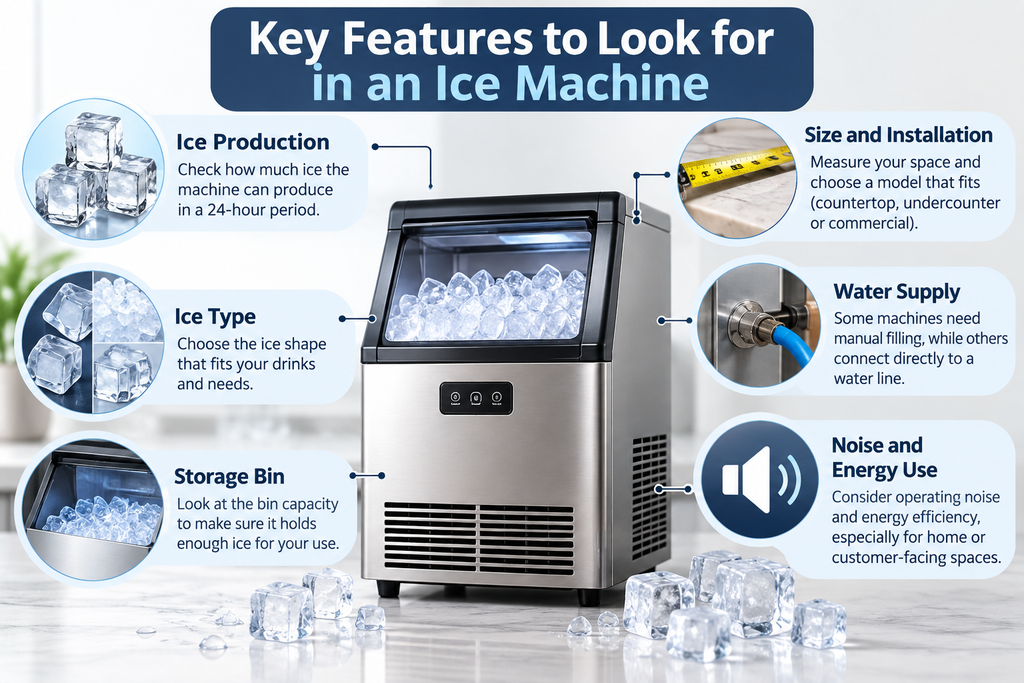
Key Features to Look for in an Ice Machine
Not every ice machine is designed for the same purpose. Comparing a few key specifications can make it easier to choose the right model.
Ice Production
Check how much ice the machine can produce in a 24-hour period. Commercial machines usually have much higher production rates than compact home models.
Ice Type
Ice shape affects how quickly it melts and how it works in different drinks. Common options include:
- Nugget or chewable ice
- Cube ice
- Bullet-shaped ice
- Flake ice
For iced coffee and soft drinks, the preferred ice type may depend on the drink and how quickly you want it to chill.
Storage Bin
Production capacity and storage capacity are not the same. A machine may produce a large amount of ice per day but hold only a limited quantity at one time.
Size and Installation
Measure the available space before buying. Countertop models are convenient for small kitchens, while undercounter and commercial machines may require dedicated installation.
Water Supply
Some machines need manual filling, while others connect directly to a water line. A plumbed-in machine can be more convenient for busy commercial environments.
Noise and Energy Use
For home kitchens and customer-facing spaces, operating noise can matter. Energy efficiency is also worth considering when the machine will run frequently.
How to Clean and Maintain an Ice Machine
Regular cleaning helps keep the ice machine operating properly and prevents unwanted odors or buildup. The exact cleaning procedure depends on the manufacturer, so always follow the instructions supplied with the machine.
A basic maintenance routine usually includes:
- Turn off and unplug the machine when required.
- Empty the remaining ice and water.
- Clean the water reservoir and removable components.
- Wipe the interior surfaces with the recommended cleaning solution.
- Rinse components thoroughly if required.
- Clean the exterior and check the ventilation area.
- Run a cleaning or sanitizing cycle when the manufacturer recommends one.
Commercial ice machines generally require more frequent maintenance because they operate more often. Keep the machine in a clean, well-ventilated location and address unusual noises, reduced production, or changes in ice quality promptly.