
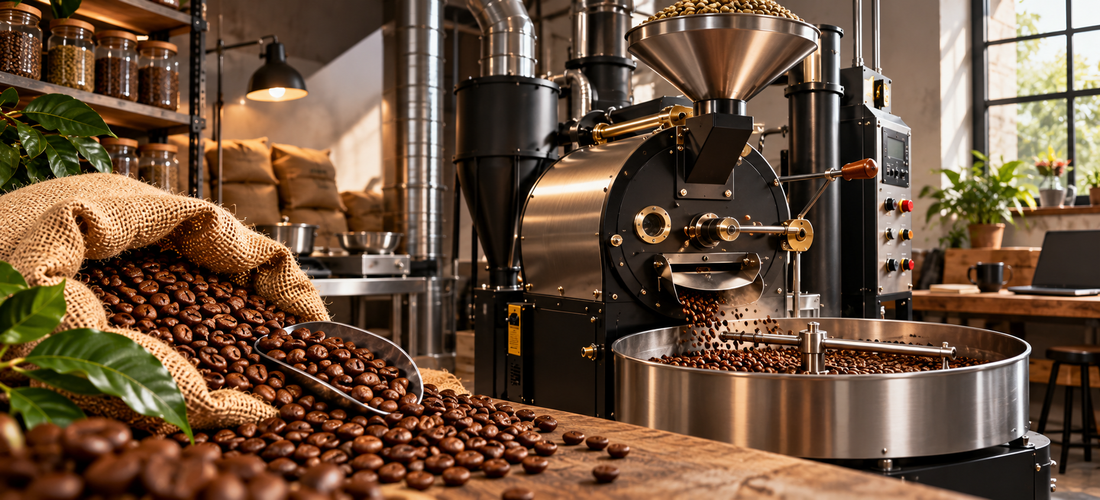
A commercial coffee roaster helps businesses control roast profiles, maintain consistency, and produce coffee in batches suited to their customers.
What Features Matter Most in a Commercial Coffee Roaster
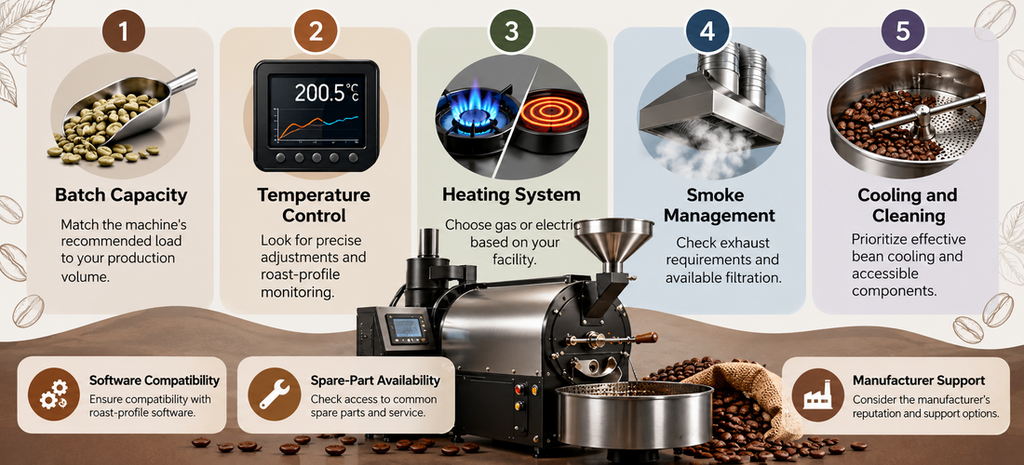
A commercial roaster should match your daily production needs while providing reliable temperature control and manageable maintenance. Consider these five features before buying:
- Batch Capacity: Match the machine’s recommended load to your production volume.
- Temperature Control: Look for precise adjustments and roast-profile monitoring.
- Heating System: Choose gas or electric based on your facility.
- Smoke Management: Check exhaust requirements and available filtration.
- Cooling and Cleaning: Prioritize effective bean cooling and accessible components.
Also consider software compatibility, spare-part availability, and manufacturer support. These factors affect consistency and long-term operating costs.
Best Commercial Coffee Roaster Machines in 2026
Commercial roasters range from compact machines for small roasting businesses to high-capacity systems for larger production facilities.
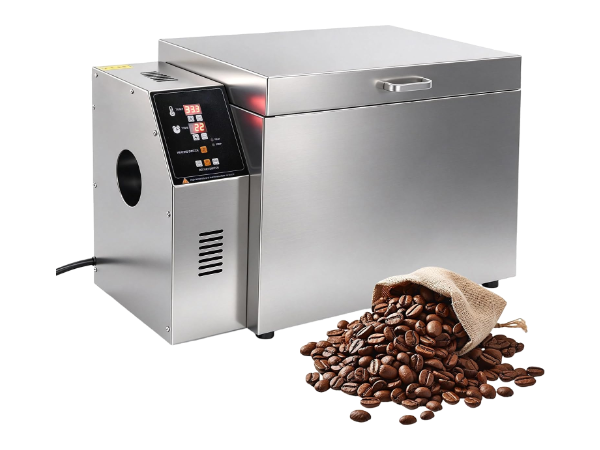
HNZXIB Commercial Electric Coffee Bean Roaster – 8.8 lb
The HNZXIB is an electric drum roaster for coffee beans, nuts, and grains. Its rotating stainless steel drum and adjustable temperature controls help manage roasting.
Key features:
- Advertised capacity: Up to 8.8 lbs
- Power supply: 110V
- Temperature range: 86–572°F
- Timer: Adjustable from 0 to 999 minutes
- Temperature control: PID system
- Construction: Stainless steel with a removable drum
The listing recommends limiting continuous heating to four hours, and the actual recommended coffee batch size should be confirmed before purchase.
KALDI Motorized Gas Coffee Roaster – 200 g
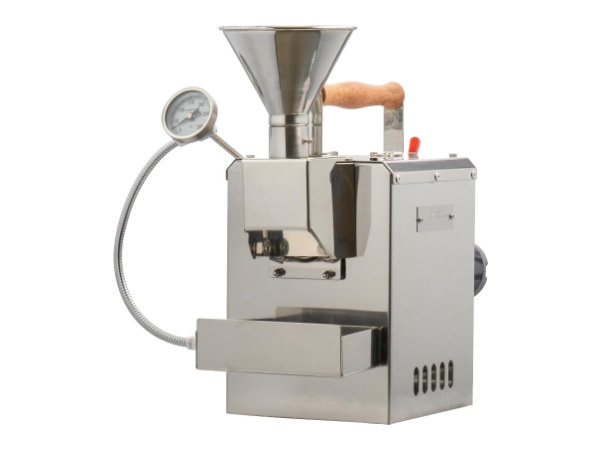
The KALDI Motorized Gas Coffee Roaster uses a rotating drum and gas heat for small-batch coffee roasting with direct temperature control.
Key features:
- Batch capacity: Up to 200 g
- Heat source: External gas burner required
- Roasting method: Motorized drum
- Drum design: Perforated metal construction
- Monitoring: Thermometer supplied with the specified package
- Weight: Approximately 9 lbs
A gas burner is required, so check the included accessories and safe operating requirements before ordering.
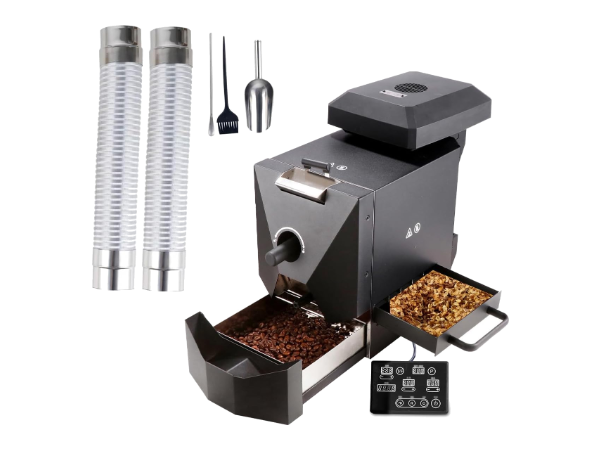
Fatamorgana Electric Coffee Bean Roaster – 500 g
The Fatamorgana electric roaster offers adjustable roasting modes, built-in smoke filtration, and chaff collection, making it suitable for small-batch coffee roasting at home or in a small workspace.
Key features:
- Advertised capacity: 500 g
- Power supply: 110V
- Operating modes: Manual, semi-automatic, and automatic
- Temperature control: Adjustable roasting settings
- Smoke management: Built-in smoke filter and chaff collector
- Dimensions: Approximately 19.5 × 10.5 × 15.8 inches
However, the available listing also mentions a capacity of up to 1 lb, so confirm the recommended coffee batch size with the seller.
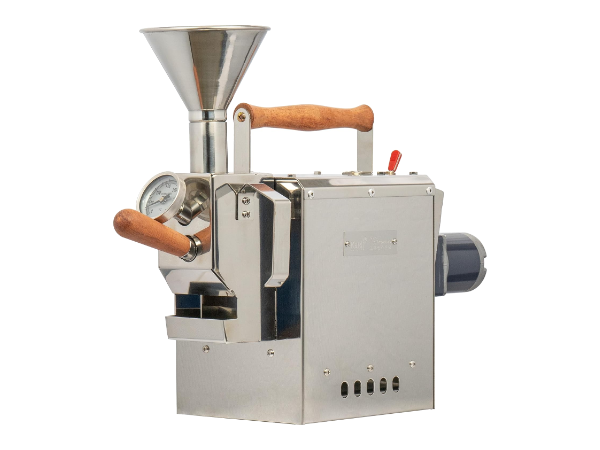
KALDI WIDE Gas Coffee Roaster – 300 g
The KALDI WIDE is a motorized gas roaster with a perforated stainless steel drum for even bean movement. Its mesh plate distributes heat, while the built-in thermometer and sampler support roast monitoring.
Key features:
- Batch capacity: Up to 300 g
- Heat source: External gas burner required
- Drum material: 2 mm-thick stainless steel
- Drum design: Perforated construction with three stirring blades
- Temperature monitoring: Analog thermometer
- Additional equipment: Hopper, sampler, and chaff tray, depending on package
Standard versions do not support thermocouples, so users who need electronic roast-curve logging should consider this limitation before buying.
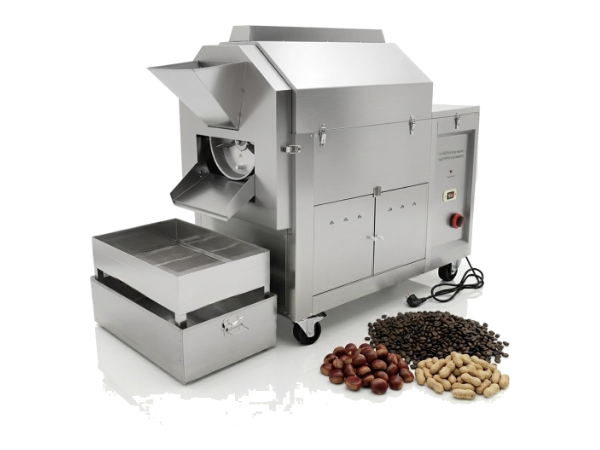
TECHTONGDA Commercial Gas Coffee Roaster – 110 lb
The TECHTONGDA is a high-capacity gas-powered drum roaster for coffee beans, nuts, and seeds. Its large size requires careful installation planning and a suitable workspace.
Key features:
- Advertised capacity: 110 lbs (50 kg)
- Power supply: 220V single-phase
- Heating source: Natural gas or LPG
- Temperature range: 32–572°F (0–300°C)
- Drum construction: Horizontal drum with a 304 stainless steel inner liner
- Net weight: Approximately 343 lbs (155.5 kg)
Its size, weight, gas connections, and electrical requirements call for a suitable commercial workspace and professional installation.
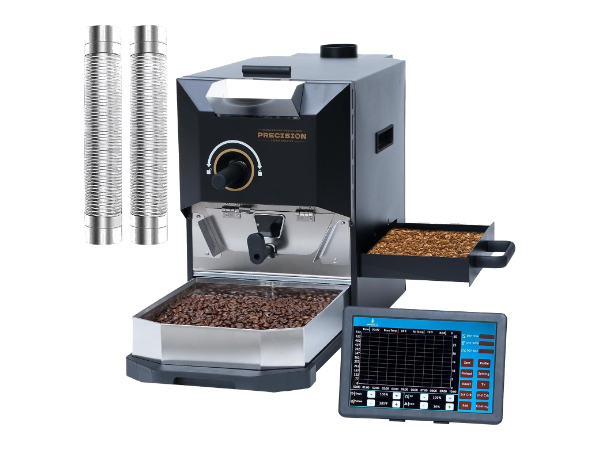
Precision Coffee Roaster – 1 kg Electric Machine
The Precision electric coffee roaster features a rotating stainless steel drum, touchscreen controls, and preset profiles. Artisan compatibility helps small businesses monitor and repeat roasting results.
Key features:
- Advertised batch capacity: Listed as 1 kg / 2 lbs; confirm with seller
- Power: 2,000W
- Voltage: 240V with NEMA 6-15 plug
- Display: 10.1-inch HD LCD touchscreen
- Roast control: 10 preset automatic profiles and manual adjustments
- Software: Artisan compatibility and roast-curve tracking
The Precision model is worth considering for small roasteries that want digital monitoring and profile control.
Gas vs. Electric Coffee Roasters: Key Differences
Gas and electric roasters can both produce consistent results, but they differ in installation, energy requirements, and operating costs.
| Feature | Gas Roasters | Electric Roasters |
|---|---|---|
| Heat source | Natural gas or propane, depending on model | Electricity |
| Installation | Requires approved gas connections | Requires a suitable electrical supply |
| Temperature control | Depends on burner and control design | Depends on heating elements and control system |
| Operating costs | Vary with local gas prices and efficiency | Vary with electricity rates and energy use |
| Main consideration | Gas supply and exhaust requirements | Electrical capacity and circuit requirements |
Gas may suit facilities already equipped for gas-powered roasting, while electric models can be convenient where suitable electrical service is available.
Drum vs. Fluid Bed Coffee Roasters
Drum and fluid bed roasters transfer heat to coffee beans in different ways. Drum machines tumble beans inside a heated chamber, while fluid bed systems use heated air to suspend and roast them.
| Feature | Drum Roaster | Fluid Bed Roaster |
|---|---|---|
| Heating method | Heated rotating drum | Circulating hot air |
| Bean movement | Beans tumble inside the drum | Airflow suspends and moves beans |
| Typical applications | Small to large commercial batches | Often small to medium batches, depending on design |
| Key consideration | Drum temperature and heat transfer | Airflow control and airflow-related energy use |
Neither design guarantees better flavor or consistency on its own. Roast quality also depends on green beans, profile development, operator skill, and machine control.
How Much Does a Commercial Coffee Roaster Cost to Operate
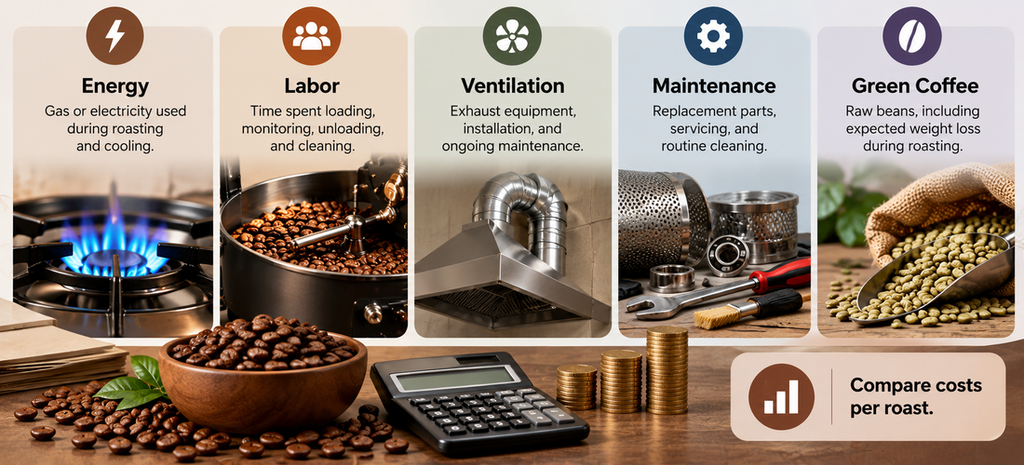
Operating costs depend on the roaster’s energy consumption, production volume, local utility rates, labor, and maintenance. Purchase price is only one part of the total cost of ownership.
Include these expenses in your budget:
- Energy: Gas or electricity used during roasting and cooling.
- Labor: Time spent loading, monitoring, unloading, and cleaning.
- Ventilation: Exhaust equipment, installation, and ongoing maintenance.
- Maintenance: Replacement parts, servicing, and routine cleaning.
- Green Coffee: Raw beans, including expected weight loss during roasting.
Compare costs per roasted pound or kilogram rather than looking only at energy use per batch. This gives you a more useful basis for evaluating machines with different capacities.
Ventilation, Installation, and Safety Requirements
Commercial coffee roasting produces heat, smoke, odors, and chaff. Before installation, confirm that your location can accommodate the machine’s ventilation, utility, and clearance requirements.
Follow these steps before operating a roaster:
- Check ventilation: Install an exhaust system appropriate for the machine and local requirements.
- Verify utilities: Confirm electrical supply or gas connections with a qualified professional.
- Plan the layout: Allow room for bean loading, cooling, cleaning, and safe operator access.
- Manage chaff: Empty collectors and follow the manufacturer’s cleaning schedule.
- Review fire safety: Keep the required clearances and follow applicable fire and building codes.
Requirements vary by machine and location, so confirm installation details with the manufacturer and local authorities before purchase.