
Every day, billions of people use caffeine to wake up and stay focused. But how well do you actually know your daily fuel? While it’s obvious in your morning espresso, it might surprise you to learn how much caffeine is hiding in your favorite soda, evening dark chocolate, or even a decaf cup.
What Is Caffeine and How Does It Work in Your Body?
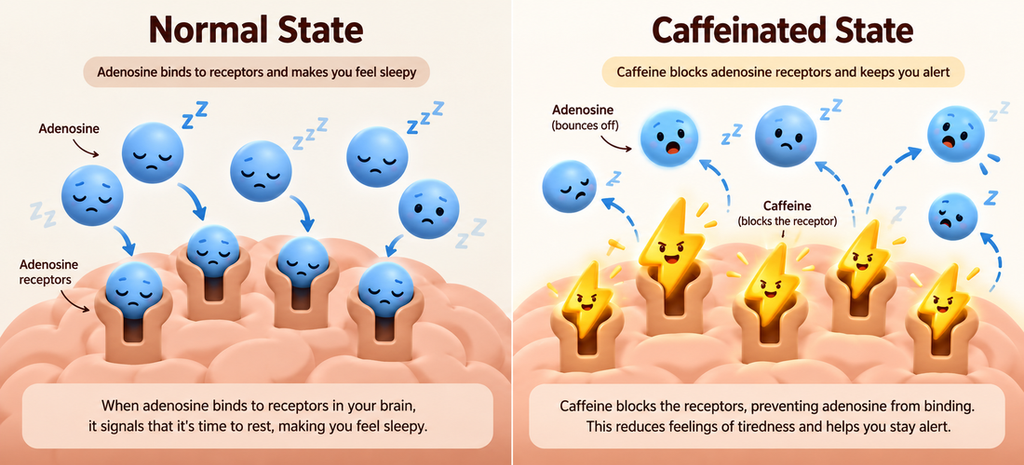
Caffeine is a natural central nervous system stimulant most commonly found in coffee, tea, and cacao plants. It works by targeting the brain, where it binds to adenosine receptors without activating them. By blocking adenosine, caffeine prevents drowsiness, increases alertness, and enhances focus and energy levels within 20 to 60 minutes of consumption.
Coffee vs. Tea Caffeine Content: Which One Has More?
As a general rule, a standard mug of coffee delivers a much stronger caffeine kick than the same size cup of tea. However, the exact numbers heavily depend on how long you steep your tea leaves or what brewing method you choose for your coffee.
The following comparison highlights typical values based on standard serving sizes:
| Drink Type (Serving Size) | Average Caffeine |
|---|---|
| Espresso (1 shot / 1 oz) | 63 mg |
| Brewed Coffee (8 oz) | 96 mg |
| Cold Brew Coffee (16 oz) | 205 mg |
| Black Tea (8 oz) | 48 mg |
| Green Tea (8 oz) | 29 mg |
| Decaf Coffee (8 oz) | 2 mg |
While a tiny shot of espresso is highly concentrated, a large glass of cold brew remains the ultimate heavyweight champion here. Because cold brew involves steeping coffee grounds in water for an extended period, it extracts a massive dose of stimulants that easily dwarfs any standard cup of black or green tea.
High-Caffeine Drinks: Energy Drinks and Pre-Workout Supplements
If you want a rapid energy spike, commercial energy drinks and fitness powders are designed to hit your system fast. The catch is that these products usually rely on synthetic caffeine mixed with massive doses of sugar or performance additives like taurine.
Here is what you are actually consuming in popular high-caffeine beverages:
- Pre-Workout Powders (1 scoop): 150 to 350 mg (Can easily hit your entire daily allowance).
- CELSIUS Essentials (16 oz): 270 mg per can.
- CELSIUS Standard (12 oz): 200 mg per can.
- Monster Energy Original (16 oz): 160 mg per can.
- Red Bull (8.4 oz): 80 mg per can.
Health Tip: Synthetic caffeine hits your bloodstream much faster than the natural variant found in traditional coffee beans. If you stack these fitness supplements with your regular daily coffee, you run a high risk of rapid heart rate spikes and a harsh energy crash later.
How Much Caffeine Is in Soda and Soft Drinks?
Sodas are typically viewed as sweet treats rather than stimulants, but they contribute significantly to your daily chemical intake. The caffeine in sodas is artificially added during manufacturing to cut through the heavy sweetness of the corn syrup.
Here is the typical caffeine breakdown for a standard 12-ounce can:
- Mountain Dew: 54 mg.
- Diet Coke: 46 mg.
- Dr Pepper: 41 mg.
- Coca-Cola Classic: 34 mg.
- Sprite: 0 mg (Completely caffeine-free).
While a single can of soda contains less than half the caffeine of a brewed coffee, the danger lies in volume. Drinking multiple cans or larger fountain sodas throughout the day creates a stealthy buildup of stimulants that can severely disrupt your sleep cycle.
Hidden Sources of Caffeine: Chocolate, Cocoa, and Sweets
One of the biggest traps for anyone tracking their stimulant intake is chocolate. Because caffeine is a natural defense mechanism inside cacao beans, any food item utilizing real cocoa solids contains a hidden dose of energy.
Keep an eye out for these sneaky numbers per standard serving:
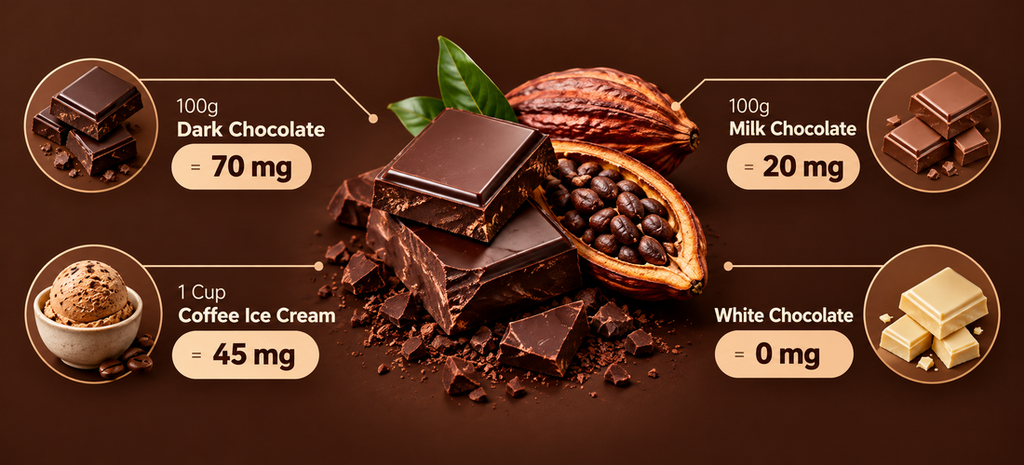
- Dark Chocolate (100g bar): Up to 70 mg (Equivalent to a solid cup of tea).
- Milk Chocolate (100g bar): Around 15–20 mg.
- Coffee Ice Cream (1 cup): 20 to 45 mg (Highly variable by brand).
- Hot Cocoa (8 oz mug): 5 to 10 mg.
The golden rule here is straightforward: the darker the chocolate bar, the more caffeine you are eating. If you are highly sensitive to stimulants or trying to relax before bed, skip the late-night dark chocolate treats and opt for white chocolate, which contains zero caffeine.
How Much Caffeine Is Too Much? Safe Daily Limits
Caffeine is a fantastic tool for mental productivity, but your body has strict boundaries. According to official FDA guidelines, consuming up to 400 mg of caffeine per day is generally safe for most healthy adults—which equals about four standard cups of coffee.
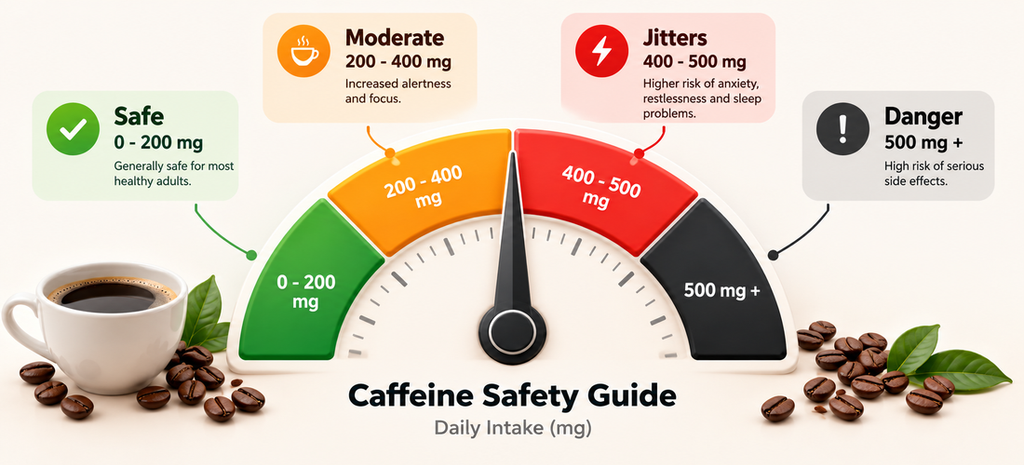
Exceeding this boundary can quickly push your nervous system into overdrive, triggering noticeable side effects:
- Severe jitters and muscle tremors
- Increased anxiety and restlessness
- Insomnia and fragmented sleep
- Rapid heart rate (palpitations)
Because everyone metabolizes stimulants at a different speed based on weight and genetics, a uniform limit does not exist.
Ready to calculate your personal limit? To find your exact daily safe maximum based on your body weight, try our interactive Caffeine Calculator for an instant, customized safety report.
Does decaf coffee have caffeine?
Yes, decaf coffee is not completely caffeine-free. An average 8-ounce cup of decaffeinated coffee contains about 2 to 7 milligrams of caffeine. In comparison, a regular cup of coffee contains around 96 milligrams.
How long does caffeine stay in your system?
Caffeine doesn’t disappear quickly; for an average healthy adult, it has a half-life of roughly 5 to 6 hours. To put it simply: if you enjoy a double espresso containing 200 mg of caffeine at 4:00 PM to survive the afternoon slump, you’ll still have 100 mg buzzing through your system at 10:00 PM when you’re trying to fall asleep.
Is 500 mg of caffeine dangerous?
Consuming 500 mg of caffeine in a single day exceeds the FDA’s recommended safe daily limit of 400 mg for healthy adults. While not strictly lethal, 500 mg can trigger side effects such as severe anxiety, insomnia, rapid heart rate, muscle tremors, and headaches.