
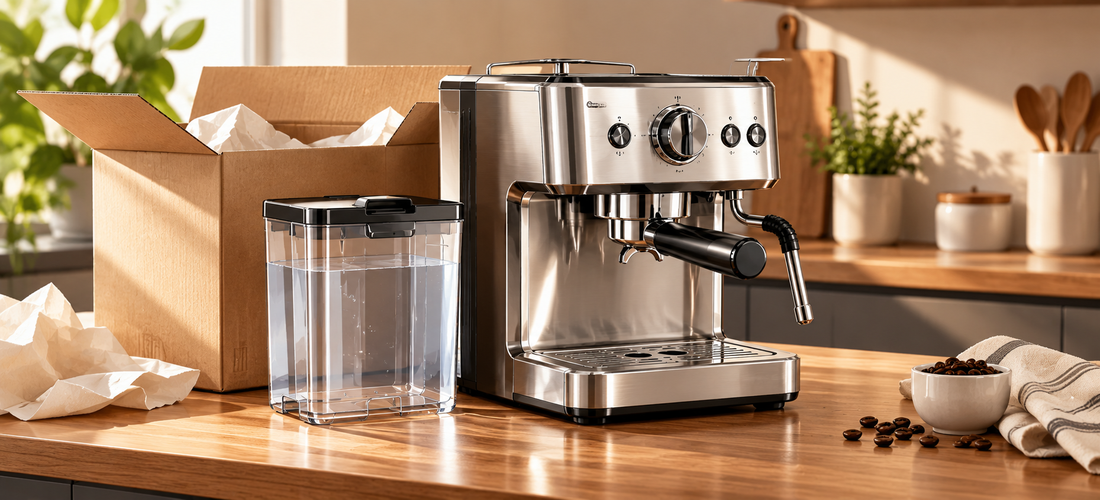
Unboxing a new espresso machine is exciting, but a sharp chemical odor can instantly ruin the moment. You might worry whether your first coffee shot is even safe to drink. While a mild factory scent is common, you should never ignore a strong chemical smell without finding its cause.
Why Does a New Espresso Machine Smell Like Plastic?
New silicone tubes, gaskets, and plastic water tanks trap manufacturing byproducts inside the factory packaging. When these polymer materials heat up for the first time, they release microscopic compounds in a process called outgassing.
This chemical reaction produces the familiar new machine smell. While this initial factory aroma is completely normal for fresh appliances, it should never linger for weeks or ruin your espresso flavor.
The primary causes:
- Manufacturing residues: Tiny industrial oils left on the internal tubing.
- Trapped volatile gasses: Factory air sealed inside the machine’s components.
- Heating element breakdown: Initial warming of protective factory coatings.
Understanding these root causes helps you safely eliminate the chemical aroma. Once you know that the odor comes from trapped manufacturing gasses rather than a mechanical defect, you can easily clear the lines using a structured cleaning routine.
Plastic Scent vs. Electrical Burning: Know the Difference
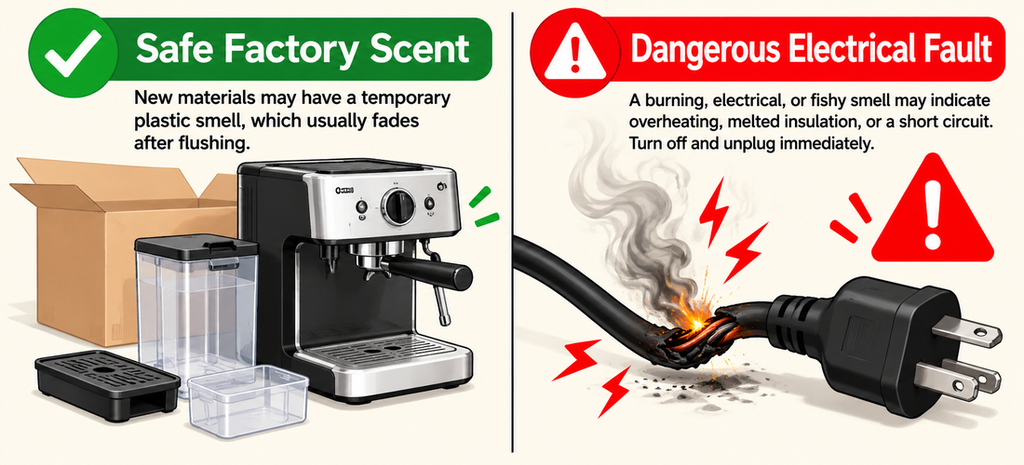
A standard factory odor shares characteristics with fresh plastic and should fade rapidly after your first deep clean.
However, an aggressive, fishy chemical smell or a sharp scent of burning wires is consistent with an electrical malfunction. If you notice smoke, melting plastic, or sparks, turn off the machine immediately, unplug it from the wall, and contact the manufacturer for a replacement.
Is the Chemical Taste in Your Coffee Dangerous?
Most reputable commercial brands construct their water systems using certified, food-grade BPA-free plastic. These materials resemble stable food-contact polymers that do not leach harmful toxins into your cup during ordinary use.
The primary issue is not toxicity, but quality. Volatile factory gasses easily dissolve into hot water, giving your espresso a terrible chemical aftertaste. For your own comfort, you should avoid drinking any coffee until the machine’s internal lines are fully cleared.
Step 1: The Initial Deep Flushing Cycle
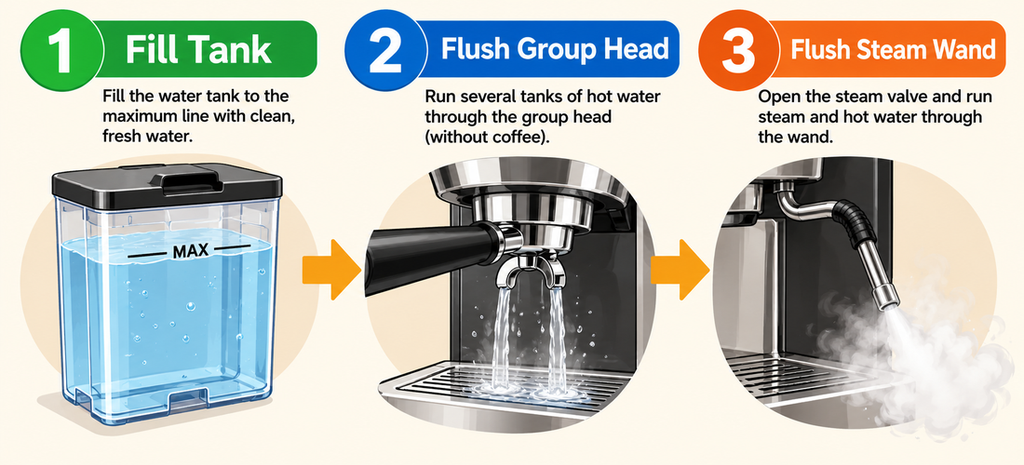
The first and most effective defense against factory odors is a mechanical flush of the entire water circuit. You must run this cooling and cleaning cycle using only fresh water, without adding any coffee grounds to the portafilter.
How to run a deep flush:
- Fill the water reservoir to the maximum line with fresh, cold water.
- Pump at least 2 to 3 full water tanks directly through the group head.
- Run the hot water dial and steam wand continuously for 60 seconds.
- Discard all collected rinse water immediately; never use it for drinks.
Mechanically washing the lines removes loose dust and surface residues. Once you clear out the initial stagnant factory water, you provide a clean environment for your coffee extraction.
Step 2: The Safe Citric Acid or Vinegar Wash
If a basic water flush fails to remove the stubborn polymer scent, a mild acid wash can help break down the manufacturing compounds. However, always check your product manual first: major brands like De’Longhi and Breville explicitly warn that harsh vinegar can erode internal heating elements.
How to run a safe acid wash:
- Mix a 1:1 solution of white vinegar and water (or use approved citric acid descaler).
- Pour the mixture into the tank and run half of the liquid through the group head.
- Turn off the machine and let the solution sit idle inside the boilers for 15 minutes.
- Flush the remaining liquid through, then run 2 full tanks of clean water to rinse.
Using a mild acid wash neutralizes stubborn, synthetic factory smells. Ensuring you run a final freshwater rinse guarantees your next espresso won’t taste sour or acidic.
Step 3: Off-Gassing and Aerating Removable Parts
Frequently, the chemical smell isn’t originating from the internal boilers, but from the raw plastic of the removable water tank or its lid. Treating these external components requires basic airflow rather than internal flushing.
How to air out your components:
- Detach the water reservoir, lid, and plastic drip tray from the machine.
- Wash the parts thoroughly using warm water and mild dish soap, then rinse.
- Place the components in a well-ventilated shade or balcony for 24 hours.
Leaving these items to air out allows trapped factory gasses to safely disperse. Avoid leaving thin plastic parts under direct, intense sunlight, as extreme UV rays can warp the shapes of budget reservoirs.
The Ultimate Espresso Machine Odor Troubleshooting Chart
Most reputable brands use food-contact materials, including BPA-free plastic, in their espresso machines. However, new-material odors can affect coffee flavor, so flush the machine thoroughly before brewing your first cup.
| What You Smell | Potential Cause | The Safe Solution |
|---|---|---|
| New plastic odor | Standard factory outgassing | Run 2–3 water-only flushes. |
| Burning or fishy smell | Electrical short circuit / melting | Unplug immediately. Contact support. |
| Musty or moldy odor | Stagnant water scale buildup | Clean the tank; run a descale cycle. |
Differentiating between a factory scent and an electrical fault is critical for your safety. Always review the physical warning labels on your machine’s cord and check the manufacturer’s manual before attempting aggressive chemical cleanings.
FAQ: Curing New Espresso Machine Scents
How many flushes does it take to remove the plastic taste?
Usually, 2 to 4 full water reservoirs will completely clear the lines. If you have run more than 5 full tanks of water and the intense chemical taste still ruins your coffee, stop using the machine and request a factory replacement.
Can I use dish soap inside the internal water lines?
No, never pour dish soap into the internal water reservoir. Soap creates uncontrollable foam inside the high-pressure boilers that is nearly impossible to flush out. Only use soap on external, removable plastic trays.
Why does the plastic smell come back when the machine gets hot?
High thermal heat accelerates the natural outgassing process of new plastics. If the smell returns only when brewing espresso, it means the internal silicone tubes need a few more hot water flushing cycles to fully cure.
Conclusion: Enjoying a Chemical-Free Espresso
A strong plastic smell from a new espresso machine is highly annoying, but it is easily fixed with a structured flushing routine. By systematically washing the water lines and airing out the plastic reservoir, you can safely protect your health and enjoy pure coffee flavors.
Is your water ratio dialed in perfectly? Once your machine is clean and odor-free, exact measurements are key to a great shot. Try our interactive Caffeine Calculator to easily cross-check your daily extraction variables and lock in pure coffee flavor today.