
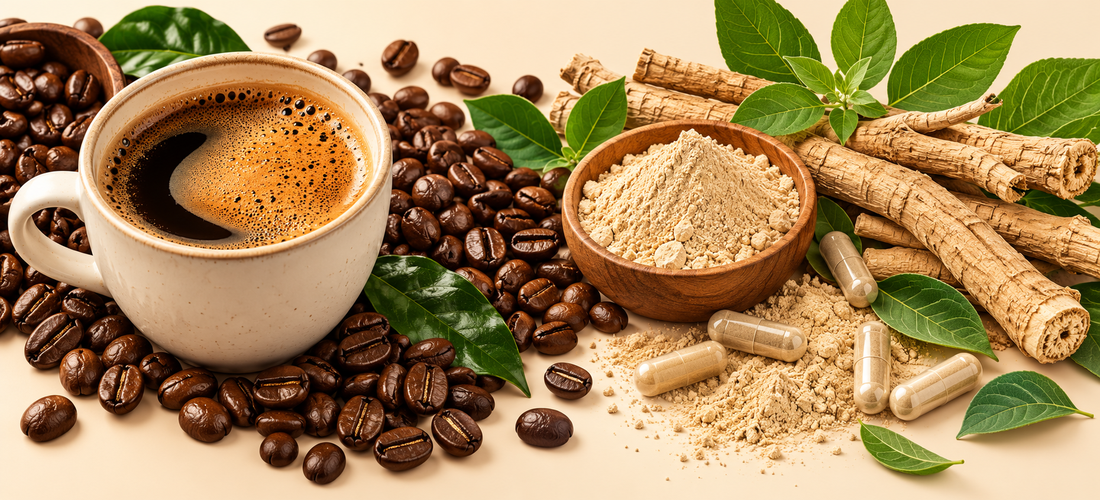
Combining caffeine with ashwagandha keeps you alert while buffering physical jitters, but managing your daily dosage boundaries is essential. For most healthy adults, this pairing delivers smooth energy, provided you avoid boiling water that damages delicate plant nutrients.
The Caffeine-Ashwagandha Synergy: What Happens When They Mix?
Caffeine stimulates the central nervous system, increasing alertness and sometimes causing nervousness, shakiness, or a racing heartbeat. Ashwagandha is an herbal supplement studied for potential effects on stress and sleep.
These substances work differently, and there is no strong clinical evidence that combining them produces better energy or reliably prevents caffeine-related side effects.
Research suggests certain ashwagandha extracts may help reduce perceived stress, but results vary by preparation and study. Do not assume ashwagandha neutralizes caffeine or makes excessive coffee consumption safer.
Preventing Caffeine Jitters: The Science of Smooth Energy
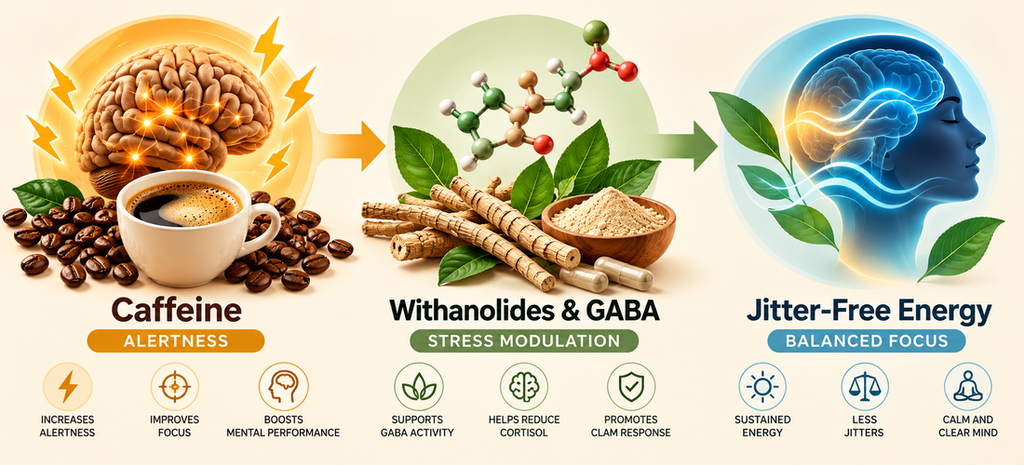
Coffee jitters hit when caffeine blocks adenosine receptors, forcing your nervous system into overdrive. Ashwagandha suppresses these tremors because its active withanolides mimic GABA, the brain’s primary calming neurotransmitter. This binding naturally slows down hyper-excited neural firing.
The neurological fix targets specific pathways:
- GABA Pathways: Relax peripheral muscles to stop shaky hands and nervous twitching.
- Rebound Protection: Soften the hard energy crash when caffeine leaves your brain cells.
Standardized extracts ensure you get a reliable dose of active, nervous-system-stabilizing compounds every morning. Target the neural root cause directly to eliminate jitters without reducing your daily caffeine intake.
Optimal Timing: Should You Mix Them in the Same Cup?
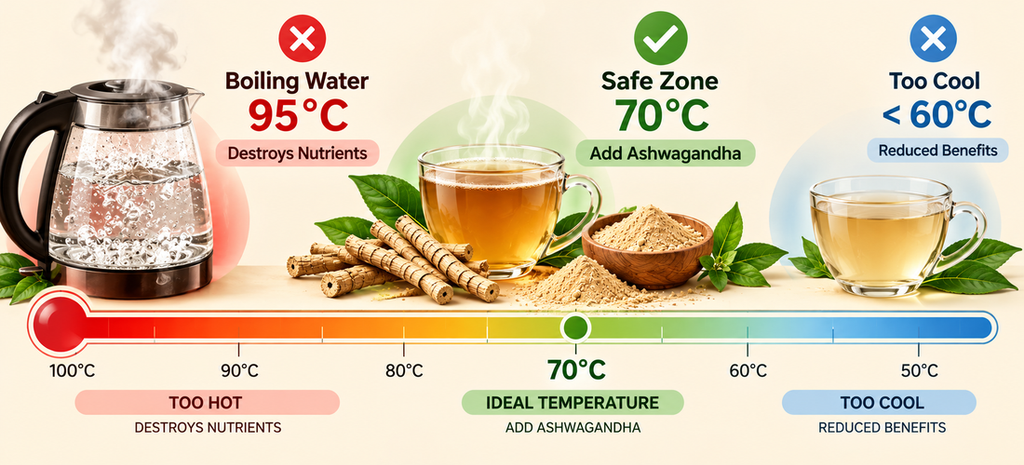
Dumping raw herbal powder into boiling coffee destroys its active nutrients. Water hotter than 90°C breaks down delicate withanolide glycosides, turning premium adaptogens into useless cup sediment. To keep molecules alive, cool the liquid or stagger your intake.
Three timing protocols for home brewers:
- The 70°C Rule: Cool your espresso for two minutes before stirring powder into the cup.
- The Pre-Prime: Take an ashwagandha capsule 15 minutes before your first sip to shield your nervous system.
- The Two-Hour Stagger: Drink coffee at 8 AM, then take your adaptogen at 10 AM to block the crash.
Protecting these chemical structures ensures your body absorbs the full functional value of the herb. Align your morning routine with these temperature benchmarks to avoid wasting premium supplements.
Finding Your Safe Dosage: Extract Tiers vs. Caffeine Limits
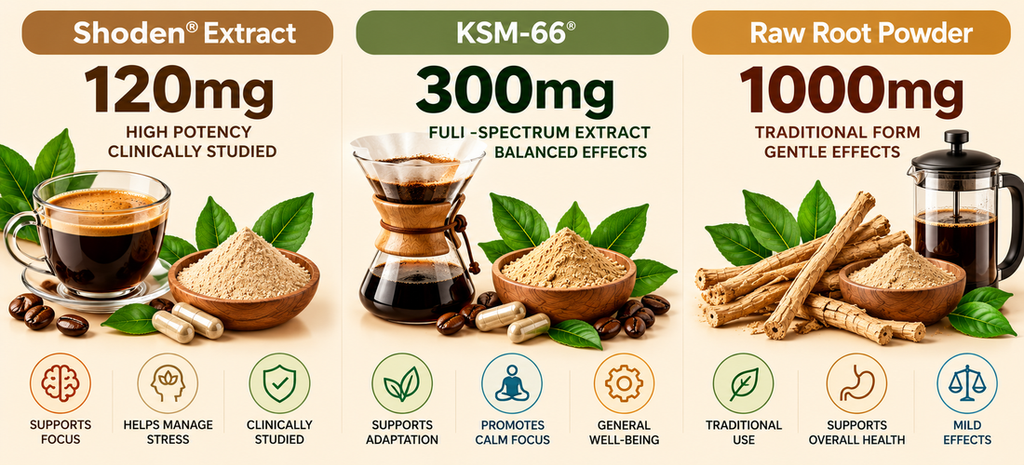
An incorrect dosage ratio turns functional coffee into either a sedative drink or a panic trigger. High-potency extracts require extreme accuracy, while raw root powder acts much milder. Your safe chemical balance depends entirely on your total daily caffeine intake.
| Extract Type | Safe Herb Dose | Max Caffeine |
|---|---|---|
| Shoden (35%) | 120 mg – 240 mg | 200 mg – 400 mg |
| KSM-66 (5%) | 300 mg – 600 mg | 100 mg – 300 mg |
| Raw Root | 1,000 mg – 3,000 mg | Under 150 mg |
To get the best results, match these baseline metrics with your target brewing equipment:
- Shoden Extract: Ideal for intense extractions like a double espresso or a stovetop moka pot.
- KSM-66 Extract: Best suited for clean, high-volume filter coffee and standard daily pour-overs.
- Raw Root Powder: Perfect for low-caffeine recipes like a light AeroPress or a long french press.
Maintaining these limits stops either compound from overwhelming your liver and metabolic pathways. Weigh ingredients on a digital pocket scale with a 0.1g increment to guarantee a safe, productive energy exchange.
Side Effects and Interactions: When to Avoid the Combination
Combining stimulants with adaptogens can trigger internal stress under specific conditions. Ashwagandha alters thyroid activity, compounding the heart-racing effects of caffeine. If chest tightness, fatigue, or cramps occur, suspend consumption immediately.
Three scenarios that require extreme caution:
- Thyroid Issues: This blend resembles triggers that alter circulating T3 and T4 hormones.
- Autoimmune Protocols: Immune-modulating plants can actively conflict with prescription immunosuppressive medications.
- Hepatic Loading: Concentrated botanical extracts place an additional clearance burden on liver pathways.
Never ignore a racing heart or sudden gastric discomfort when testing new functional routines. If symptoms appear, switch to decaf immediately and consult a doctor before reintroducing any herbs.
Best Ashwagandha Delivery Forms for Coffee Brewers
Your supplement format changes absorption speed and your coffee’s taste profile. Liquid tinctures mix instantly but carry a deep bitterness that overpowers delicate roasts. Standardized capsules offer total dosing accuracy while protecting your palate from harsh flavors.
| Format | Taste Impact | Main Benefit |
|---|---|---|
| Capsule | Neutral | Protects delicate coffee tasting notes |
| Tincture | Highly Bitter | Fast sublingual and gastric absorption |
| Creamer | Smooth / Sweet | Dissolves fat-soluble herbal fractions |
Balancing functional performance against sensory pleasure is key to a sustainable daily routine. If you brew expensive, single-origin specialty beans, stick to capsules to keep your tasting notes completely clean.
Step-by-Step Guide to Brewing Your First Adaptogenic Coffee
Making a perfect functional brew requires keeping strict control over your extraction variables and water temperatures. This process shields the volatile oils in your coffee while keeping the adaptogen’s molecular bonds intact.
How to prepare your morning cup:
- Pull the Shot: Brew your standard espresso or filter coffee exactly how you normally do.
- Cool the Fluid: Let the hot coffee rest undisturbed for 120 seconds until it drops to 70°C.
- Add the Powder: Drop your measured dose of KSM-66 or liquid tincture directly into the liquid.
- Emulsify: Whip the mixture with a handheld milk frother for 10 seconds to blend the layers together smoothly.
Sticking to this routine prevents extreme heat from damaging the active ingredients in your supplements. Drinking this mix alongside a balanced breakfast improves absorption and keeps your stomach free from irritation.
Frequently Asked Questions (FAQ)
Does hot coffee destroy ashwagandha?
Only if the liquid is boiling hot. Dropping your supplement into coffee above 90°C breaks down active withanolides. Letting the cup cool down to 70°C ensures full molecular survival.
Can You Take Ashwagandha and Coffee at the Same Time?
Yes, these substances can be consumed together, though individual responses vary. Combining adaptogenic herbs with coffee requires mindfulness regarding your specific tolerance to both stimulants and calming agents.
Does Ashwagandha Help Reduce Caffeine Jitters?
Yes, it directly targets muscle twitching and scattered focus. The plant’s active compounds stimulate GABA receptors, applying a natural chemical brake to the central nervous system acceleration caused by caffeine. This biochemical interaction smoothens the intense stimulant spike into sustainable, linear focus.
Conclusion: Can You Take Ashwagandha and Coffee at the Same Time?
Adding ashwagandha to your morning coffee is a great, safe way to get clean energy and sharp focus without structural nervous system anxiety. Managing your daily stimulant boundaries ensures your body stays perfectly balanced, productive, and free from unexpected metabolic stress.
To precisely map out your personalized daily consumption limits and find your exact tolerance threshold, utilize our complimentary Caffeine Calculator tool. Tracking your accurate liquid metrics ensures your morning routine remains highly productive, scientifically balanced, and completely health-safe.