
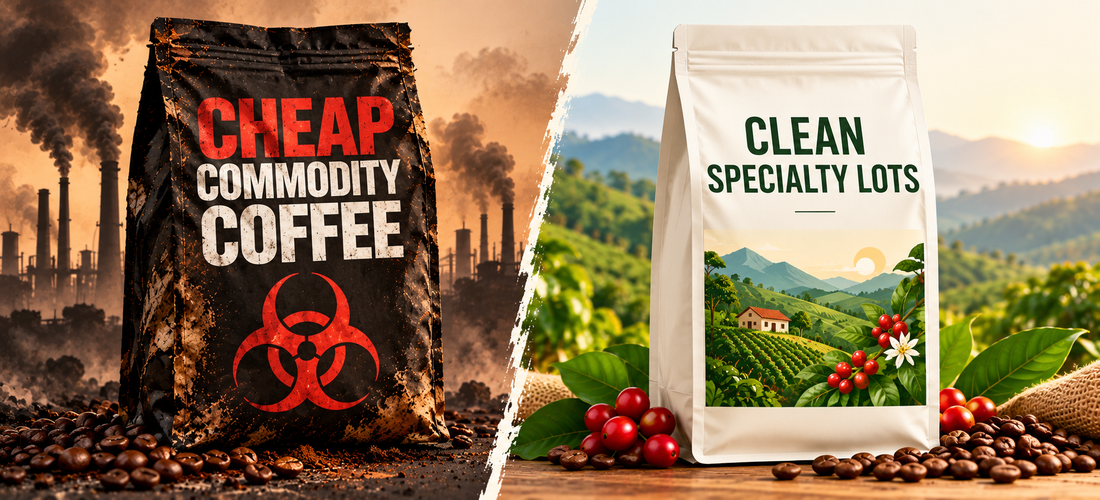
Cheap supermarket coffee often triggers intense headaches and migraines. The real cause isn’t caffeine, but chemical impurities and mold toxins found in low-grade beans.
The Hidden Chemistry of Commodity Coffee
Cheap coffee contracts prioritize massive volume over rigorous chemical safety and sorting. Unregulated farming practices leave behind chemical residues that irritate sensitive nervous systems and cause vascular discomfort.
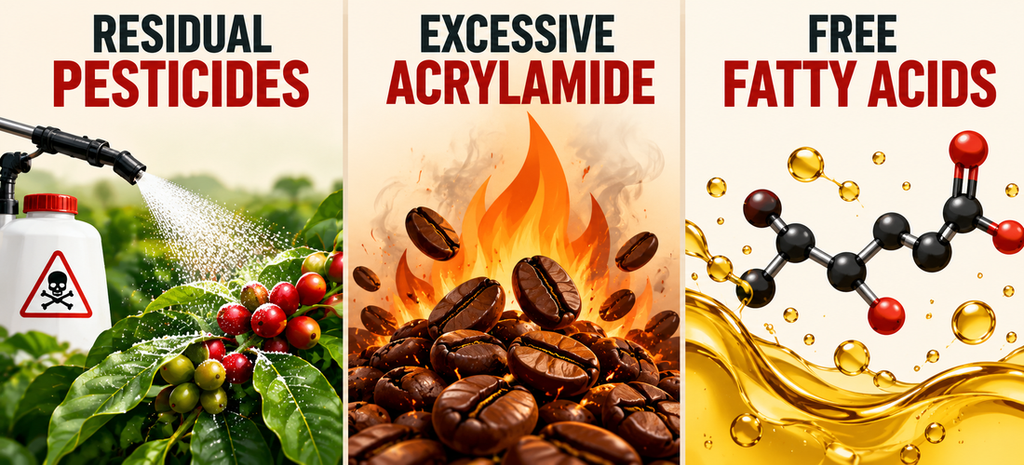
The primary chemical triggers:
- Residual Pesticides: Toxic agricultural chemicals left on uncertified commodity crops.
- Excessive Acrylamide: Toxins formed during rapid, high-heat industrial flash roasting.
- Free Fatty Acids: Oxidized lipids from stale, improperly stored green beans.
Isolating these hidden variables explains why high-end specialty coffee rarely causes physical pain. Switching to clean, trace-free coffee lots is the fastest way to reclaim a comfortable morning routine.
Robusta vs. Arabica: The Caffeine Jolt and Muscle Tension
Mass-market blends rely on cheap Robusta beans to cut costs. Robusta contains up to 80% more caffeine than specialty Arabica. This massive spike causes sharp blood vessel constriction followed by a painful vascular rebound, triggering intense migraines.
How high caffeine doses trigger physical tension:
- Adrenaline Surge: Spikes your body’s fight-or-flight hormone response instantly.
- Vascular Spasms: Constricts and dilates brain arteries, creating pulsing pressure.
- Muscle Tightness: Overstimulates nerves, locking up your upper neck muscles.
Opting for lower-caffeine Arabica beans prevents your nervous system from entering this hyper-reactive state. Balancing your organic intake ensures you experience sustained mental clarity without structural physical consequences.
Mass Commercial Roasting vs. Precision Specialty Roasting
Commercial supermarket coffee is often roasted for speed and volume. Specialty roasters use tailored heat profiles, often over 10–14 minutes, though roast times vary by equipment and bean. Longer roasting doesn’t automatically make coffee safer or healthier.
The stark technical differences between these two methods directly impact your wellbeing:
| Roasting Attribute | Mass Commercial | Precision Specialty |
|---|---|---|
| Heat Style | Flash heat (260°C); scorched exterior, raw core. | Gradual convective airflow; even thermal development. |
| Gas Retention | Traps bitter, toxic carbon compounds inside. | Promotes controlled outgassing during cooling. |
| Defect Sorting | Zero sorting; roasts moldy and sour defects together. | Multi-stage hand and optical defect sorting. |
Precision-roasted coffee minimizes your exposure to toxic byproducts. Eliminating charred, unevenly developed beans directly protects your vascular system from sudden inflammatory reactions.
The Role of Biogenic Amines and Fermentation Faults
Wild fermentation in cheap coffee creates toxic histamines. Leaving harvested cherries in unmanaged heaps allows rogue bacteria to build up biogenic amines. These chemical leftovers instantly trigger severe neurogenic headaches.
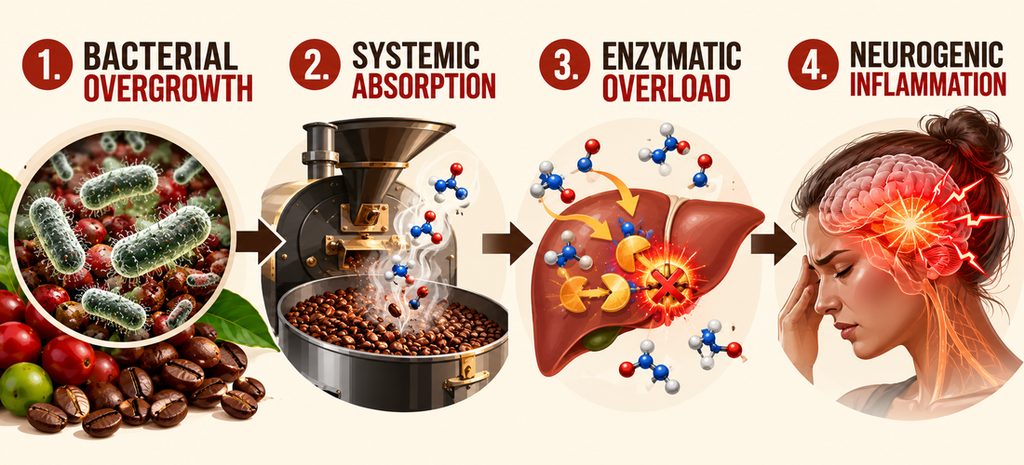
The biological progression of a fermentation-induced headache:
- Bacterial Overgrowth: Wild yeasts build up histamine on rotting cherry skins.
- Systemic Absorption: Heat-resistant amines survive roasting and dissolve into your cup.
- Enzymatic Overload: Toxins overwhelm your body’s enzymes and flood your bloodstream.
- Neurogenic Inflammation: Elevated histamines irritate your trigeminal nerve, triggering sharp head pain.
Avoiding coffees processed with loose, unregulated industrial methods cuts off this chain of chemical triggers. Selecting cleanly washed specialty lots keeps your morning beverage free from hidden fermentation faults.
Mycotoxins and Mold Contamination in Cheap Blends
Cheap coffee may develop mold during humid, poorly controlled storage. Some fungi produce Ochratoxin A, a mycotoxin that can survive roasting. However, typical exposure hasn’t been shown to cause immediate inflammation or headaches.
Critical sourcing indicators to protect your health:
- Third-Party Testing: Premium roasters display clean certificates showing zero detectable mold toxins.
- Sourcing Transparency: Reliable packages explicitly print the exact farm name and harvest year.
- Single-Origin Tracking: Avoiding multi-country commodity blends removes the risk of toxic lots.
Insisting on complete batch transparency ensures you never accidentally ingest harmful fungal bi-products. Investing in cleanly stored agricultural crops guarantees your morning caffeine intake remains entirely health-safe.
Chlorogenic Acid Degradation and Cortisol Spikes
Aggressive roasting degrades beneficial chlorogenic acids into harsh irritants that alter gastric pH. These compounds may trigger a spike in systemic cortisol levels, constricting blood vessels and potentially causing severe tension headaches.
Poorly roasted beans trigger a stress response that manifests through these distinct physiological warnings:
- Cold Sweats: Clammy palms and sudden skin temperature drops within 10 minutes of drinking.
- Elevated Pulse: A racing, pounding heart rate occurring before caffeine fully absorbs.
- Gastric Distress: Sour stomach cramps that trigger head pain via the gut-brain axis.
Flooding your body with stress hormones and chemical irritants forces dangerous vascular constriction. Switching to cleanly developed specialty coffee stabilizes your endocrine system and protects your cardiovascular health.
How to Safely Switch to Headache-Free Brewing
Upgrading your bean quality eliminates chemical headaches without triggering brutal caffeine withdrawal. Systematically replacing commodity coffee preserves your morning energy while removing toxic manufacturing variables.
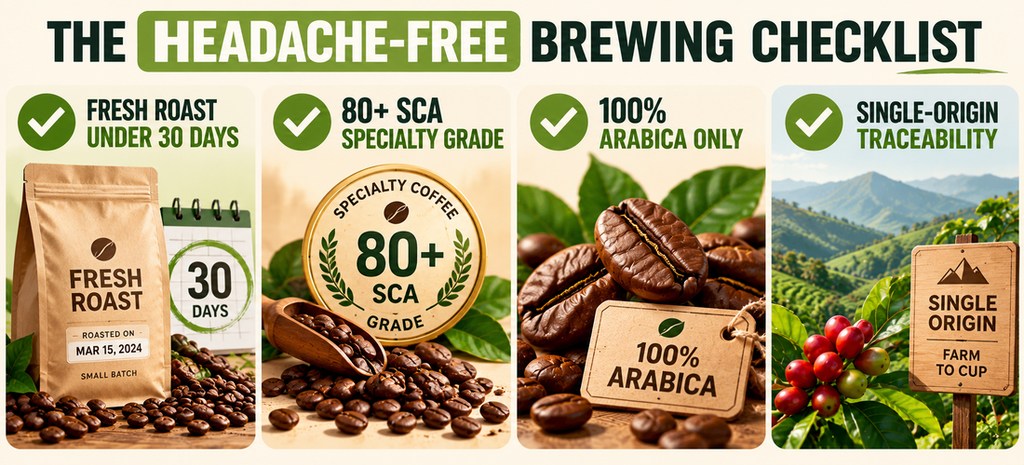
Follow this simple checklist to optimize your daily brewing routine smoothly:
- Source Freshness: Buy coffee with a verified roast date under 30 days old.
- Verify Grade: Purchase beans scored 80 points or higher on the specialty scale.
- Match Consumption: Keep your daily fluid ounces steady to avoid caffeine deprivation.
Making this deliberate change quickly shields your body from low-grade roasting defects. Consistent bean quality stabilizes blood flow and guarantees a clean, side-effect-free energy boost.
FAQ: Decoding Common Coffee-Induced Migraines
Why does cheap coffee cause headaches, but expensive specialty coffee doesn’t?
Price isn’t the main factor. Cheaper blends may contain more Robusta and caffeine. Bean quality, caffeine dose, and personal sensitivity can all affect headache risk.
Can old, stale supermarket coffee cause severe headaches?
Stale coffee mainly loses flavor; evidence linking staleness directly to severe headaches is limited. Caffeine levels, sensitivity, and withdrawal are more established triggers.
Does switching to organic coffee eliminate coffee headaches?
No. Organic certification doesn’t guarantee headache-free coffee. Try fresh, high-quality Arabica, monitor caffeine intake, and reduce consumption gradually if needed.
Final Verdict: Choose Coffee That Suits You
Coffee-related headaches aren’t necessarily caused by cheap beans. Caffeine dose, individual sensitivity, sleep, and changes in daily consumption may all play a role. Specialty coffee can offer better flavor and traceability, but it doesn’t guarantee a headache-free experience.
Here’s how to find what works for you:
- Track your caffeine: Record your coffee servings, headache symptoms, and when they occur.
- Adjust one variable at a time: Try a smaller serving, a different brew strength, or decaf to identify potential triggers.
- Avoid sudden changes: If you drink coffee regularly, reduce caffeine gradually to minimize withdrawal headaches.
Use our Caffeine Calculator to estimate your daily caffeine intake from coffee and other beverages. Knowing your approximate total can help you make more informed choices about serving sizes and consumption habits.