
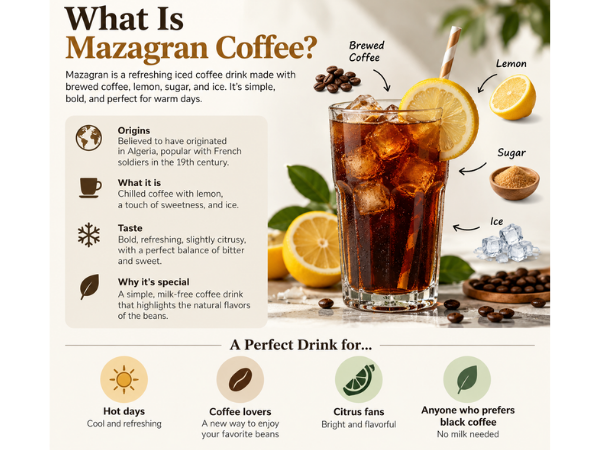
Mazagran is a refreshing coffee drink made with brewed coffee, lemon, sweetener, and ice. Because the drink combines coffee with bright citrus, the beans you choose can noticeably change the final flavor.
What Is Mazagran Coffee?
Mazagran is a cold coffee drink traditionally associated with coffee, lemon, sugar, and a chilled serving style. It is often described as an early form of iced coffee, although recipes vary by country and preparation method.
The combination is simple, but the balance matters. Coffee provides bitterness and body, lemon adds acidity, sugar softens both flavors, and ice makes the drink crisp and refreshing.
Unlike milk-based iced coffee drinks, Mazagran does not rely on milk or cream to round out the coffee. That means the character of the beans remains relatively noticeable.
Best 7 Coffee Beans to Make Mazagran Coffee
The following seven coffees offer different flavor profiles, so there is no need to use the same style of bean for every recipe. A bright Ethiopian or Kenyan coffee can emphasize the citrus side of Mazagran, while Colombian, Guatemalan, or Brazilian coffee can create a deeper and smoother drink.
1. Volcanica Coffee Ethiopian Yirgacheffe
Ethiopian Yirgacheffe is a natural starting point for a bright and refreshing Mazagran. Coffee from this region is often associated with floral aromas, fruit-forward flavors, and lively acidity.
Key Features:
- Ethiopian Yirgacheffe coffee
- Light roast profile
- Fruity and floral character
- Bright acidity
- Whole coffee beans
- Suitable for grinding fresh before brewing
For Mazagran, this type of coffee works especially well when you want the lemon to enhance the coffee’s natural citrus and fruit notes.

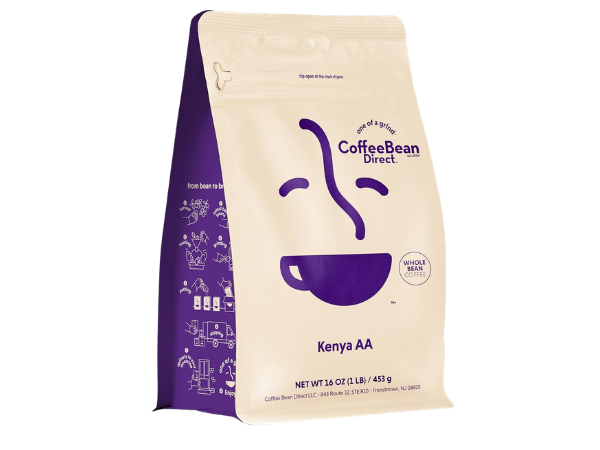
2. Coffee Bean Direct Kenya AA, Whole Bean
Kenya AA is a good choice when you want a Mazagran with pronounced fruitiness and acidity. Kenyan coffee can have berry-like and citrus characteristics that create an interesting contrast with fresh lemon.
Key Features:
- Kenya AA whole beans
- Light roast profile
- Fruity and berry-like notes
- Bright acidity
- Vibrant flavor
- Whole bean format
If the finished drink tastes too sharp, slightly increase the sugar or reduce the amount of lemon rather than making the coffee much weaker.
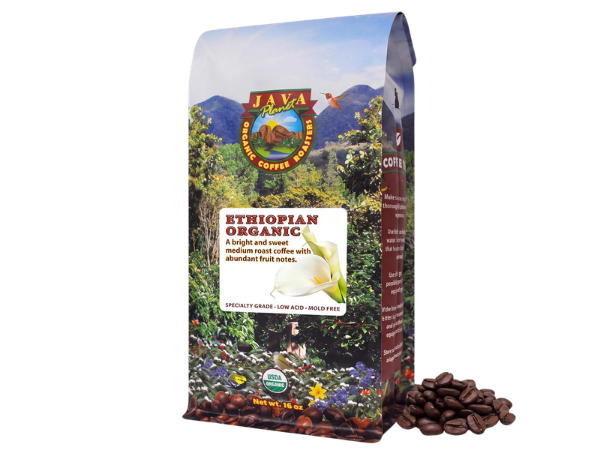
3. Java Planet Low Acid Organic Ethiopian
This Java Planet Ethiopian coffee offers a different approach to Mazagran. Its medium roast and low-acid positioning make it useful for coffee drinkers who enjoy Ethiopian beans but do not want an aggressively acidic cup.
Key Features:
- Ethiopian coffee
- Medium roast
- Low-acid positioning
- Organic whole beans
- Fruity coffee character
- Smoother profile than many bright light roasts
This can be a particularly useful option if you find light-roast Ethiopian coffee too sharp with lemon.
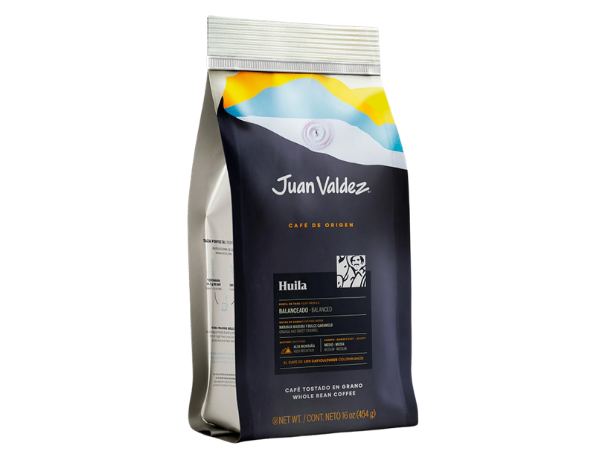
4. Juan Valdez Huila Whole Bean Coffee
Juan Valdez Huila brings a balanced Colombian profile to the selection. Huila is one of Colombia’s well-known coffee-growing regions, and coffees from the area can combine sweetness, fruit characteristics, and moderate acidity.
Key Features:
- Colombian Huila coffee
- Whole bean format
- Balanced flavor profile
- Moderate acidity
- Natural sweetness
- Suitable for everyday brewing
Its balanced character gives you more flexibility with lemon and sweetener, making it easier to adjust the recipe to your taste.
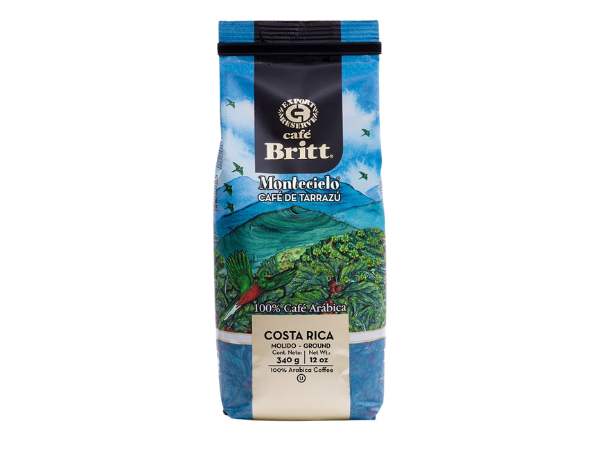
5. Café Britt Montecielo Costa Rican Coffee Tarrazú, Whole Bean
Costa Rican Tarrazú coffee can work particularly well when you want a clean and refreshing Mazagran. The region is known for coffees with bright acidity and a clean cup profile, while sweetness can provide a useful counterpoint to lemon.
Key Features:
- Costa Rican Tarrazú coffee
- Whole beans
- Clean flavor profile
- Bright acidity
- Sweet coffee character
- Good match for citrus-based drinks
Use this coffee when you want the lemon to remain an important part of the drink rather than simply adding a small acidic accent.
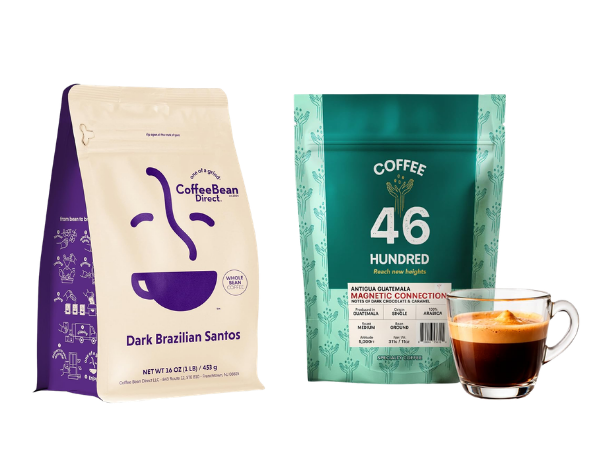
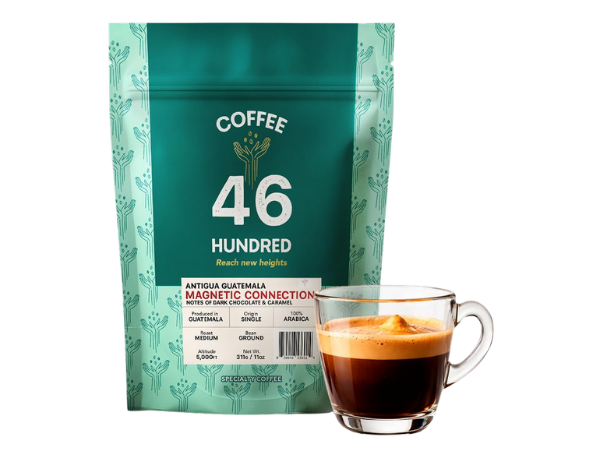
6. COFFEE 46 HUNDRED Antigua Guatemala Ground Coffee
Guatemalan coffee gives you a richer alternative to the fruit-forward options above. This Antigua coffee features chocolate and caramel flavor characteristics, creating a deeper contrast with the sharpness of lemon.
Key Features:
- Antigua Guatemala coffee
- Chocolate flavor notes
- Caramel characteristics
- Richer coffee profile
- Ground coffee format
- Good alternative to highly acidic coffees
Chocolate and caramel notes can make Mazagran taste more dessert-like without requiring a large amount of sugar.
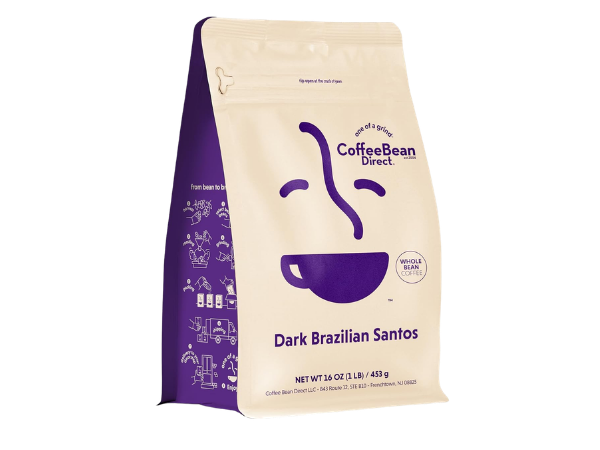
7. Coffee Bean Direct Dark Brazilian Santos, Whole Bean
Brazilian Santos provides the darkest and most robust profile in this selection. Instead of emphasizing floral or citrus characteristics, this style of coffee can bring stronger roasted, nutty, and chocolate-like flavors.
Key Features:
- Brazilian Santos coffee
- Dark roast
- Whole bean format
- Bold coffee flavor
- Nutty and roasted characteristics
- Lower emphasis on bright acidity
Because dark roast coffee can introduce more bitterness, it is important to balance this version carefully.
What Kind of Coffee Is Best for Mazagran?
There is no single “correct” bean for Mazagran. The best choice depends on how you want the finished drink to taste.
For a bright and refreshing drink, start with a light-roast coffee with fruity or floral characteristics. Ethiopian and Kenyan beans are particularly interesting because their acidity and fruit notes can complement lemon.
If you prefer a smoother and more balanced drink, choose a medium roast. Colombian, Costa Rican, and Ethiopian medium-roast coffees can provide enough sweetness and body without making the drink excessively bitter.
For a stronger, darker cup, a medium-dark or dark roast can also work. Brazilian coffee with nutty or chocolate-like notes is a good example of this style.
Light vs. Medium Roast: Which Works Better?
For most homemade Mazagran recipes, light to medium roast coffee is the easiest place to start.
Light roasts tend to preserve more of the coffee’s natural acidity and fruit character. That can be an advantage when lemon is part of the recipe, because the coffee can contribute complexity instead of tasting simply bitter and strong.
Medium roasts generally provide more body and sweetness. They can be easier to balance when you are using sugar and lemon, particularly if you prefer a less acidic drink.
| Roast | Typical Character | Mazagran Result |
|---|---|---|
| Light | Floral, fruity, acidic | Bright and refreshing |
| Medium | Balanced, sweet, fuller | Smooth and versatile |
| Dark | Roasted, bold, bitter | Strong and intense |
A very dark roast is not necessarily a bad choice. However, excessive roast bitterness combined with lemon can make the drink taste harsh. If using dark-roasted beans, start with a slightly weaker coffee concentration and adjust the sweetener to taste.
How to Brew Coffee for Mazagran at Home
The brewing method does not need to be complicated. The main goal is to produce a flavorful coffee that remains balanced after dilution from ice and the addition of lemon.
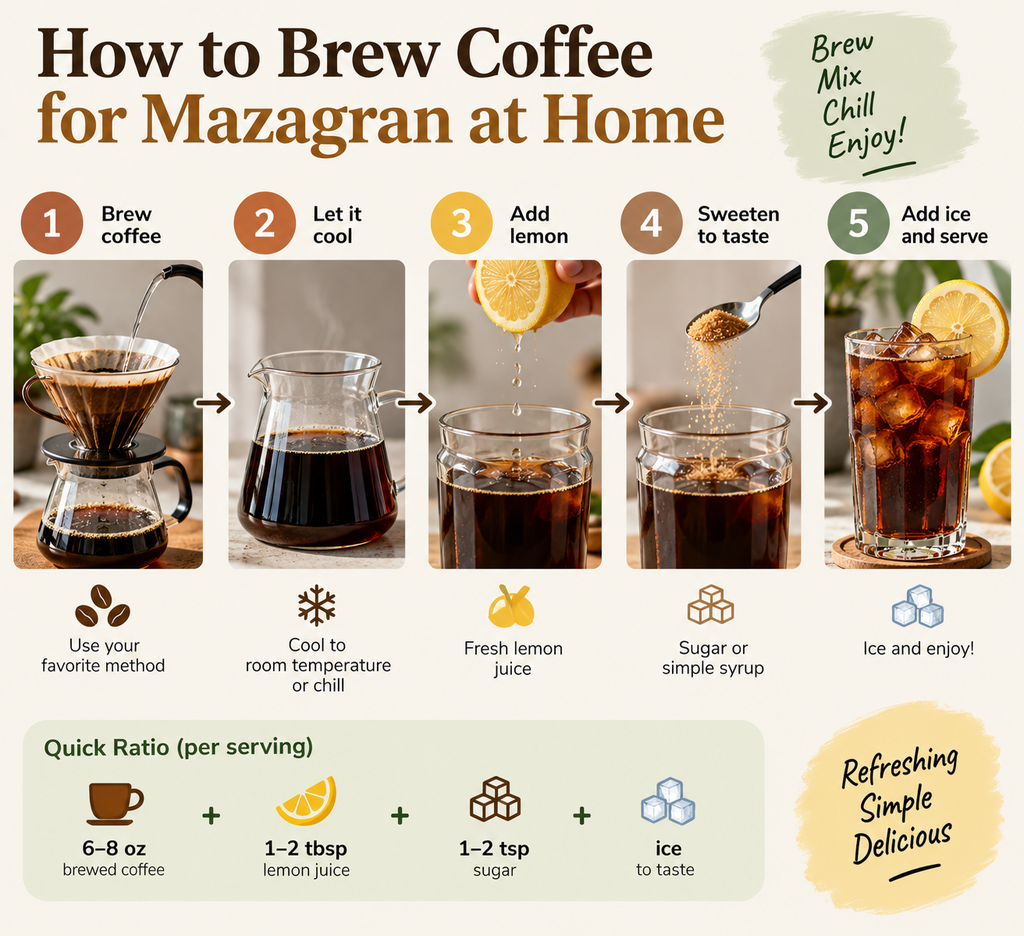
1. Brew a concentrated coffee
Start with your preferred brewing method, such as a drip coffee maker, pour-over, or French press. Brew slightly stronger than you normally would because ice will dilute the drink.
Avoid extracting the coffee too aggressively. Excessive bitterness becomes more noticeable when combined with lemon.
2. Let the coffee cool slightly
Allow the freshly brewed coffee to cool for a few minutes. You can also chill it in the refrigerator if you want a colder drink without relying heavily on ice.
3. Add lemon
Pour the coffee over ice and add fresh lemon juice. Start with a small amount and increase it gradually.
A useful starting point for one serving is:
- 6–8 oz brewed coffee
- 1–2 tablespoons fresh lemon juice
- 1–2 teaspoons sugar or simple syrup
- Ice
Adjust these amounts according to the roast and your preferred balance.
4. Sweeten to taste
Sugar does more than make the drink sweeter. It helps balance coffee bitterness and lemon acidity.
If you use a bright Ethiopian or Kenyan coffee, you may prefer slightly more sweetener. With a chocolatey or nutty coffee, less may be necessary.
5. Serve immediately
Give the drink a good stir and serve over plenty of ice. Mazagran is at its most refreshing when the coffee, lemon, sweetness, and dilution are in balance.
Tips for Better Homemade Mazagran
- Use freshly ground beans whenever possible.
- Choose fresh lemon rather than bottled lemon juice.
- Do not add too much lemon at once.
- Brew the coffee slightly stronger than your usual hot cup.
- Use enough ice to chill the drink quickly.
- Adjust sugar after tasting the coffee and lemon together.
- If the drink tastes too bitter, reduce the coffee strength or increase the sweetness.
- If it tastes too sour, use less lemon or choose a coffee with more body and sweetness.
The easiest way to find your favorite combination is to keep the recipe simple and change one variable at a time. Start with a medium roast, moderate lemon, and a small amount of sugar, then adjust from there.