
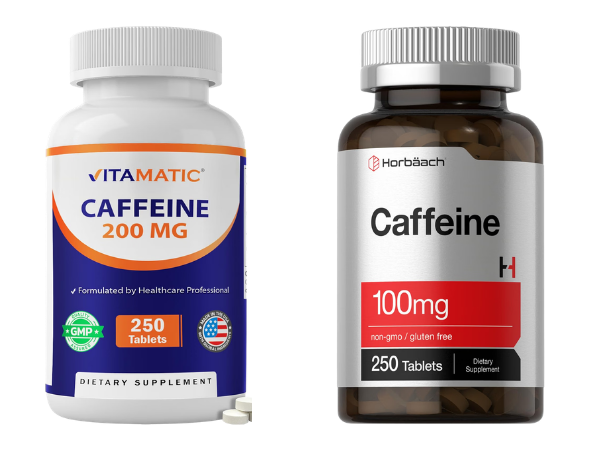
Caffeine tablets are a popular choice for people who want a fast, reliable energy boost without the taste or calories of coffee or energy drinks.
What Are Caffeine Tablets and How Do They Work?
Caffeine tablets are solid supplements designed to deliver a measured amount of caffeine directly into the bloodstream after digestion. Unlike coffee or tea, which vary in caffeine content depending on preparation, tablets guarantee consistency.
Key traits of caffeine tablets:
- Precise Dosage – Each tablet contains a fixed amount, usually 100–200 mg.
- Fast Absorption – Effects begin within 30–60 minutes.
- No Calories – Unlike sugary drinks, tablets add no extra energy intake.
- Controlled Use – Ideal for people tracking caffeine consumption.
By bypassing the variability of brewed drinks, caffeine tablets offer a predictable way to manage energy levels.
Best Caffeine Tablets: Top-Rated Picks
The market offers a wide range of caffeine tablets, each with different strengths and added ingredients. Choosing the right one depends on your tolerance, lifestyle, and desired effect.
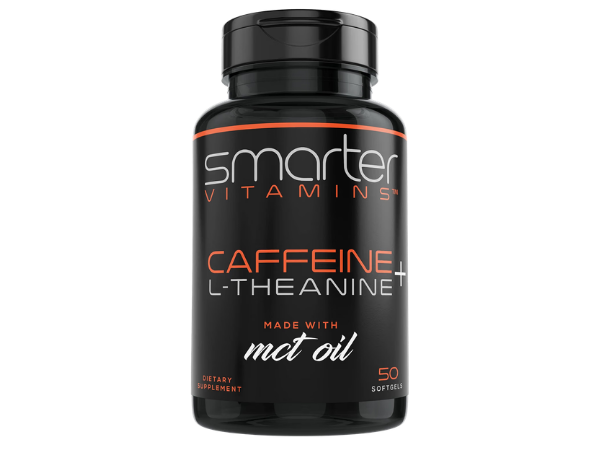
SmarterVitamins Caffeine Pills
SmarterVitamins takes a different approach from basic caffeine tablets by combining caffeine with L-theanine and coconut-derived MCT oil.
- Caffeine: 200 mg per softgel
- L-Theanine: 100 mg per softgel
- MCT Oil: Coconut-sourced MCT oil
- Format: Softgels
- Formula: No proprietary blend; the key ingredients are individually listed
It makes SmarterVitamins particularly different from straightforward caffeine-only options in this roundup, although the 200 mg caffeine dose still puts it firmly in the higher-dose category.
NoDoz Caffeine Pills Maximum Strength
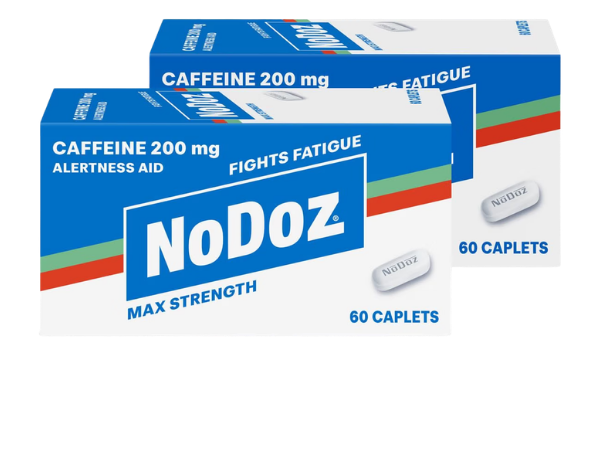
NoDoz is a traditional caffeine alertness aid built around a straightforward 200 mg dose. Its main appeal is simplicity: there are no complicated stimulant blends to interpret, making it easy to understand how much caffeine each caplet provides.
- Caffeine: 200 mg per caplet
- Product type: Alertness-aid caffeine caplets
- Strength: Maximum Strength
- Package: 120 caplets in the listed version
- Primary purpose: Temporary support for mental alertness and wakefulness
At 200 mg per caplet, NoDoz is intended for users who already know how they respond to relatively concentrated caffeine doses.
Vivarin Caffeine Pills
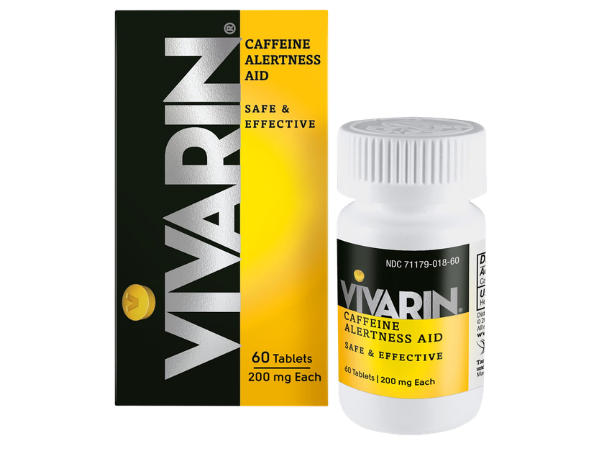
Vivarin is one of the more established caffeine tablet options and uses a simple 200 mg caffeine formula. The current DailyMed listing identifies Vivarin as an OTC caffeine alertness aid and confirms the 60-tablet package with 200 mg of caffeine per tablet.
- Caffeine: 200 mg per tablet
- Package size: 60 tablets
- Product type: OTC caffeine alertness aid
- Serving: 1 tablet
- Active ingredient: Caffeine
Vivarin is a good example of a conventional caffeine tablet: the formula is centered on a clearly stated caffeine dose rather than a large collection of additional stimulants.
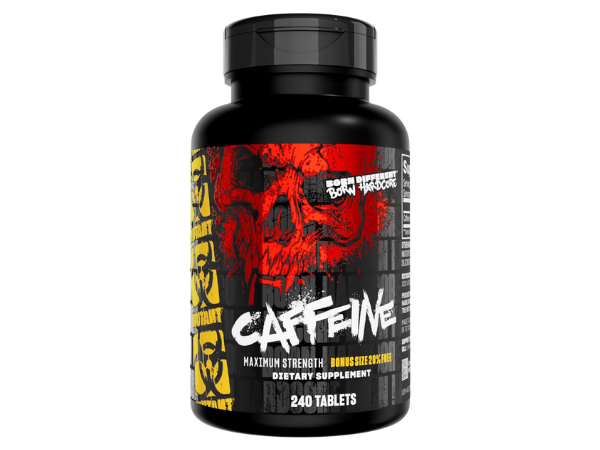
Mutant Caffeine Maximum Strength
Mutant Caffeine focuses on a high-potency, uncomplicated formula. Each tablet supplies 200 mg of caffeine anhydrous, while the 240-tablet bottle provides a particularly large supply for people who prefer buying caffeine supplements in bulk.
- Caffeine: 200 mg per tablet
- Caffeine source: Caffeine anhydrous
- Package: 240 tablets
- Calories and sugar: No added sugar or calories
- Other ingredients: Includes standard tablet excipients such as microcrystalline cellulose and magnesium stearate
With its large bottle and single 200 mg caffeine dose, Mutant is geared toward users looking for a straightforward stimulant without a long ingredient list.
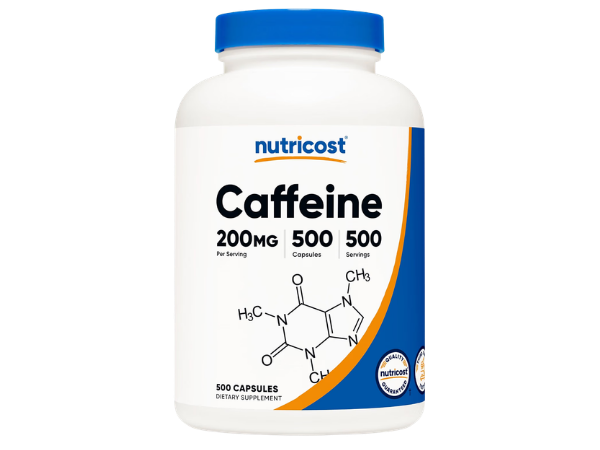
Nutricost Caffeine Pills
Nutricost stands out in this group because its standard version provides 100 mg of caffeine per capsule rather than 200 mg. That lower dose gives users more flexibility when trying to control the amount of caffeine consumed at one time.
- Caffeine: 100 mg per capsule
- Package: 250 capsules
- Caffeine source: Caffeine anhydrous
- Format: Capsules
- Manufacturing: Listed as made in a GMP-compliant facility
A 100 mg capsule can be useful for people who find 200 mg tablets too strong or who want smaller increments when adjusting caffeine intake.
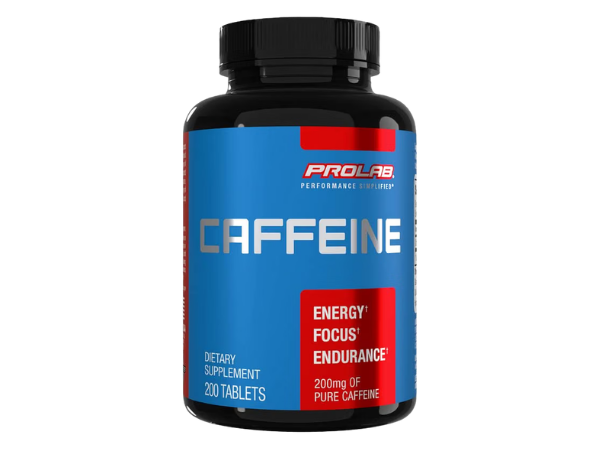
ProLab Caffeine – Energy, Focus & Endurance
ProLab Caffeine is built around 200 mg of pure caffeine per serving and is marketed toward energy, focus, and exercise performance. Its relatively simple formula makes the product easy to compare with other caffeine-only supplements.
- Caffeine: 200 mg per serving
- Serving size: 1 tablet
- Format: Tablets
- Calories: Zero added calories
- Available sizes: 100-, 200-, and 300-tablet options
The main advantage of ProLab is predictability: one tablet delivers a clearly defined 200 mg caffeine dose without a proprietary stimulant matrix.
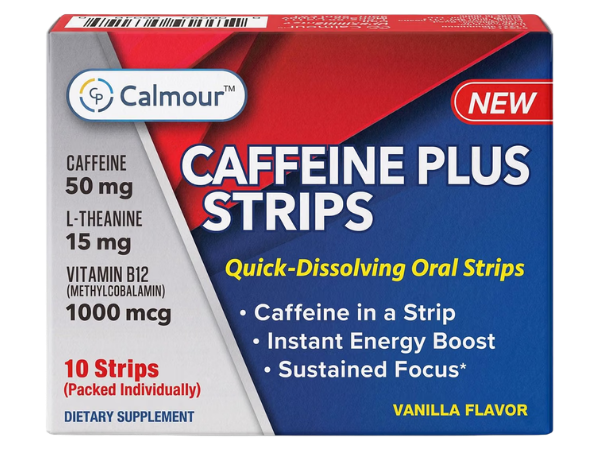
CALMOUR Caffeine Plus Strips
CALMOUR is the outlier in this ranking because it is not a conventional pill or tablet. Instead, the product uses dissolvable oral strips containing a relatively low 50 mg caffeine dose along with L-theanine and vitamin B12.
- Caffeine: 50 mg per strip
- L-Theanine: 15 mg per strip
- Vitamin B12: 1,000 mcg per strip
- Format: Dissolvable oral strip
- Pack options: 10 or 30 strips
Its strip format is also useful for people who want a portable caffeine option without swallowing a pill or preparing a drink.
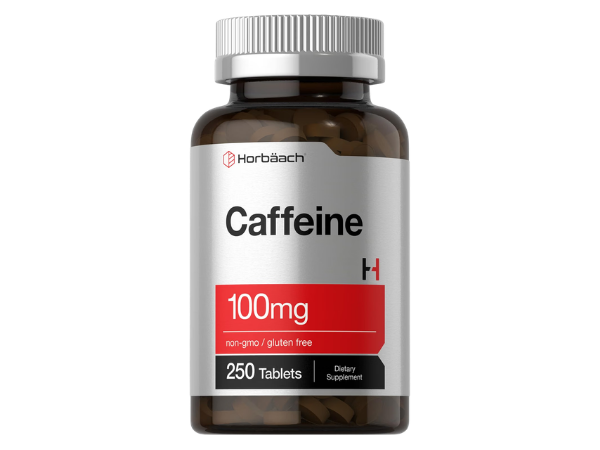
Horbäach Caffeine Pills with Green Tea
The product label and manufacturer information identify 200 mg of caffeine plus 20 mg of green tea extract in each tablet, giving it a slightly more complex formula than caffeine-only tablets.
- Caffeine: 200 mg per tablet
- Green Tea Extract: 20 mg per tablet
- Package: 200 tablets
- Green tea standardization: Listed for polyphenols, catechins, and EGCG
- Formula: Caffeine combined with botanical extract
Although the product is marketed as a 220 mg caffeine pill in its name, the manufacturer’s detailed description separates the ingredients into 200 mg of caffeine and 20 mg of green tea extract.
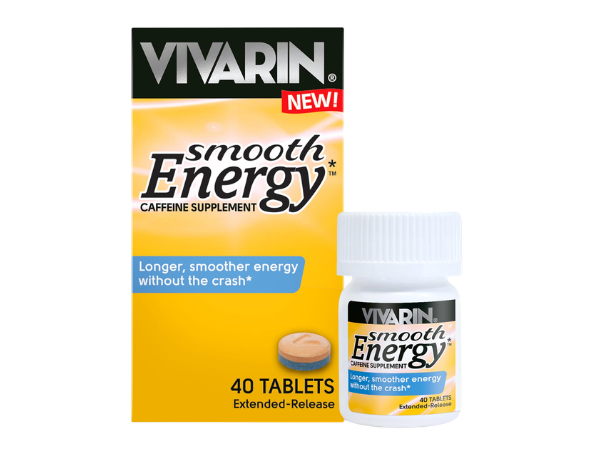
Vivarin Smooth Energy Extended Release Caffeine Tablets
Vivarin Smooth Energy is designed differently from conventional caffeine tablets because it uses a bi-layered tablet. According to the manufacturer, one layer releases caffeine quickly while another is designed for gradual release.
- Caffeine: 200 mg per tablet
- Release design: Bi-layered tablet
- Caffeine source: Caffeine anhydrous
- Recommended interval: Not more often than every 4 hours
- Maximum stated amount: 400 mg in 24 hours
It is intended to provide an initial boost while extending caffeine release, making it particularly relevant for people who prefer a longer-lasting format.
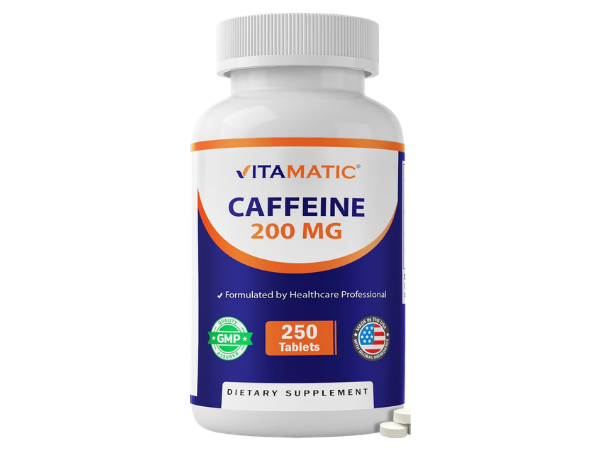
Vitamatic Caffeine Pills
Vitamatic offers a high-dose caffeine tablet with 200 mg per serving and a large 250-tablet bottle. Its formula is intentionally uncomplicated and is marketed without sugar, artificial flavors, or several common dietary ingredients.
- Caffeine: 200 mg per tablet
- Package: 250 vegetarian tablets
- Dietary features: Non-GMO and gluten-free
- Free from: Sugar, starch, sodium, soy, yeast, corn, wheat, and artificial flavors
- Manufacturing: Made in the USA in a GMP-compliant, FDA-registered facility
Its vegetarian tablet format also gives it a small point of differentiation from caffeine products sold in gelatin capsules.
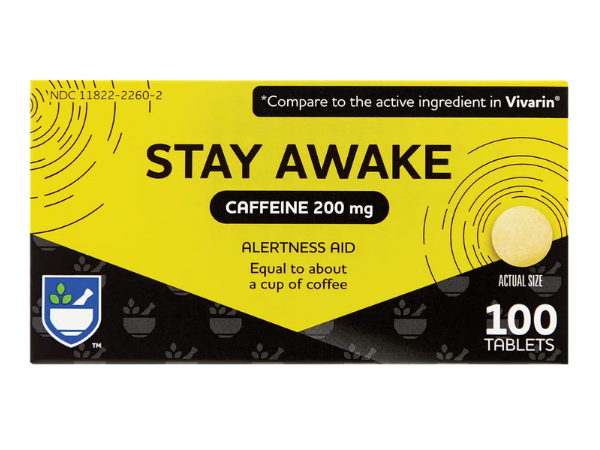
Rite Aid Stay Awake Tablets Caffeine
Rite Aid Stay Awake is an OTC caffeine product specifically labeled as an alertness aid. Each tablet contains 200 mg of caffeine, and the current DailyMed record provides the product’s active ingredient, directions, and warnings.
- Caffeine: 200 mg per tablet
- Package: 100 tablets
- Product type: OTC alertness aid
- Recommended use: 1 tablet no more often than every 3–4 hours for adults and children 12+
- Purpose: Helps restore mental alertness or wakefulness during fatigue or drowsiness
Because this is an OTC drug product rather than simply a dietary supplement, its labeling includes specific directions and warnings.
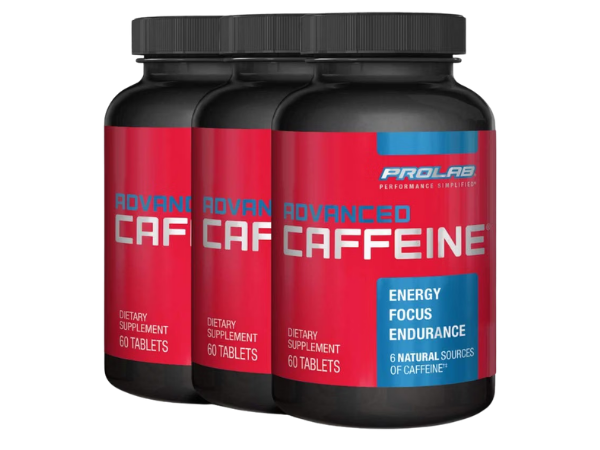
ProLab Caffeine with Green Tea Extract
The three-pack format is designed for buyers who want multiple bottles rather than a single container, while the underlying product remains focused on a relatively simple caffeine-and-green-tea combination.
- Caffeine: 200 mg per serving
- Additional ingredient: Green tea extract
- Format: Tablets
- Bundle: 3-pack
- Positioning: Energy and focus support
Compared with ProLab’s caffeine-only formula, this version is more appropriate for readers specifically interested in a caffeine product that includes a botanical ingredient.
Caffeine Tablets vs. Coffee: Which Is More Convenient?
Coffee and caffeine tablets both deliver energy, but they differ in convenience, cost, and experience. Coffee provides flavor, aroma, and ritual, while tablets focus purely on functionality.
Comparison highlights:
- Coffee – Offers taste, warmth, and antioxidants.
- Tablets – Provide precision, portability, and calorie-free energy.
- Cost – Tablets are often cheaper per dose than coffee shop drinks.
- Speed – Tablets are faster to consume, no brewing required.
- Control – Tablets allow exact dosage, unlike variable coffee strength.
For people who enjoy the sensory experience of coffee, tablets may feel too clinical. However, for those who prioritize efficiency, tablets are unmatched in convenience.
When and How to Take Caffeine Tablets
Timing and dosage are critical when using caffeine tablets effectively. The goal is to maximize alertness without disrupting sleep or causing side effects.
Best practices for use:
- Morning Boost – Take after waking to combat grogginess.
- Pre-Workout – Consume 30–45 minutes before exercise for enhanced performance.
- Study Sessions – Use during long periods of concentration.
- Driving – Helpful for long trips to maintain focus.
- Avoid Late Use – Do not take within 6 hours of bedtime.
Start with a lower dose (100 mg) to assess tolerance, then adjust as needed. Pairing caffeine with water helps absorption, while combining with L-theanine or magnesium may reduce side effects.