
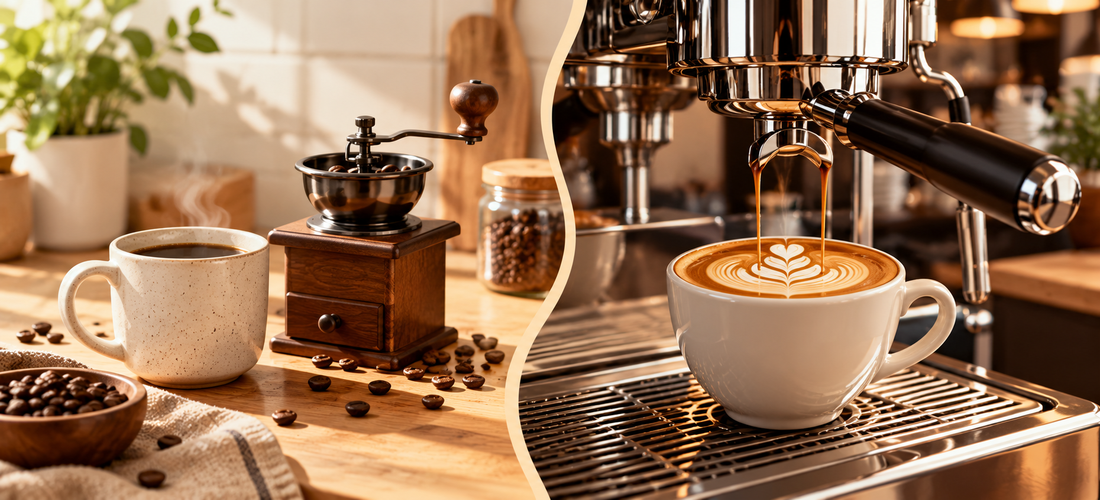
You buy the same premium beans your favorite café uses, expecting the same liquid magic. Instead, your home cup tastes flat, harsh, or dull. The difference isn’t the beans—five behind-the-bar secrets dictate why professional coffee hits harder, and you can easily mimic them at home.
The Core Secret: Commercial Water Filtration Systems
Coffee is about 98% water, meaning your tap water forms the absolute chemical foundation of your cup. Normal tap water or basic pitcher filters leave behind chlorine and unpredictable mineral levels that actively crush delicate coffee aromas.
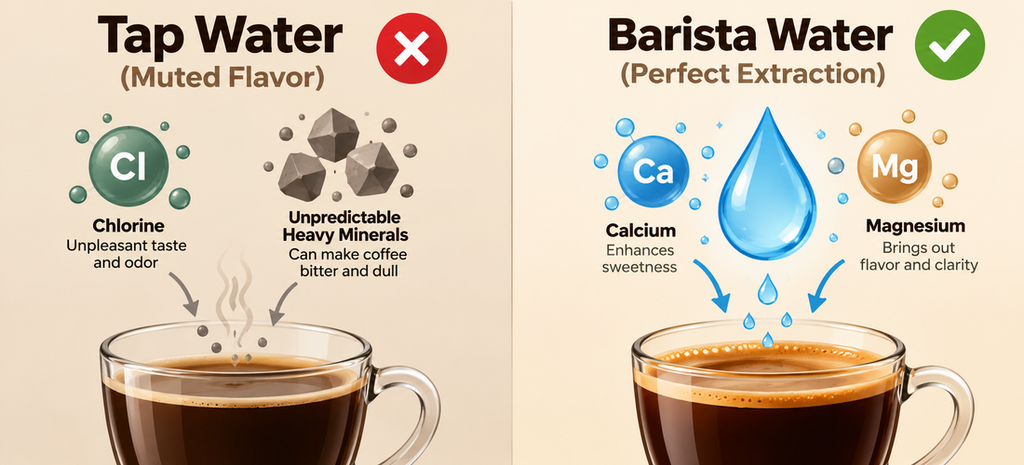
Specialty cafes invest thousands in commercial reverse-osmosis systems. They strip the water completely bare and then precisely inject the exact milligrams of minerals needed for perfect extraction.
The key variables:
- Water hardness: The specific amount of calcium and magnesium that extracts flavor notes.
- Alkalinity: The chemical buffer that regulates and balances the coffee’s natural fruit acids.
Home Fix: Stop using plain tap water. Switch to high-quality bottled spring water or buy mineral packets like Third Wave Water to mix into distilled water for a clean canvas.
The Burrs Matter: Commercial vs. Budget Grinders
That commercial espresso grinder at your local shop costs more than a decent used car. Its massive, razor-sharp flat burrs are engineered to create a perfectly uniform grind consistency where every single coffee particle is the exact same size.
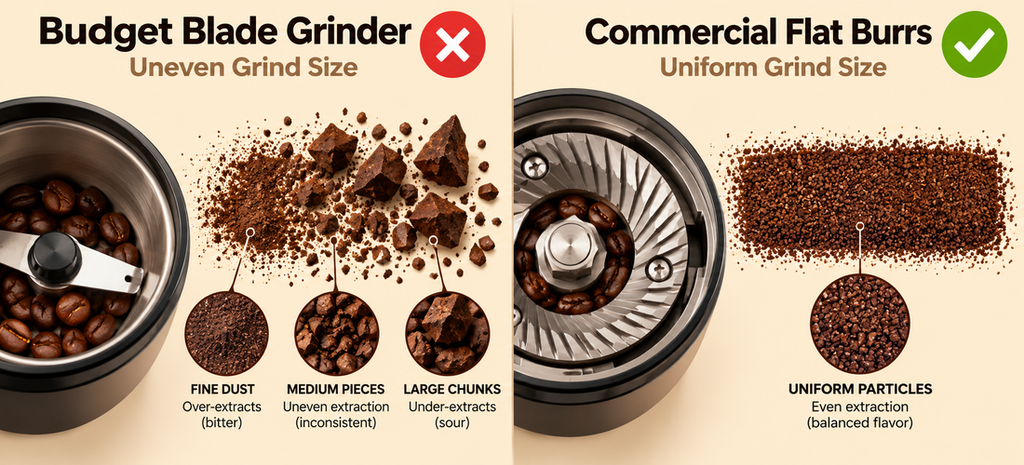
Cheap home blade or budget wheel grinders do not grind; they smash. They produce a chaotic mix of microscopic dust (fines) and giant chunks, ruining your extraction balance.
Why this ruins your cup:
- Microscopic dust: Over-extracts instantly, flooding your cup with harsh, lingering bitterness.
- Giant chunks: Under-extracts completely, leaving behind a sour, watery mess.
- The result: Your home coffee tastes confusingly bitter and sour at the same exact time.
Home Fix: Before you buy a fancier coffee machine, invest in a high-quality manual hand grinder or an entry-level electric burr grinder. It is the single biggest flavor upgrade you can make.
Industrial Temperature and Pressure Stability
Budget home machines suffer from severe heat loss, dropping by 5°C to 7°C mid-brew and causing uneven extraction. Commercial café equipment uses heavy boilers and PID controllers to lock the temperature within 0.1°C, extracting flavors perfectly from start to finish.
How to stabilize your home setup:
- Preheat everything: Rinse your dripper, French press, and mugs with boiling water.
- Flush the group head: Run a short blank hot water shot through your espresso machine.
- Discard the rinse water: Never let fresh grounds sit in a cold brewing vessel.
Eliminating these temperature shifts provides a stable environment for your extraction. Minimizing heat loss forces your coffee grounds to release their best flavors consistently.
Freshness and Bean Turnover Rates
A bustling specialty coffee shop rotates its stock at a blistering speed, often grinding through a full kilogram bag of beans in just a few hours. The coffee running through their hoppers is always at its absolute peak performance window.
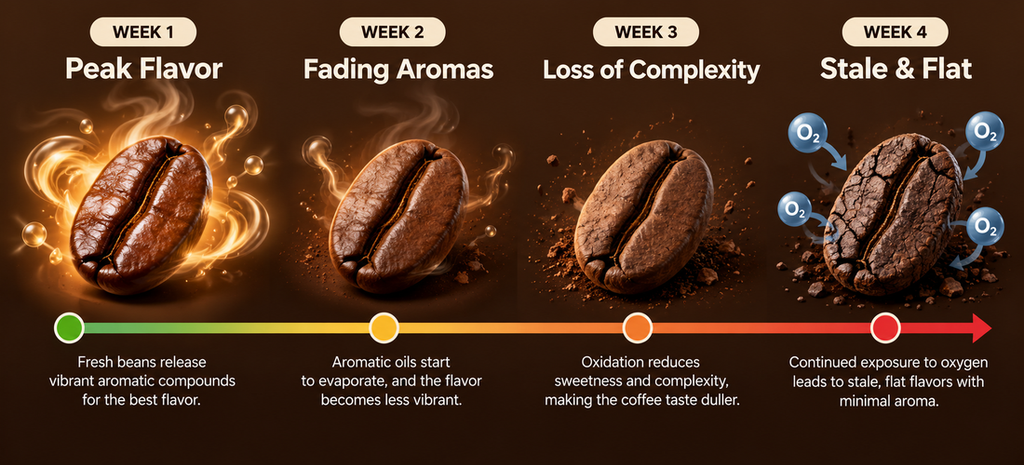
At home, a standard 250-gram bag often sits in a kitchen cabinet for weeks at a time. The moment you open that bag, oxygen begins rushing in, kickstarting the staling process.
What happens as beans age:
- Volatile gasses escape: The lively, fruity aroma notes evaporate into thin air.
- Oxidation takes over: The trapped organic oils turn stale, making your brewed coffee taste flat and wooden.
Home Fix: Buy smaller 250g bags that display a clear “Roast Date” rather than a commercial “Best Before” expiration. Store them in an airtight container with a one-way valve in a dark pantry, and only grind your beans immediately before brewing.
Barista Technique: Pre-Infusion and Weight Precision
Professional baristas do not leave a single variable to guesswork. They operate like scientists: weighing inputs, timing extractions on stopwatches, and adjusting only one metric at a time to perfect the recipe.
They also utilize pre-infusion (or a bloom phase for pour-overs). This process gently wets the coffee bed with a small amount of water before applying full brewing pressure or flow.
Why the bloom phase is mandatory:
- Releases trapped gasses: It allows accumulated carbon dioxide to safely escape the fresh coffee grounds.
- Prevents channeling: It ensures the coffee bed expands evenly, preventing water from rushing through empty pockets.
Home Fix: Buy a cheap digital kitchen scale accurate to 0.1 grams. Stop using scoops and start weighing both your dry coffee dose and your final liquid output for flawless repeatability.
The Ultimate Home vs. Coffee Shop Brewing Comparison
Cafés don’t possess a single magic trick; they simply manage multiple variables simultaneously. Use this breakdown to see exactly where your home kitchen stands against a professional espresso bar.
| Brewing Variable | What Cafés Do | How to Fix It at Home |
|---|---|---|
| Water Quality | Industrial RO filtration + minerals | Use spring bottled water or mineral packets. |
| Grind Burrs | Commercial flat burrs (perfect uniformity) | Upgrade to a dedicated manual/electric burr grinder. |
| Precision | Weigh coffee and yield down to 0.1g | Use a digital scale; track exact water ratio. |
| Temperature | Multi-boiler systems (stable within 0.1°C) | Preheat your dripper, server, and cups thoroughly. |
| Freshness | Cycle through bags in a few hours | Buy small 250g bags; check explicit roast dates. |
Closing the flavor gap does not require an industrial commercial budget. By simply upgrading your water chemistry and weighing your ingredients on a digital scale, you can instantly erase 80% of the quality difference.
FAQ: Fast Upgrades for Your Home Coffee Ritual
Does the type of milk affect why coffee shop lattes taste better?
Yes, it comes down to dry steam pressure. Commercial espresso machines spin milk into a sweet, glossy microfoam that blends perfectly with coffee. Home frothers usually create large air bubbles, resulting in a stiff, separated texture that dilutes the espresso.
Can a cheap espresso machine make good coffee?
Absolutely, if your brewing foundation is solid. A budget machine can pull a great shot if you pair it with a quality burr grinder, fresh beans, and clean filtered water. The machine itself matters far less than your grind uniformity and recipe precision.
Why does coffee shop coffee smell better than it tastes?
Aroma molecules hit your senses faster than your tongue registers flavor. Freshly ground coffee under high heat releases intense, volatile aromatic gasses. Once you sip the liquid, the lower temperature and heavy bitter solids naturally mask some of that initial sweetness.
Conclusion: Closing the Flavor Gap
Barista-level coffee is a controlled science, not a mystery. Once you take control of your water minerals, upgrade to a uniform burr grind, and start measuring your recipes with a digital scale, your home kitchen will easily rival the quality of your favorite local café.
Ready to master your home recipe? Perfect coffee-to-water brew ratios are the absolute foundation of any great extraction. Try our interactive Caffeine Calculator to easily check your variables and start brewing barista-level coffee today.