
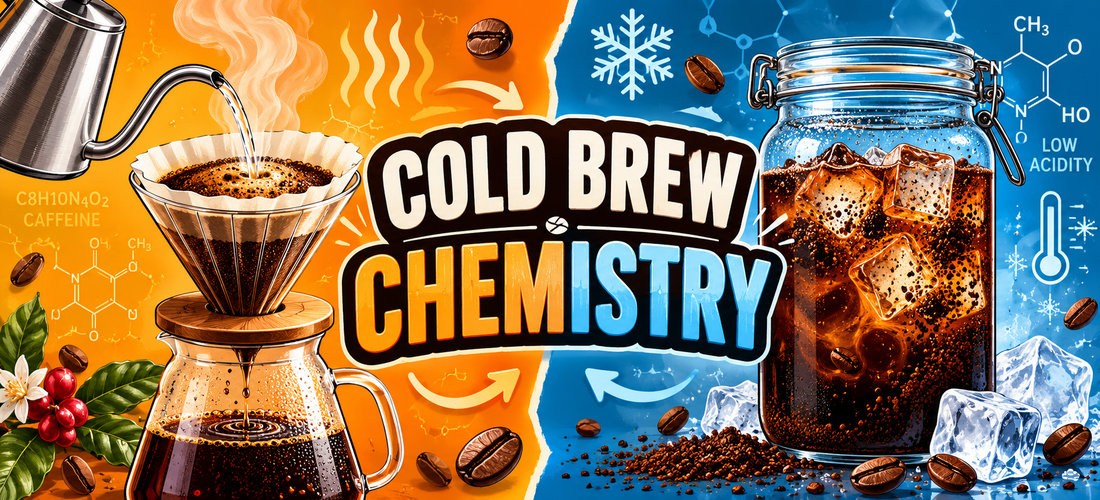
Cold water extraction locks out harsh flavors by preventing bitter oils and sharp acids from entering your mug. Understanding this simple chemical shift is the ultimate secret to enjoying a naturally sweet, stomach-friendly cup.
Hot vs. Cold Extraction: The Chemical Temperature Split
Hot water acts as a violent catalyst, rapidly dissolving volatile acids and oils within seconds. In contrast, cold water extracts flavor compounds slowly and selectively over several hours.
Key Extraction Differences:
- Thermal Energy: Hot water forces rapid molecular breakdown of cell structures.
- Time Buffer: Cold steeping coaxes out delicate aromatics without shocking the grounds.
- Solubility Curve: Harsh, sour compounds require high thermal energy to fully dissolve.
This temperature contrast entirely changes what ends up in your final glass. By removing heat, you prevent the most aggressive compounds from ruining your beverage.
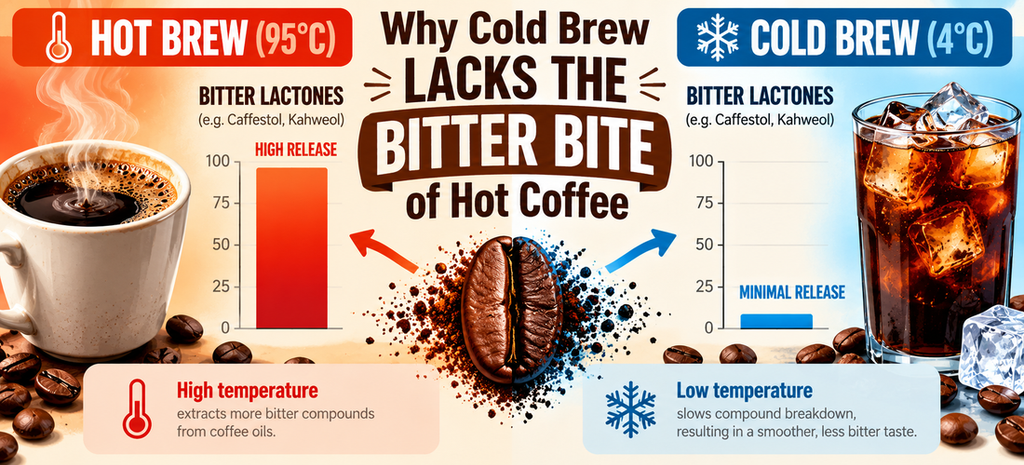
Why Cold Brew Lacks the Bitter Bite of Hot Coffee
The missing bitterness in cold immersion directly relates to how organic compounds react to thermal stress. Under high heat, chlorogenic acids break down into harsh, astringent lactones and phenylindanes.
| Brew Method | Extraction Catalyst | Bitterness Intensity |
|---|---|---|
| Pour Over | Hot Water (93°C) | Standard roasty bitterness |
| Cold Brew | Cold Water (4°C) | Extremely low bitterness |
| French Press | Hot Water (95°C) | High heavy bitterness |
Because cold water cannot unlock these aggressive bitter molecules, they remain trapped inside the discarded coffee grounds. This creates a remarkably clean cup that never blankets your tongue in a dry, chemical aftertaste.
The Science Behind Cold Brew’s Natural Sweetness
Cold brew tastes sweet without additives because cold immersion leaves complex polysaccharides completely intact. High heat normally damages these delicate natural sugars, converting them into bitter, caramelized notes instead.
Sweet Flavor Compounds:
- Polysaccharides: Complex long-chain sugars that provide a thick, smooth mouthfeel.
- Hydrolyzed Esters: Fruity, aromatic molecules that mimic the taste of real sugar.
- Caramelized Molecules: Retained compounds that offer distinct chocolate and nutty notes.
Preserving these organic compounds gives the beverage an exceptionally smooth, heavy body. This natural chemical syrupy texture successfully tricks your palate into sensing high sweetness without a single calorie.
Measuring the pH: Is Cold Brew Actually Less Acidic?
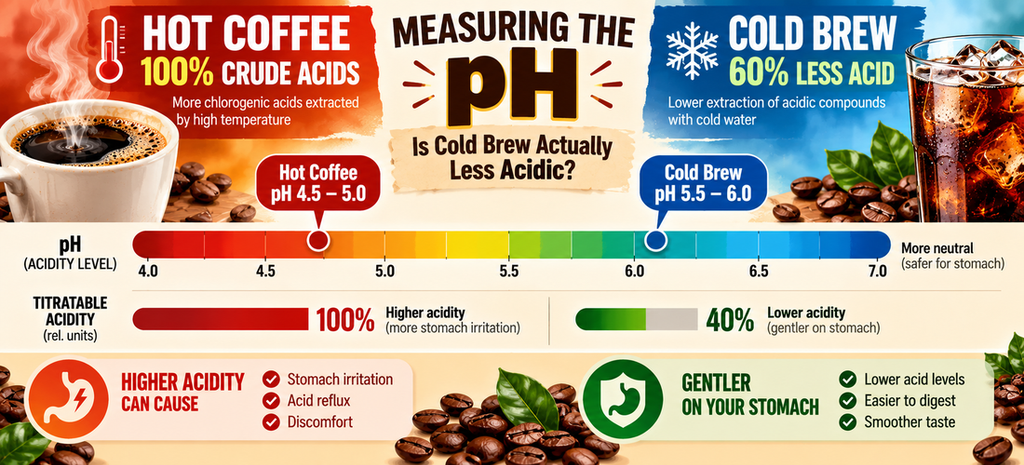
Sipping cold brew shares characteristics with a much safer, calmer gastrointestinal experience. While the measurable pH scale reading is only slightly higher than hot coffee, cold brew contains up to 60% fewer crude titratable acids.
Signs of Reduced Gastric Distress:
- Minimal Reflux: Low acid concentrations prevent sudden esophageal burning sensations.
- Calm Digestion: The smooth liquid does not trigger rapid stomach acid production.
- Stomach Safety: Lacks the harsh chemical compounds that irritate sensitive tissue.
This significant reduction in harsh acids protects your stomach lining from sudden, painful irritation. However, if severe gastric pain persists after drinking cold brew, it may point to underlying gastroenterological sensitivities.
How Time Replaces Heat: The 12-to-24-Hour Steeping Rule
Because cold water lacks thermal kinetic energy, extended contact time becomes the primary extraction mechanism. The optimal brewing window safely closes between 16 to 20 hours at room temperature.
| Steeping Window | Flavor Profile | Suggested Use |
|---|---|---|
| Under 12 Hours | Weak, sour, grassy | Under-extracted waste |
| 16–20 Hours | Sweet, chocolaty, smooth | Perfect ready-to-drink |
| Over 24 Hours | Woody, bitter, heavy | Over-extracted concentrate |
Managing this steep time ensures you pull the maximum amount of sweetness before bitter elements slip into the water. Never let your grounds steep indefinitely, or the liquid will lose its smooth, signature crispness.
Best Coffee Beans for a Super-Smooth Cold Brew Recipe
Choosing the right raw ingredient ensures your cold immersion recipe yields the smoothest possible flavor profile. Low-acid dark roasts and medium roasts from specific volcanic regions work best in cold water.
- Sumatran Beans: Naturally low in acidity with deep, earthy chocolate notes.
- Brazilian Origins: Packed with heavy nutty oils that amplify natural sweetness.
- Dark Roast Profiles: Immersion highlights comforting cocoa flavors while leaving out smoky bitterness.
Avoid bright, light roasts, as their intense floral fruitiness can taste unpleasantly sour when brewed cold. Sticking to chocolate-forward bean profiles guarantees an authentic, smooth coffeehouse result.
FAQ: Troubleshooting Cold Brew Sweetness and Acid Levels
Does cold brew coffee have more caffeine than hot coffee?
Yes, cold brew concentrates carry a higher caffeine volume due to the extended 1:8 brewing ratio. Diluting the final concentrate with equal parts water or milk brings the caffeine back down to a standard level.
Why does my homemade cold brew taste bitter instead of sweet?
This unexpected bitterness is consistent with over-extraction or using a grind size that is far too fine. Switch to an extra-coarse, chalkboard-crumb consistency and limit your total steeping time to 18 hours.
Can I heat up cold brew without making it highly acidic?
Yes, warming cold brew gently on a stovetop will not reintroduce the missing chemical acids. The harsh, bitter compounds were never extracted from the grounds, making it perfectly safe to heat up and enjoy hot.
The Bottom Line for Passionate Home Brewers
Ditching high temperatures is a scientifically proven way to enjoy a sweet, low-acid coffee experience. By swapping heat for time, you protect your digestive health while unlocking a smooth flavor profile hidden inside your favorite beans.
Balancing your daily caffeine routine requires an accurate understanding of cold concentrate strengths. To safely calculate your total stimulant intake and optimize your morning energy, use our interactive Caffeine Calculator to audit your brewing habits today.