
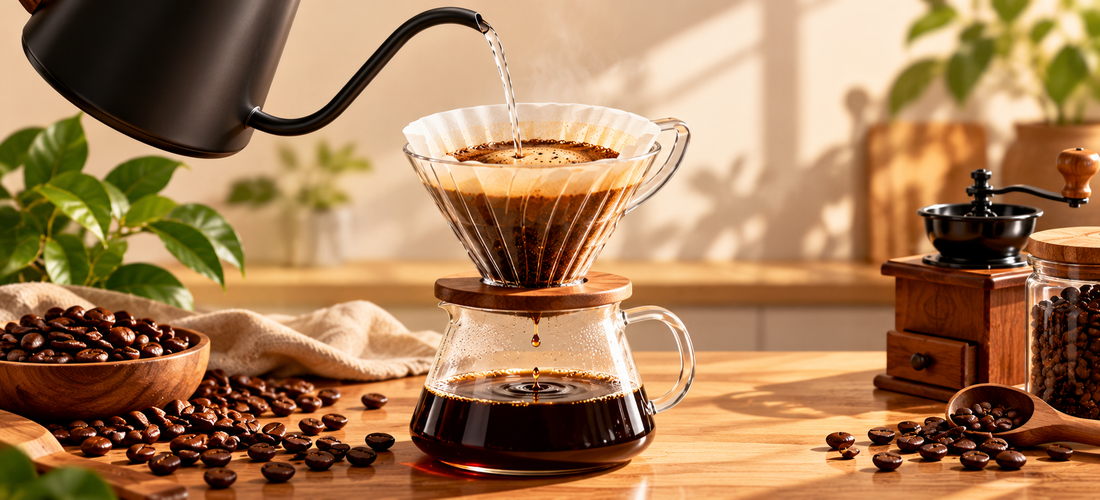
You bought great beans, weighed your coffee, and poured with precision. Yet your morning V60 tastes harsh, dry, and painfully bitter. Before you blame the roast, check these four critical variables—one small adjustment will completely rescue your next cup.
Bitter vs. Sour Coffee: How to Identify Over-Extraction
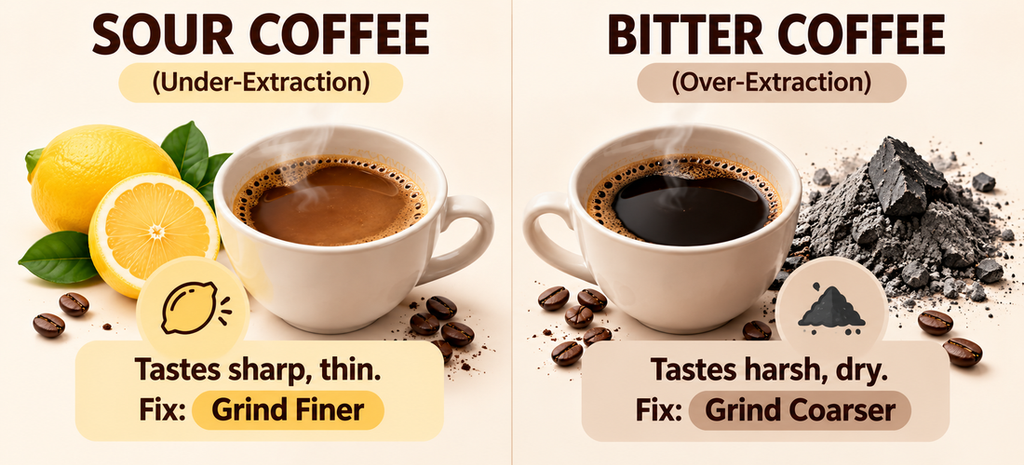
To fix your brew, you must first diagnose the taste. Sourness tastes sharp, thin, and hits the sides of your tongue, signaling under-extraction. Bitterness, on the other hand, leaves a harsh, ash-like coating and a sandpaper-dry sensation in your mouth.
This unpleasant dryness means you have hit over-extraction. Water has spent too much time dissolving the coffee bed, pulling out heavy, bitter organic compounds that should have stayed inside the grounds.
The quick test: If your morning cup leaves a lingering, aggressive aftertaste that makes you reach for a glass of water, you are over-extracting.
Reason 1: Your Coffee Grind Size Is Too Fine
Your grind size directly dictates how fast water travels through the coffee bed. When your grind is too fine, the tiny particles pack closely together, creating a tight bottleneck in your paper filter.
Water gets trapped inside the cone, drastically extending the brewing time. The longer the water sits stagnant against the coffee grounds, the more bitter chemicals it strips away.
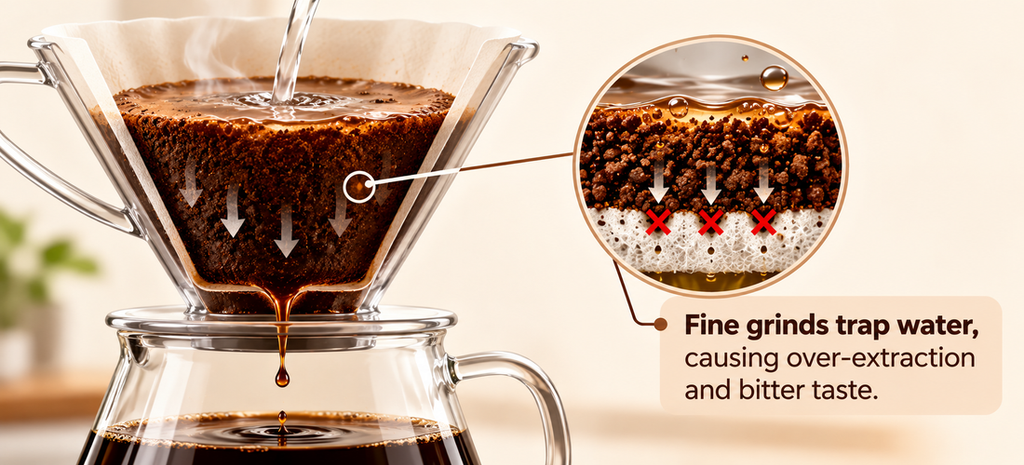
How to fix it: Move your grinder one or two steps coarser. Your total pour-over drawdown time should land between 2:30 to 4:00 minutes. If your brew takes longer, your fine particles are sabotaging your flavor.
Reason 2: Your Water Temperature Is Too Hot
While boiling water won’t literally set your coffee grounds on fire, it acts like an aggressive turbocharger for extraction. Using water straight from a boiling kettle (100°C) rapidly dissolves the heavy, bitter compounds from the bean.
This is especially destructive for medium and dark roasts, where high heat instantly accentuates burnt and smoky flavors.
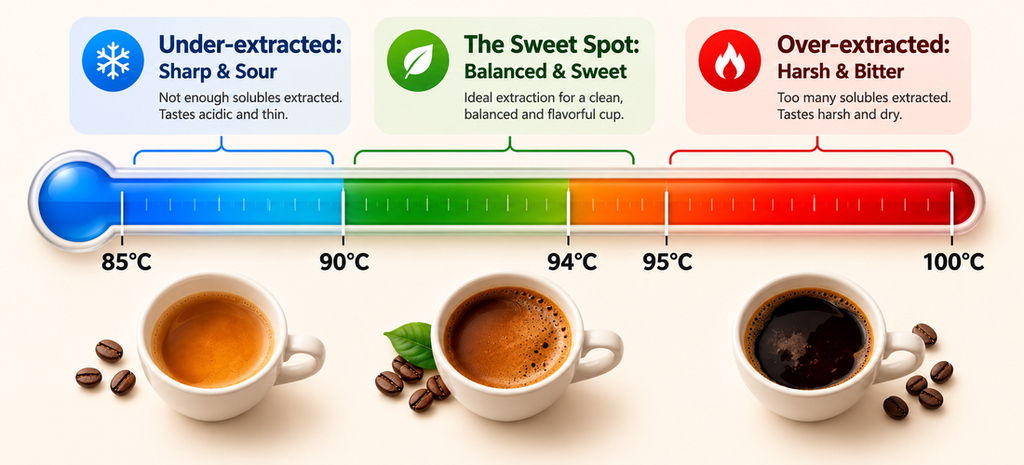
How to fix it: The golden sweet spot for most pour-overs is 90°C to 94°C. If you don’t own a temperature-controlled kettle, simply let your boiling water sit open for 2 minutes before you start pouring.
Reason 3: Your Pouring Speed and Agitation Are Too Aggressive
Pouring technique is not just for show; it alters how water moves the coffee bed. Blasting water directly down the center or stirring the slurry violently with a spoon creates excessive agitation.
Too much movement forces the microscopic coffee dust (fines) to migrate to the bottom of the cone, instantly clogging the pores of your paper filter.
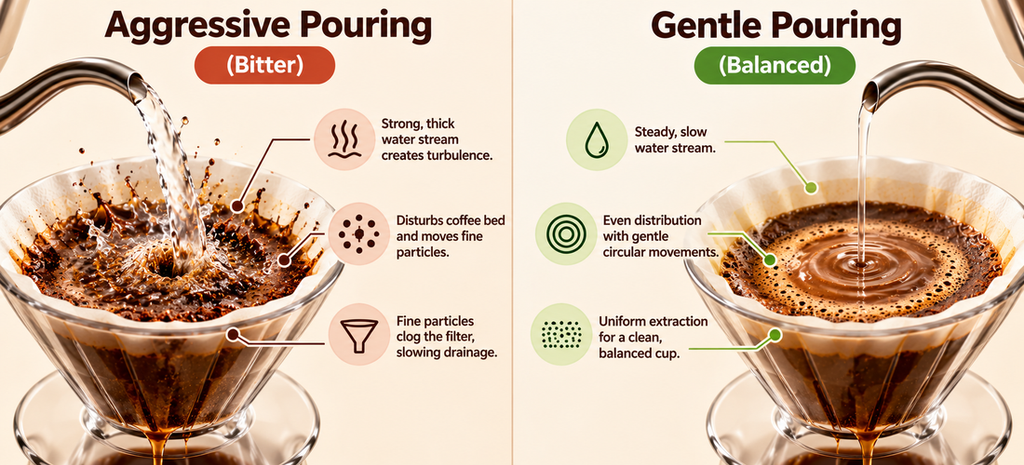
How to fix it: Pour in slow, controlled concentric circles, keeping the stream gentle. Always let your coffee bloom for 30 to 45 seconds first, and avoid pouring water directly onto the bare paper filter walls.
Reason 4: Sneaky Culprits (Dirty Equipment and Low-Quality Water)
Sometimes your technique is flawless, but invisible variables ruin the taste. Stale coffee oils quickly oxidize and harden inside your V60 dripper or grinder burrs, injecting a rancid, ashy flavor into every fresh brew.
Your water chemistry matters just as much. Hard tap water packed with heavy minerals alters the extraction balance, easily muting pleasant acidity and leaving behind a flat, bitter cup.
The quick checklist:
- Scrub your dripper and server with soap after every single use.
- Clean your grinder burrs monthly to remove hidden oil buildup.
- Switch to clean, filtered water instead of plain tap water.
Eliminating these hidden variables creates a clean canvas for your brewing process. Once your gear is spotless and your water is filtered, any remaining bitterness can be easily fixed by adjusting your grind size or water temperature.
The Ultimate Pour Over Troubleshooting Chart
Dialing in the perfect pour-over requires a systematic approach rather than random guesswork. When your coffee tastes off, it is easy to panic and change your grind size, water ratio, and pouring technique all at once—which only leads to more confusion.
| What You Taste | The Root Cause | The Quick Fix |
|---|---|---|
| Lingering ashiness with a distinct dry finish | Over-extraction due to a fine grind or long contact time | Grind slightly coarser and keep all other variables identical. |
| Bitter in one sip, sour in the next | Uneven extraction caused by filter clogging or hard pours | Switch to a gentler pour and ensure water hits the bed evenly. |
| Burnt, heavy, or smoky aftertaste | Water temperature is too high or the roast is too dark | Drop your water temperature down to 90°C or try fresher beans. |
Your next step: Never tweak multiple variables at the same time. Adjust only your grind size first, taste the difference, and see what actually improves the cup.
FAQ: Quick Fixes for a Bitter Cup of Coffee
Can I fix a bitter cup of coffee after brewing?
Yes, you can easily rescue the balance in your mug. Simply add a splash of clean hot water to dilute the concentrated bitterness, or use milk to mask the harsh organic compounds.
How do you counteract bitter taste in coffee?
Fix it at the source during your next brew by shifting your grind size coarser, lowering your water temperature, and pouring more gently to reduce filter clogging.
Why does my V60 coffee taste like ash?
An ashy flavor usually points to dirty equipment coated in stale oils or using water that is far too hot on dark-roasted beans. Clean your gear thoroughly and drop your brewing temperature.
Conclusion: Dialing In Your Perfect Pour Over Recipe
Fixing a bitter pour-over is all about controlling the speed and temperature of your extraction. Once you dial in your grind size and calm down your pouring technique, your daily coffee will finally reward you with clean, vibrant, and balanced flavors.
Need help balancing your recipe? Exact coffee-to-water ratios are crucial for avoiding over-extraction. Try our interactive Caffeine Calculator to easily check your brewing variables and lock in a perfectly balanced cup every single morning.