
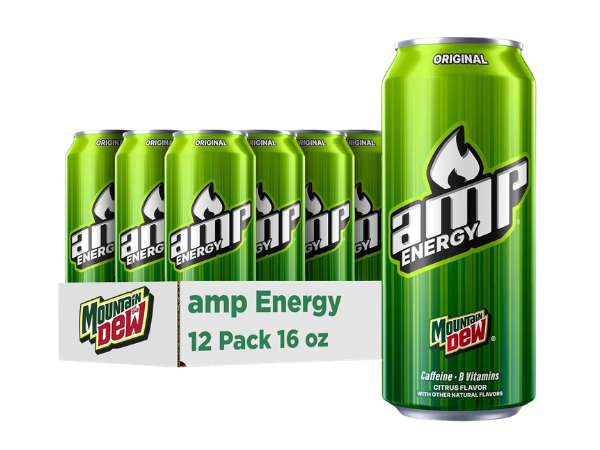
Caffeine
142 mg
Note: Caffeine amounts are based on a standard 16‑oz can of Mountain Dew AMP Energy Drink.
| Attribute | Value |
|---|---|
| Caffeine Level | Moderate |
| Serving Size | 16 fl oz |
| Serving Size (ml) | 473 ml |
| Caffeine | 142 mg |
| Calories | 220 kcal |
| Sugar | 58 g |
| Caffeine per fl oz | 9 mg/fl oz |
Mountain Dew AMP Energy Drink combines Mountain Dew’s bold citrus flavor with caffeine, vitamins, and other energy-focused ingredients.
What Is Mountain Dew AMP Energy Drink?
Mountain Dew AMP Energy Drink is essentially a hybrid between a soft drink and a functional energy beverage. It builds on the popularity of Mountain Dew by adding caffeine, taurine, B‑vitamins, and other energy‑related compounds.
Key traits of AMP include:
- Citrus Flavor Base – Retains the signature Mountain Dew taste with a sharper, more concentrated profile.
- Added Caffeine – Provides a stronger stimulant effect than regular Mountain Dew.
- Functional Ingredients – Includes taurine, guarana extract, and B‑vitamins for energy metabolism.
Together, these features make AMP a beverage that appeals to both soda fans and energy drink consumers, bridging the gap between refreshment and performance.
How Much Caffeine Is in a Can of Mountain Dew AMP?
Caffeine is the defining ingredient of any energy drink, and AMP delivers a noticeable amount. A standard 16‑oz can contains 142 mg of caffeine, which is significantly higher than a regular Mountain Dew soda (about 54 mg per 12‑oz can).
Breakdown of caffeine content:
- 16‑oz Can – 142 mg caffeine
- 12‑oz Can (less common) – Approximately 106 mg caffeine
- Comparison to Coffee – A typical 8‑oz cup of brewed coffee contains 95 mg caffeine
This level of caffeine is enough to increase alertness, improve focus, and reduce fatigue, but it also requires moderation.
Mountain Dew AMP Energy Drink Nutrition Facts
Beyond caffeine, AMP contains calories, sugar, and other nutrients that contribute to its energy profile. While it is not marketed as a health drink, its nutritional composition is important for consumers to understand.
Typical nutrition facts for a 16‑oz can:
- Calories – Around 220
- Total Fat – 0 g
- Sodium – 120 mg
- Total Carbohydrates – 58 g
- Sugars – 58 g
- Protein – 0 g
- B‑Vitamins – Includes niacin, vitamin B6, and vitamin B12
These values highlight that AMP is calorie‑dense, primarily due to its sugar content. While the added B‑vitamins support energy metabolism, the high sugar load can contribute to energy spikes followed by crashes.
How Many Calories and How Much Sugar Are in AMP?
Calories and sugar are two of the most scrutinized aspects of energy drinks. AMP is no exception, as its formulation relies heavily on sugar to deliver quick energy and enhance flavor.
Nutritional highlights:
- Calories per 16‑oz Can – 220
- Sugar Content – 58 g (about 14 teaspoons of sugar)
- Daily Value Impact – This amount of sugar exceeds the American Heart Association’s recommended daily limit for added sugars (36 g for men, 25 g for women).
While the sugar provides a rapid energy boost, it also raises concerns about long‑term health effects such as weight gain, insulin resistance, and dental issues.
Mountain Dew AMP Energy Drink Ingredients Explained
AMP’s ingredient list is designed to combine flavor, stimulation, and functional support. Each component plays a role in shaping the drink’s effects.
Key ingredients include:
- Carbonated Water – Provides the fizzy texture.
- High Fructose Corn Syrup – Main sweetener, contributing to calories and sugar content.
- Citric Acid – Enhances tartness and preserves freshness.
- Natural Flavors – Maintain the citrus profile of Mountain Dew.
- Caffeine – Primary stimulant for alertness.
- Taurine – Amino acid often included in energy drinks for potential endurance benefits.
- Guarana Extract – Plant‑based stimulant that adds additional caffeine.
- B‑Vitamins (Niacin, B6, B12) – Support energy metabolism and reduce fatigue.
- Sodium Benzoate – Preservative to extend shelf life.
However, the reliance on sugar and artificial additives means AMP is best consumed occasionally rather than as a daily beverage.
Health Considerations and Side Effects
Like all energy drinks, AMP carries potential health risks if consumed excessively. While moderate intake can provide a useful energy boost, overconsumption may lead to negative outcomes.
Possible side effects include:
- Jitteriness and Anxiety – From high caffeine intake.
- Insomnia – Especially if consumed late in the day.
- Rapid Heartbeat – Can affect individuals sensitive to stimulants.
- Sugar Crash – Energy spike followed by fatigue due to high sugar content.
- Weight Gain – From frequent consumption of calorie‑dense drinks.
- Dental Issues – Sugar and acidity can erode tooth enamel.
Health experts generally recommend limiting energy drink consumption, especially among adolescents, pregnant women, and individuals with heart conditions.