
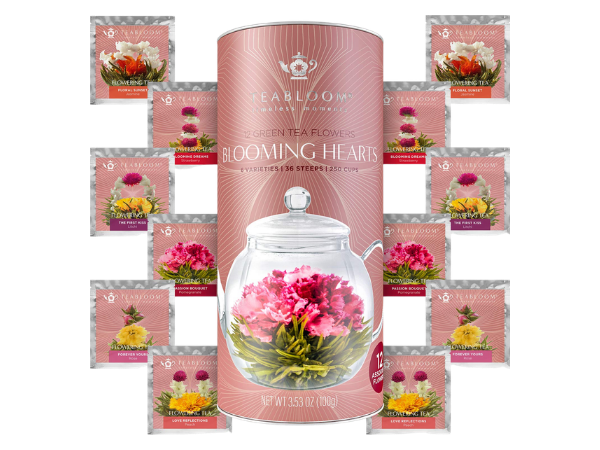
Caffeine
30–50 mg
Note: Caffeine amounts are based on standard brewing of Teabloom Heart-Shaped Flowering Teas using green tea leaves.
| Attribute | Value |
|---|---|
| Caffeine Level | Moderate |
| Serving Size | 1 blooming tea ball |
| Serving Size (ml) | 240 ml per cup |
| Caffeine | 30–50 mg |
| Calories | 2 kcal |
| Caffeine per Cup | 10–25 mg per 240 ml |
Teabloom Flowering Tea is more than just a beverage—it’s an experience that combines artistry, flavor, and wellness.
What Is Teabloom Flowering Tea?
Teabloom Flowering Tea is a handcrafted tea ball made from premium green tea leaves and edible flowers. When placed in hot water, the ball unfurls into a blooming floral display, offering both aesthetic beauty and a soothing drink.
- Handcrafted Design – Each tea ball is carefully tied by artisans using young green tea leaves and blossoms.
- Visual Experience – The tea blooms into shapes like lilies, jasmine, or roses, turning tea time into a performance.
- Flavor Variety – Infused with natural flavors such as pomegranate, strawberry, litchi, and peach.
- Green Tea Base – Provides antioxidants, catechins, and natural caffeine.
Beyond its beauty, Teabloom Flowering Tea is a functional beverage that delivers the health benefits of green tea while offering a calming ritual.
What Is the Caffeine Content in Teabloom Flowering Tea?
The caffeine content in Teabloom Flowering Tea depends largely on the green tea leaves used. Since green tea naturally contains caffeine, every tea ball will release some amount during steeping.
- Per Tea Ball – Approximately 30–50 mg of caffeine when brewed in a full teapot.
- Per Cup (240 ml) – Around 10–25 mg of caffeine, depending on steeping conditions.
- Comparison to Coffee – A cup of coffee typically contains 95–120 mg, making flowering tea a gentler option.
- Daily Intake – Safe for moderate consumption, especially for those sensitive to caffeine.
This moderate caffeine level makes Teabloom Flowering Tea suitable for afternoon or evening enjoyment, offering a gentle lift without disrupting sleep patterns.
Does Every Teabloom Flowering Tea Flavor Contain the Same Amount of Caffeine?
While Teabloom offers multiple flavor variations, the caffeine content remains relatively consistent because the base is always green tea. The added flavors—such as fruit or floral infusions—do not significantly alter caffeine levels.
- Jasmine & Rose – Floral notes enhance aroma but do not affect caffeine.
- Pomegranate & Strawberry – Fruity infusions add sweetness without changing caffeine.
- Litchi & Peach – Exotic flavors provide variety but caffeine remains stable.
- Green Tea Base – The determining factor for caffeine content.
- Consistency Across Flavors – All varieties fall within the same caffeine range.
This consistency ensures that no matter which flavor you choose, you can expect a similar caffeine profile. The differences lie in taste and aroma, not in stimulant strength.
Why Does the Caffeine Content Vary in Teabloom Flowering Tea?
The variation in caffeine levels comes from natural factors rather than flavor additives. Green tea leaves differ in caffeine concentration depending on their age, growing conditions, and processing.
- Leaf Age – Younger leaves typically contain more caffeine.
- Growing Region – Soil, climate, and altitude influence caffeine levels.
- Harvest Season – Spring harvests often yield higher caffeine than later ones.
- Processing Method – Minimal oxidation preserves caffeine in green tea.
- Brewing Variables – Steeping time and water temperature affect extraction.
These natural variations explain why one tea ball may yield slightly more or less caffeine than another. It’s part of the charm of artisanal tea—each bloom is unique.
How Brewing Method Affects Caffeine Levels
Brewing technique plays a major role in determining how much caffeine ends up in your cup. Adjusting steeping time, water temperature, and serving size can significantly alter the final caffeine concentration.
- Steeping Time – Longer steeping extracts more caffeine.
- Water Temperature – Hotter water releases caffeine faster.
- Teapot Size – Larger volumes dilute caffeine per cup.
- Multiple Infusions – Reusing the same tea ball reduces caffeine in later brews.
- Personal Preference – Adjusting brew strength allows control over caffeine intake.
By experimenting with brewing methods, tea drinkers can tailor their caffeine experience—either maximizing energy or minimizing stimulation for relaxation.
Health Benefits of Teabloom Flowering Tea
Teabloom Flowering Tea is not only admired for its visual elegance but also valued for its wellness properties. Because it is crafted from young green tea leaves and edible flowers, it delivers a combination of antioxidants, moderate caffeine, and calming botanicals.
- Antioxidants – Rich in catechins that combat free radicals.
- Heart Health – May support cardiovascular wellness.
- Mental Clarity – Moderate caffeine enhances focus without overstimulation.
- Stress Relief – The blooming ritual promotes mindfulness and relaxation.
- Digestive Support – Herbal flowers can aid digestion and soothe the stomach.
These benefits make Teabloom Flowering Tea more than just a beverage—it’s a holistic wellness ritual. The combination of beauty, flavor, and health makes it a unique addition to any tea lover’s collection.