
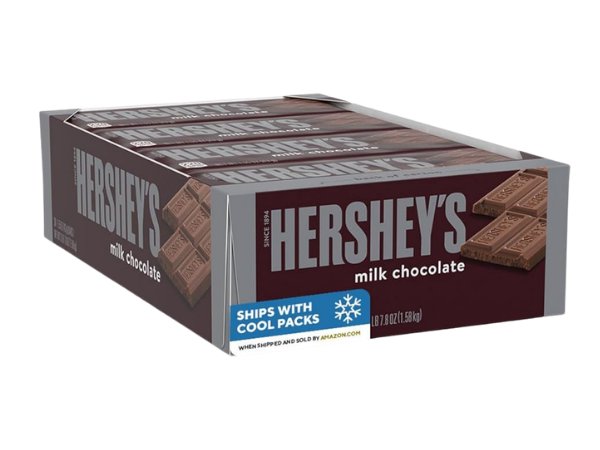
Caffeine
9 mg
Note: Caffeine amounts are based on Hershey’s official nutrition data for a standard 1.55 oz bar. Levels may vary slightly depending on cocoa content and manufacturing batches.
| Attribute | Value |
|---|---|
| Caffeine Level | Low |
| Serving Size | 1 bar |
| Serving Size (grams) | 43 g |
| Caffeine | 9 mg |
| Calories | 210–220 kcal |
| Sugar | 24–25 g |
HERSHEY’S Milk Chocolate is one of the most iconic candy bars in the world. Beyond its sweet taste, consumers often wonder about its nutritional profile—caffeine levels, calories, sugar, gluten status, and allergens.
What Is HERSHEY’S Milk Chocolate Made Of?
Unlike dark chocolate, which emphasizes bold cocoa intensity, Hershey’s Milk Chocolate is designed to be approachable, mild, and comforting. Its recipe combines carefully selected ingredients that create the signature flavor recognized for over a century.
- Sugar – The primary sweetener, giving the bar its classic taste and structure.
- Milk – Adds creaminess and softens cocoa bitterness.
- Chocolate Liquor – Provides cocoa solids and natural caffeine.
- Cocoa Butter – Ensures smooth mouthfeel and melt‑in‑your‑mouth texture.
- Milk Fat – Enhances richness and flavor depth.
- Soy Lecithin & PGPR – Emulsifiers that stabilize ingredients and improve consistency.
- Natural Flavor – Subtle taste enhancer for balance.
Hershey’s Milk Chocolate is intentionally lighter in cocoa than dark varieties, making it suitable for children, casual snackers, and anyone who prefers a milder chocolate experience.
HERSHEY’S Milk Chocolate Ingredients and Cocoa Content Explained
HERSHEY’S Milk Chocolate is carefully formulated to deliver a smooth, sweet flavor that appeals to a wide audience. Unlike dark chocolate, which highlights bold cocoa intensity, Hershey’s Milk Chocolate balances cocoa with milk and sugar to create a lighter, creamier taste.
- Cocoa Butter – Smooth texture.
- Chocolate Liquor – Provides cocoa solids.
- Milk Powder & Milk Fat – Dilutes cocoa intensity.
- Sugar – Dominates flavor profile.
- Cocoa Percentage – Estimated around 20–25%.
This lower cocoa percentage explains why Hershey’s Milk Chocolate has less caffeine and a sweeter taste. It’s designed for consumers who prefer a milder chocolate experience.
How Much Cocoa Is in HERSHEY’S Milk Chocolate?
The cocoa content of HERSHEY’S Milk Chocolate is one of the main factors that defines its flavor, texture, and caffeine level. Unlike dark chocolate, which often contains 50–70% cocoa solids, Hershey’s Milk Chocolate is intentionally lighter, with an estimated cocoa percentage of 20–25%.
- Approximate Cocoa Content – 20–25%.
- Flavor Impact – Creamy, mild, less bitter.
- Nutritional Impact – Lower antioxidants than dark chocolate.
- Caffeine Impact – Reduced compared to dark chocolate.
This cocoa balance ensures Hershey’s Milk Chocolate appeals to mainstream tastes, offering indulgence without the intensity of dark chocolate.
Does HERSHEY’S Milk Chocolate Contain Caffeine?
Caffeine is naturally present in cocoa beans, which means that any chocolate product will contain at least a small amount. HERSHEY’S Milk Chocolate is no exception, though its caffeine levels are significantly lower than those found in dark chocolate or coffee.
- Caffeine Source – Cocoa solids naturally contain caffeine.
- Caffeine Amount – ~9 mg per 1.55 oz bar.
- Comparison to Coffee – A cup of coffee has ~95 mg, far higher.
- Comparison to Dark Chocolate – Dark chocolate can exceed 30 mg per ounce.
- Consumer Impact – Minimal stimulant effect, safe for most ages.
For most consumers, the caffeine in Hershey’s Milk Chocolate is too low to cause jitters, insomnia, or other side effects typically associated with caffeine intake.
How Many Calories Are in a HERSHEY’S Milk Chocolate Bar?
Calories are one of the most important nutritional factors to consider when enjoying HERSHEY’S Milk Chocolate. A standard 1.55 oz (43 g) bar contains about 210–220 calories, making it an energy‑dense snack.
- Calories per Bar – 210–220 kcal in a 1.55 oz serving.
- Calories from Fat – ~105 kcal, with 13 g total fat.
- Calories from Carbohydrates – ~95 kcal, mostly from sugar.
- Calories from Protein – ~10 kcal, from milk solids.
- Daily Value Impact – Represents ~10% of a 2,000‑calorie diet.
The calorie count is similar to other milk chocolate bars of the same size, but higher than sugar‑free or dark chocolate options with less added sugar.
Sugar Content in HERSHEY’S Milk Chocolate: What to Know
Sugar is the dominant nutrient in HERSHEY’S Milk Chocolate, shaping both its flavor and nutritional profile. A standard 1.55 oz (43 g) bar contains 24–25 grams of sugar, which accounts for nearly half of its total calories.
- Total Sugars – 24–25 g per bar.
- Added Sugars – ~21 g, making up most of the total.
- Daily Value Percentage – ~42% of the recommended daily limit.
- Impact on Flavor – Sweet, creamy, and less bitter than dark chocolate.
- Health Considerations – High sugar intake can affect blood sugar and dental health.
The sugar content explains why Hershey’s Milk Chocolate is so popular among children and casual snackers—it delivers instant sweetness and energy.
Is HERSHEY’S Milk Chocolate Gluten-Free?
For individuals with celiac disease or gluten sensitivity, knowing whether a product is gluten‑free is essential. HERSHEY’S Milk Chocolate bars are considered gluten‑free, as they do not contain wheat, barley, rye, or other gluten‑containing ingredients.
- Gluten-Free Status – Standard bars are gluten‑free.
- No Wheat Ingredients – Safe for celiac diets.
- Cross-Contamination Risk – Minimal in regular bars.
- Specialty Products – Some varieties may contain gluten.
- Official Labeling – Hershey’s confirms gluten‑free status on packaging.
Overall, Hershey’s Milk Chocolate is a safe indulgence for those avoiding gluten, provided consumers check the packaging for allergen and ingredient statements.
Allergens in HERSHEY’S Milk Chocolate: What You Should Know
Food allergies are a major concern for many consumers, and HERSHEY’S Milk Chocolate contains several common allergens that should be noted. The recipe includes milk in multiple forms, soy lecithin as an emulsifier, and may be produced in facilities that also handle nuts.
- Milk – Present as milk solids, milk fat, and lactose.
- Soy Lecithin – Used as an emulsifier, a common allergen.
- Possible Nut Cross‑Contact – Facilities may process peanuts or tree nuts.
- Gluten-Free Status – Standard bars are gluten‑free, but specialty products may differ.
- Labeling Practices – Hershey’s provides allergen warnings on packaging.
For consumers with dairy or soy allergies, Hershey’s Milk Chocolate is not a safe option. Those with nut allergies should exercise caution and always check packaging for cross‑contact warnings.