
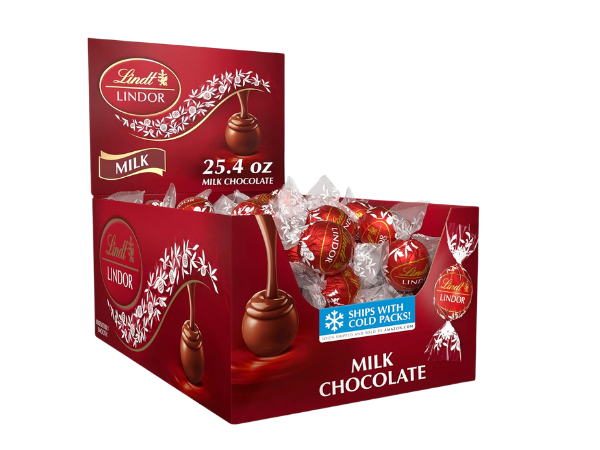
Caffeine
6 mg
Note: Caffeine amounts are based on average cocoa content in Lindt Milk Chocolate products.
| Attribute | Value |
|---|---|
| Caffeine Level | Low |
| Serving Size | 30 g |
| Caffeine | 6 mg |
| Calories | 160 kcal |
| Sugar | 14 g |
Lindt Milk Chocolate is cherished for its velvety texture and balanced sweetness, but beyond taste, many consumers wonder about its caffeine levels.
What Is Lindt Milk Chocolate Made Of?
Lindt Milk Chocolate is carefully crafted with a blend of high‑quality ingredients that create its signature smoothness. The recipe balances cocoa derivatives with milk solids and sugar, enhanced by emulsifiers and flavorings.
- Sugar – Provides sweetness and balances cocoa bitterness.
- Cocoa butter & cocoa mass – Deliver chocolate flavor and texture.
- Milk solids – Add creaminess and a lighter taste.
- Soya lecithin – Acts as an emulsifier for smooth melting.
- Barley malt extract – Adds depth of flavor but introduces gluten.
- Flavorings (vanilla) – Enhance aroma and taste.
Together, these ingredients make Lindt Milk Chocolate indulgent and distinctive. However, the inclusion of barley malt extract means some varieties are not gluten‑free, which is important for consumers with dietary restrictions.
Lindt Milk Chocolate Caffeine Content by Serving Size
Caffeine levels in Lindt Milk Chocolate vary depending on serving size. While dark chocolate contains higher amounts, milk chocolate remains relatively low. For example, Lindt LINDOR Milk Chocolate Truffles (30 g) contain about 6 mg of caffeine, which is far less than a typical cup of coffee.
- Lindt LINDOR Milk Chocolate Truffles 30 g – 6 mg caffeine
- Standard Lindt Milk Chocolate Bar (100 g) – approx. 20 mg caffeine
- Lindt Excellence Milk Chocolate (100 g) – approx. 25 mg caffeine
This makes Lindt Milk Chocolate suitable for those who want a sweet indulgence without a strong stimulant effect. It can be enjoyed even in the evening without significantly disturbing sleep.
Does Lindt Milk Chocolate Have Nuts or Tree Nuts?
Many Lindt Milk Chocolate products are produced in facilities that also handle nuts. While not every bar or truffle contains nuts, cross‑contamination is possible. Lindt explicitly warns that its milk chocolate may contain traces of hazelnuts, almonds, or other tree nuts.
- Hazelnuts – Commonly used in Lindt pralines and truffles.
- Almonds – Found in certain milk chocolate bars.
- Other nuts – Possible traces due to shared equipment.
For people with nut allergies, Lindt Milk Chocolate should be consumed cautiously. Even if nuts are not listed as an ingredient, trace amounts may still be present.
Is Lindt Milk Chocolate Gluten-Free?
Lindt Milk Chocolate is not always gluten‑free. The presence of barley malt extract in many recipes introduces gluten. While some Lindt dark chocolates may be gluten‑free, milk chocolate varieties often contain this ingredient.
- Contains barley malt extract – Source of gluten.
- Not certified gluten‑free – Risk for sensitive individuals.
- Check product labels – Some special editions may differ.
In summary, Lindt Milk Chocolate is generally unsafe for gluten‑free diets, though Lindt does offer select gluten‑free options in other product lines.
Ingredient Breakdown: Allergens in Lindt Milk Chocolate
Lindt Milk Chocolate contains several allergens that consumers should be aware of. The most common are milk, soy, and gluten. Additionally, due to manufacturing practices, traces of nuts may be present. Lindt clearly highlights allergens in bold on packaging.
- Milk – Whole milk powder, skimmed milk powder, lactose, milk fat.
- Soy – Soya lecithin used as emulsifier.
- Gluten – Barley malt extract.
- Nuts – Possible traces of hazelnuts, almonds, or other tree nuts.
This allergen profile means Lindt Milk Chocolate is unsuitable for people with dairy, soy, gluten, or nut allergies. Always check the packaging before consumption.
Can People with Food Allergies Eat Lindt Milk Chocolate Safely?
For individuals with food allergies, Lindt Milk Chocolate poses risks. Those allergic to milk, soy, gluten, or nuts should avoid it unless they find a certified safe variety. Lindt’s allergen labeling is clear, but cross‑contamination remains possible. People with mild lactose intolerance may tolerate small amounts, but those with celiac disease or nut allergies should be cautious.
- Unsafe for milk allergies – Contains multiple milk derivatives.
- Unsafe for soy allergies – Contains soya lecithin.
- Unsafe for gluten intolerance – Contains barley malt extract.
- Risk for nut allergies – May contain traces of hazelnuts or almonds.
Ultimately, Lindt Milk Chocolate is not recommended for people with severe food allergies. Safer alternatives include certified gluten‑free or nut‑free chocolates from other brands.