
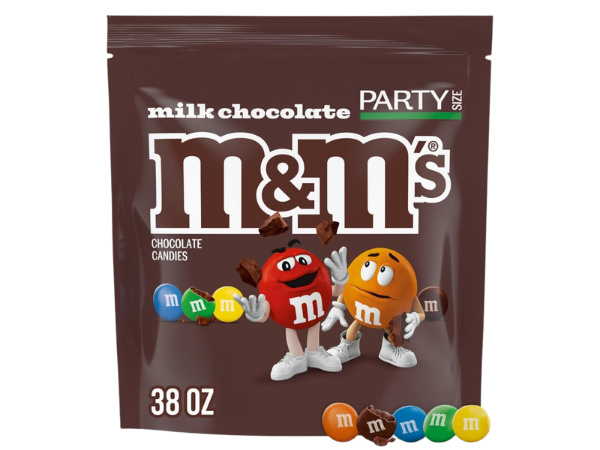
Caffeine
9–10 mg
Note: Caffeine amounts are based on the average cocoa content in milk chocolate used for M&M’s. Actual values may vary slightly depending on serving size and manufacturing batches.
| Attribute | Value |
|---|---|
| Caffeine Level | Very Low |
| Serving Size | 1.69 oz |
| Serving Size (grams) | 48 g |
| Total Caffeine | 9–10 mg |
| Calories | 240 kcal |
| Sugar | 30 g |
M&M’s Milk Chocolate candies are one of the most iconic chocolate treats in the world. Known for their colorful candy shells and smooth milk chocolate centers, they are enjoyed by millions daily.
What Are M&M’s Milk Chocolate Candies Made Of?
M&M’s Milk Chocolate candies are crafted from a blend of milk chocolate and a thin candy shell. The milk chocolate inside is made with cocoa solids, sugar, milk powder, and cocoa butter, while the shell is a mixture of sugar, corn syrup, and food coloring.
- Milk Chocolate Core – Contains cocoa solids, cocoa butter, sugar, and milk powder.
- Candy Shell – Made from sugar, corn syrup, and food coloring.
- Flavor Balance – Sweetness from sugar and creaminess from milk powder.
- Texture Contrast – Crunchy shell paired with soft chocolate inside.
- Color Variety – Red, yellow, blue, green, brown, and orange shells.
The milk chocolate provides a mild cocoa flavor with less bitterness compared to dark chocolate, while the candy shell adds crunch and sweetness.
How Much Caffeine Is in M&M’s Milk Chocolate?
Milk chocolate naturally contains caffeine because it is made from cocoa beans. However, the amount is relatively small compared to coffee or dark chocolate. M&M’s Milk Chocolate candies contain about 5–6 mg of caffeine per ounce (28 g).
- 1 oz (28 g) – 5–6 mg caffeine.
- Fun Size Pack (0.46 oz) – About 2–3 mg caffeine.
- Single Serving Bag (1.69 oz) – Around 9–10 mg caffeine.
- King Size Bag (3.14 oz) – Roughly 15–18 mg caffeine.
- Family Size Bag (10 oz) – About 50–60 mg caffeine.
Compared to a cup of coffee (95 mg caffeine), M&M’s provide only a fraction of the stimulant. This makes them safe for most people to enjoy without worrying about excessive caffeine intake.
Why Milk Chocolate Has Less Caffeine Than Dark Chocolate
The caffeine content in chocolate depends on the cocoa percentage. Dark chocolate contains more cocoa solids, which means more caffeine. Milk chocolate, like that used in M&M’s, has a lower cocoa percentage and more sugar and milk powder, resulting in less caffeine overall.
- Dark Chocolate (70% cocoa) – 20–25 mg caffeine per ounce.
- Milk Chocolate (M&M’s) – 5–6 mg caffeine per ounce.
- White Chocolate – Virtually no caffeine.
- Cocoa Powder – Higher caffeine concentration.
- Chocolate Drinks – Varies depending on cocoa content.
This explains why M&M’s Milk Chocolate is milder in both flavor and caffeine. The added milk and sugar dilute the cocoa solids, making the chocolate sweeter and less stimulating compared to dark chocolate.
How Serving Size Affects Caffeine Intake from M&M’s
The amount of caffeine you consume from M&M’s depends entirely on how many you eat. Since each ounce contains about 5–6 mg of caffeine, larger servings naturally increase intake.
- Small Handful (0.5 oz) – 3 mg caffeine.
- Standard Pack (1.69 oz) – 9–10 mg caffeine.
- Movie Theater Box (3 oz) – 15–18 mg caffeine.
- Sharing Size (5 oz) – 25–30 mg caffeine.
- Party Bag (10 oz) – 50–60 mg caffeine.
While these numbers are low compared to coffee or energy drinks, eating large amounts of M&M’s can add up. For children or people sensitive to caffeine, even small amounts may have noticeable effects.
Can M&M’s Milk Chocolate Affect Energy or Sleep?
Although M&M’s contain caffeine, the amount is too small to provide a significant energy boost. Instead, the sugar content is more likely to cause a short burst of energy followed by a crash. Eating M&M’s late at night may slightly affect sleep, but the impact is minimal compared to drinking coffee or tea.
- Sugar Spike – Quick energy boost from sugar.
- Caffeine Content – Mild stimulant effect.
- Energy Crash – Drop in energy after sugar is metabolized.
- Sleep Impact – Minimal unless consumed in very large amounts.
- Safe for Most – Low caffeine makes them unlikely to disrupt sleep.
Overall, M&M’s are more of a sweet treat than an energy booster. Their caffeine levels are too low to cause major sleep disturbances, but moderation is always best.
M&M’s Milk Chocolate Nutrition: Sugar, Calories, and Ingredients
Beyond caffeine, M&M’s Milk Chocolate candies have a nutritional profile worth noting. They are high in sugar and calories, making them a treat best enjoyed occasionally rather than daily.
- Calories (1.69 oz pack) – About 240 calories.
- Sugar Content – Roughly 30 g per serving.
- Fat Content – 10 g, mostly from cocoa butter.
- Protein – 2 g per serving.
- Ingredients – Milk chocolate, sugar, corn syrup, food coloring, and stabilizers.
While M&M’s are fun and delicious, they should be consumed in moderation. Their sugar and calorie content can contribute to weight gain if eaten excessively, and the small caffeine amount adds only a minor stimulant effect.