
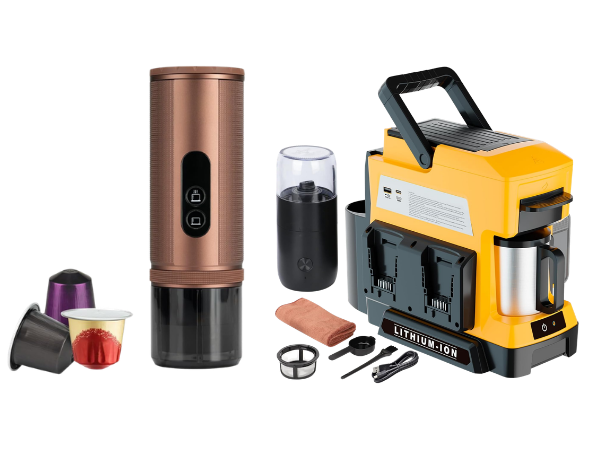
A good cup of coffee can make a morning outdoors much better, but traditional coffee makers are not always practical when you are camping, traveling, or spending the day away from an electrical outlet.
What Is a Battery-Powered Coffee Maker and How Does It Work?
A battery-powered coffee maker is a compact brewing device that uses a rechargeable battery or removable battery pack instead of a standard wall outlet. Depending on the model, the battery can power the heating element, pump, or both.
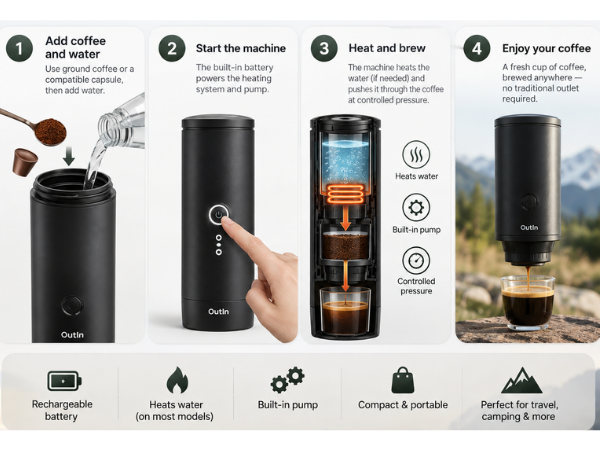
Most portable espresso machines work in a few basic steps:
- Add coffee and water — Use ground coffee or a compatible capsule, then add water.
- Start the machine — The battery powers the heating system and pump.
- Heat and brew — The machine heats the water and pushes it through the coffee at controlled pressure.
- Enjoy your coffee — The compact design lets you brew without a traditional power outlet.
The main advantage is convenience. You do not necessarily need a kettle, stove, or electrical outlet. However, heating water consumes considerably more battery power than simply pumping already-hot water.
8 Best Battery-Powered Coffee Makers
Choosing a portable coffee maker depends on where you plan to use it and how much convenience you want. The models below range from self-heating espresso machines and cordless brewers to a manual option for travelers who prefer not to rely on batteries.
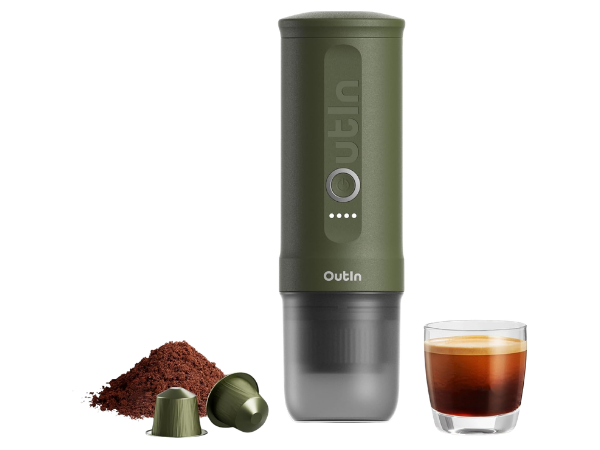
1. Outin Nano Portable Espresso Machine
The Outin Nano is a compact self-heating espresso maker designed for people who want espresso without a traditional power outlet. Its rechargeable battery can heat water and power the brewing system, so you can prepare coffee using cold or preheated water.
Key Features:
- 20-bar maximum pressure
- 2,500mAh 3-cell rechargeable battery
- Heats water to about 198°F (92°C)
- Works with ground coffee and compatible capsules
- USB and 12V/24V car charging support
- Weight: about 670 g (1.48 lb)
Best For: Travelers and campers who want a small espresso machine that can heat its own water without an outlet.
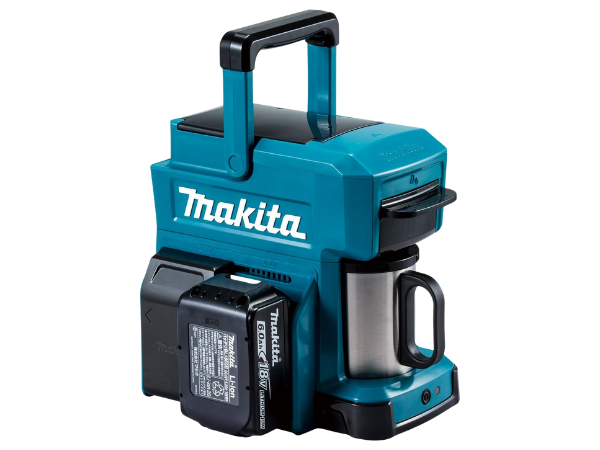
2. Makita CM501DZ Coffee Maker
The Makita CM501DZ is a different kind of cordless coffee maker. Instead of having a built-in rechargeable battery, it uses Makita 12V max CXT or 18V LXT lithium-ion batteries.
Key Features:
- Compatible with Makita 18V LXT and 12V max CXT batteries
- 240 ml (8 oz) water tank
- Uses ground coffee or single-serve packs
- Permanent filter
- About 5 minutes for a 5 oz cup with an 18V battery
- Up to 3 × 5 oz cups per 5.0Ah 18V battery charge
- Removable water tank
- Battery and charger not included
Best For: Camping, job sites, workshops, and Makita tool owners who already have compatible batteries.
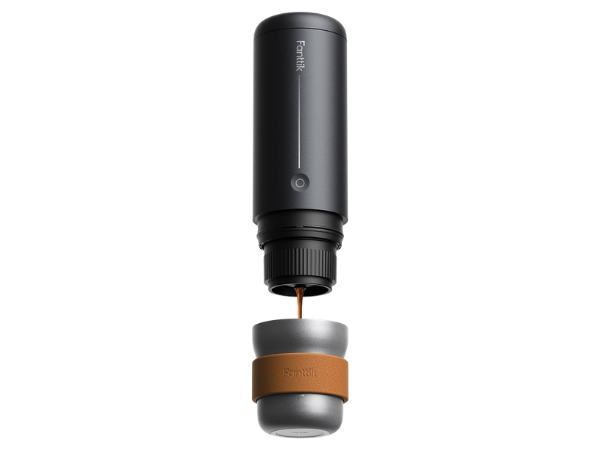
3. Fanttik Cafein 11 Portable Espresso Maker
The Fanttik Cafein 11 combines a rechargeable power system with an integrated heating element, making it suitable for situations where hot water is not readily available.
Key Features:
- 20-bar maximum pressure
- 8-second pre-soak function
- Self-heating system
- Heats room-temperature water to about 198°F in approximately 135 seconds
- Compatible with ground coffee and capsules
- 30W USB-C fast charging
- Around 8 cups per charge when heating room-temperature water, according to the manufacturer
Best For: Long road trips, camping, hiking, and travelers who want a versatile self-heating espresso maker with USB-C charging.
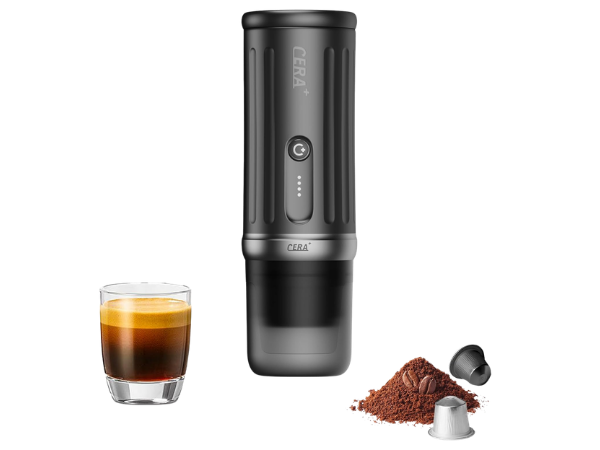
4. CERA+ PCM03S Portable Espresso Machine
The CERA+ PCM03S is a self-heating portable espresso machine built around a large 13,500mAh battery. It is designed to handle both ground coffee and NS-style capsules, giving travelers two convenient brewing options.
Key Features:
- 13,500mAh battery
- Self-heating design
- 9-bar standard extraction pressure
- Up to 20-bar maximum pressure
- 150W power
- 92°C (198°F) extraction temperature
- Up to 80 ml water capacity
- Compatible with NS-style capsules and ground coffee
Best For: Campers and travelers who prioritize battery capacity and want a self-heating espresso maker for longer trips.
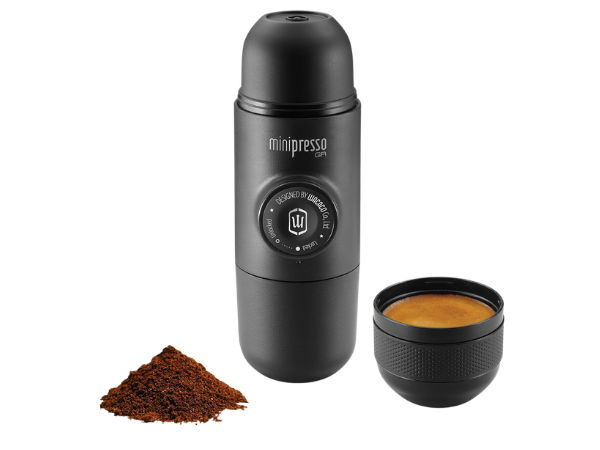
5. WACACO Minipresso GR
The WACACO Minipresso GR deserves a place on this list as a manual alternative, but it is important to clarify that it is not battery-powered. Instead, it uses a hand-operated piston to build brewing pressure.
Key Features:
- Manual operation
- No battery or electricity required
- Designed for ground coffee
- 70 ml water capacity
- 8 g ground coffee capacity
- 8-bar maximum/average operating pressure
- Weight: 360 g
- Compact 175 mm length
Best For: Backpackers and hikers who want the lightest and simplest coffee setup and do not want to depend on batteries.
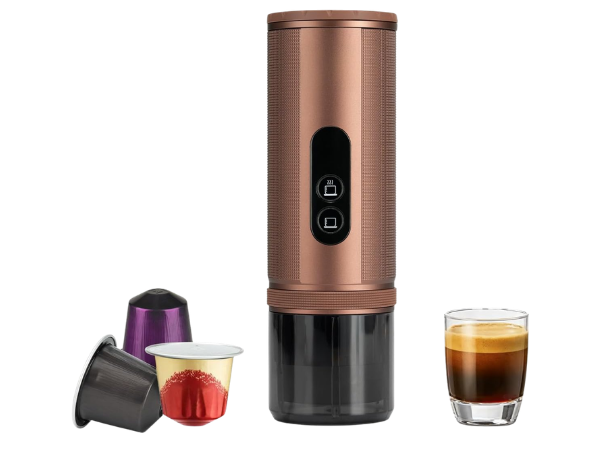
6. FANSHAIN Portable Coffee Machine
The FANSHAIN Portable Coffee Machine is aimed at travelers who want an electric espresso maker that can be used away from a conventional outlet. Its design emphasizes quick heating and capsule convenience, with compatibility with Nespresso-style capsules.
Key Features:
- Rechargeable electric design
- Rapid-heating system
- Compatible with Nespresso-style capsules
- Up to 8 cups per full charge according to product listing
- Portable design for travel and camping
- Capsule-based brewing for easy preparation
Best For: Travelers and campers who prefer capsule coffee and want a simple electric brewing option without carrying a separate espresso setup.
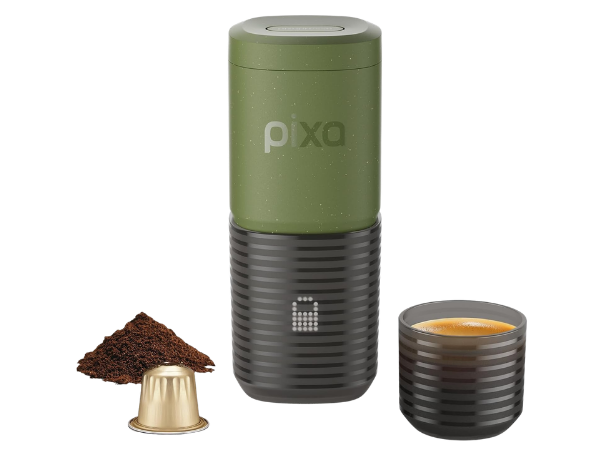
7. WACACO Pixapresso Electric & Portable Espresso Machine
The WACACO Pixapresso is one of the more feature-rich portable espresso makers in this group. It combines a rechargeable battery, integrated heating, adjustable temperature settings, and compatibility with both ground coffee and Nespresso Original-compatible capsules.
Key Features:
- 20-bar maximum pressure
- 3,000mAh 3-cell battery
- Self-heating system
- Approximately 180-second heat-up time under specified conditions
- 120 ml water tank
- 8–16 g adjustable coffee basket
- Ground coffee and NS-compatible capsule support
- USB-C charging
Best For: Coffee enthusiasts who want more control over temperature, dose, and brewing style in a portable machine.
8. DeWalt 20V MAX Cordless Coffee Maker
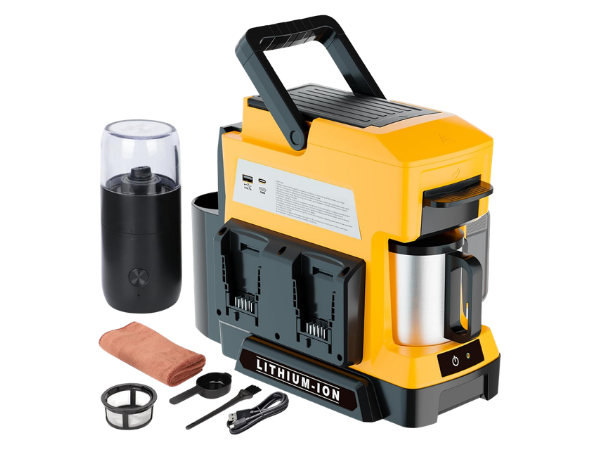
This DeWalt-compatible cordless coffee maker is designed for people who already use the DeWalt 20V MAX battery platform. Unlike the portable espresso machines above, it focuses on brewed coffee and offers multiple preparation methods.
Key Features:
- Compatible with DeWalt 20V MAX batteries
- 400W heating system
- Approximately 8 oz brewing capacity
- Three brewing options
- Ground coffee
- E.S.E. pods
- Coffee bags
- Separate rechargeable coffee grinder included
- Reusable metal filter
Best For: DeWalt tool owners, construction workers, campers, and travelers who prefer regular brewed coffee instead of espresso.
How Long Does a Battery-Powered Coffee Maker Last on One Charge?
There is no universal answer because battery life depends heavily on how the machine is used.
The biggest factor is water temperature. Heating cold or room-temperature water requires considerably more energy than pumping water that is already hot.
For example, Outin’s published testing gives the Nano up to five brews when heating 50 ml of room-temperature water, compared with more than 200 extractions when using hot water.
Other factors include:
- Water volume per brew
- Starting water temperature
- Brewing temperature
- Number of shots per session
- Battery age
- Outdoor temperature
- Charging habits
- Whether the machine is used while charging
For a weekend camping trip, it is smart to calculate your expected number of drinks rather than relying only on the manufacturer’s maximum figure.
What to Look for in a Portable Battery Coffee Maker
Not every portable coffee maker is equally useful outdoors. Before buying one, consider how and where you expect to use it.
Battery Capacity
Battery capacity is important, but a larger number does not automatically mean more cups. A machine that heats cold water consumes much more energy than one that only pumps preheated water.
Look at the manufacturer’s estimated number of brews under conditions similar to your own.
Heating Time
Self-heating models are convenient because you do not need a separate kettle. However, heating water takes time and uses more battery power.
For camping, a machine that heats water in a few minutes may be perfectly acceptable. For a quick coffee during a commute, faster operation can be more valuable.
Coffee Compatibility
Check whether the machine accepts:
- Ground coffee
- Nespresso Original-style capsules
- Other capsule formats
- Only one specific brewing system
Ground coffee offers more flexibility, while capsules are generally easier and cleaner when traveling.
Weight and Size
For car camping, weight is less important than it is for backpacking.
If you are hiking several miles, a lightweight manual brewer may make more sense. If you are traveling by car, a larger battery-powered model can provide more convenience without creating much of a packing problem.
Battery-Powered vs. Manual Coffee Makers: Which Is Better for Travel?
Battery-powered coffee makers are the more convenient choice when you want automation. They can heat water, control pressure, and produce coffee with very little physical effort.
Manual coffee makers are simpler. They do not depend on batteries and can be used repeatedly as long as you have hot water and coffee.
| Feature | Battery-Powered | Manual |
|---|---|---|
| Electricity needed | Yes | No |
| Battery management | Required | None |
| Heating water | Often built in | Usually external |
| Brewing effort | Low | Higher |
| Weight | Usually higher | Usually lower |
| Convenience | Excellent | Good |
| Best for | Car travel, camping, road trips | Hiking, backpacking |
| Risk of running out of power | Yes | No |
For car camping and road trips, a rechargeable espresso machine is usually the more convenient choice. You can charge it in the vehicle and avoid carrying a separate kettle.
For backpacking, a manual brewer such as the WACACO Minipresso GR can be more practical because you do not have to carry a large battery or worry about finding a way to recharge it.