
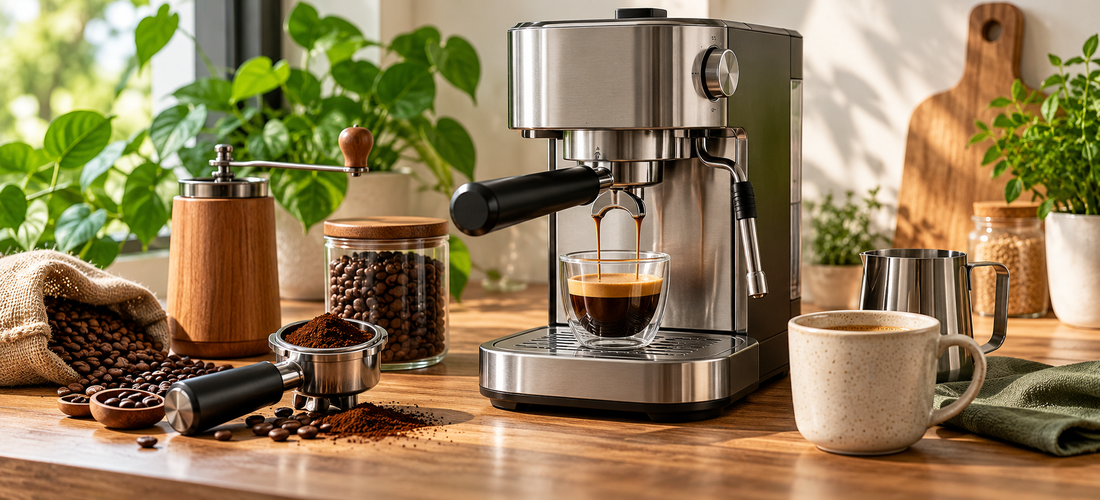
Choosing a low-waste espresso machine means looking beyond its appearance and brewing performance. Reusable coffee grounds systems, durable construction, replaceable parts, and reduced packaging can help limit everyday waste.
Key Features of a Low-Waste Espresso Machine
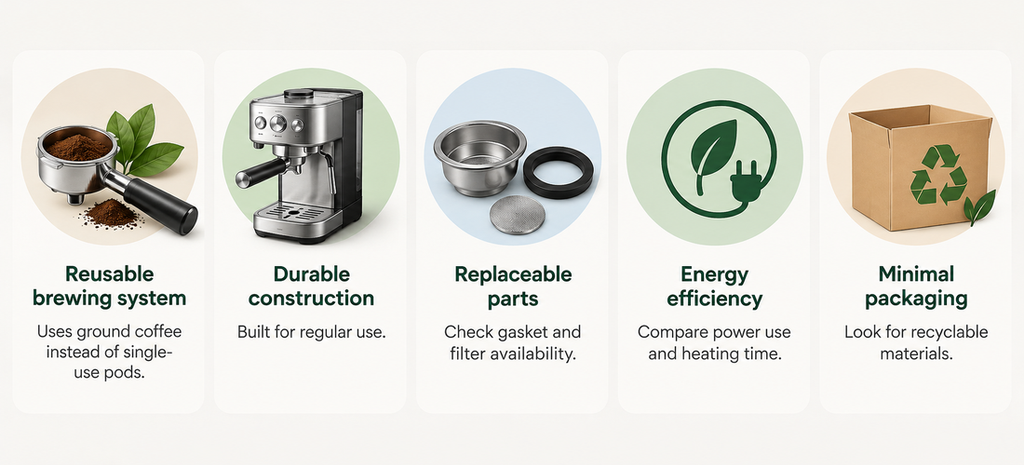
A low-waste espresso machine should make it easy to prepare coffee without relying on disposable capsules or accessories. Consider these key features before buying:
- Reusable brewing system: Uses ground coffee instead of single-use pods.
- Durable construction: Built for regular use.
- Replaceable parts: Check gasket and filter availability.
- Energy efficiency: Compare power use and heating time.
- Minimal packaging: Look for recyclable materials.
No single feature guarantees a lower environmental impact. A machine’s lifespan, energy use, coffee packaging, and maintenance requirements all matter.
9 Best Low-Waste Espresso Machines
The best options for an eco-friendly coffee setup include traditional semi-automatic machines, models with built-in grinders, and manual espresso makers.
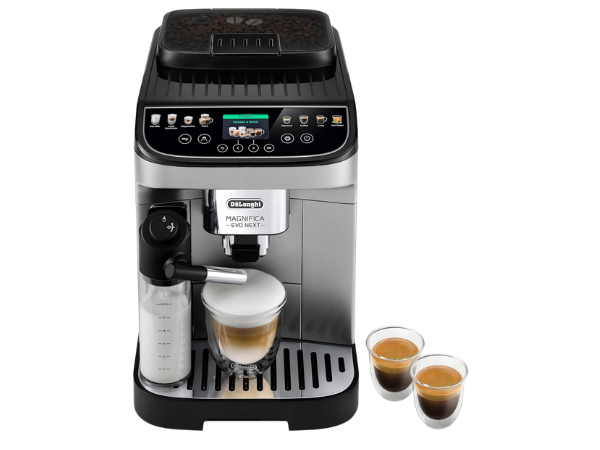
De’Longhi Magnifica Evo
The De’Longhi Magnifica Evo is a bean-to-cup espresso machine that grinds coffee on demand and prepares drinks at the touch of a button.
Key features:
- Brewing system: Fully automatic, bean-to-cup
- Coffee grinder: Built-in conical burr grinder with 13 settings
- Drink options: Up to 7 one-touch recipes, depending on the version
- Water tank: Approximately 61 oz
- Maintenance: Removable, dishwasher-safe components
Using whole beans avoids single-use coffee capsules, while the grounds container collects used coffee for disposal or suitable composting.
Ninja Luxe Café Premier
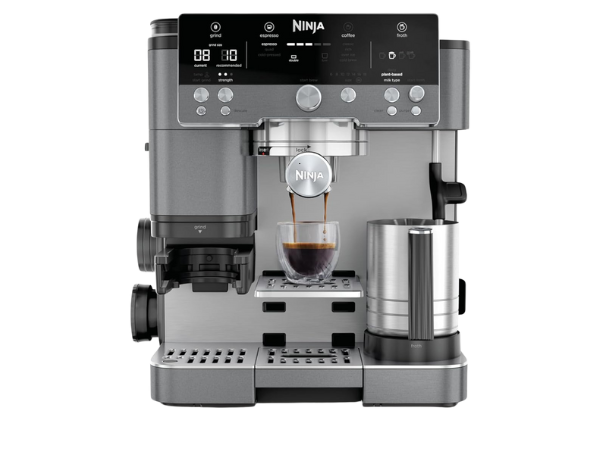
The Ninja Luxe Café Premier is a versatile coffee system that prepares espresso, drip coffee, and cold brew from whole beans.
Key features:
- Brewing options: Espresso, drip coffee, and cold brew
- Coffee grinder: Integrated conical burr grinder with 25 settings
- Dosing: Built-in scale for weight-based coffee dosing
- Controls: Guided grind recommendations and brewing adjustments
- Milk system: Hands-free frothing
This all-in-one design avoids disposable capsules and combines several brewing methods in one appliance.
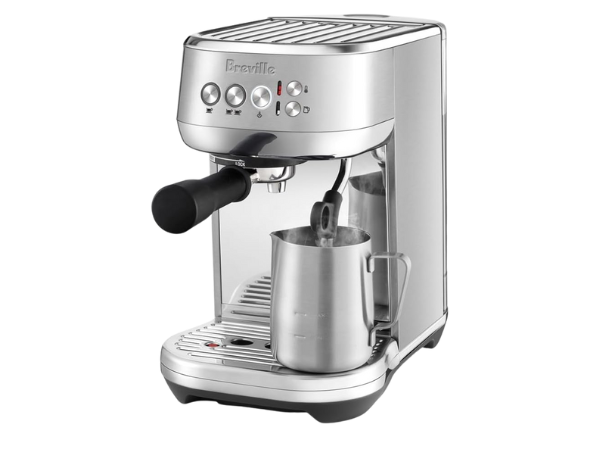
Breville Bambino Plus
Its stainless steel portafilter and automatic milk-texturing system offer a balance of hands-on espresso preparation and everyday convenience.
Key features:
- Portafilter: 54 mm stainless steel
- Coffee dose: Up to 18 g
- Heating: ThermoJet system, ready in approximately 3 seconds
- Water tank: 64 oz
- Milk system: Automatic and manual texturing
The Bambino Plus uses a reusable portafilter to avoid disposable capsules. A separate grinder is needed for whole beans.
De’Longhi Dedica Arte
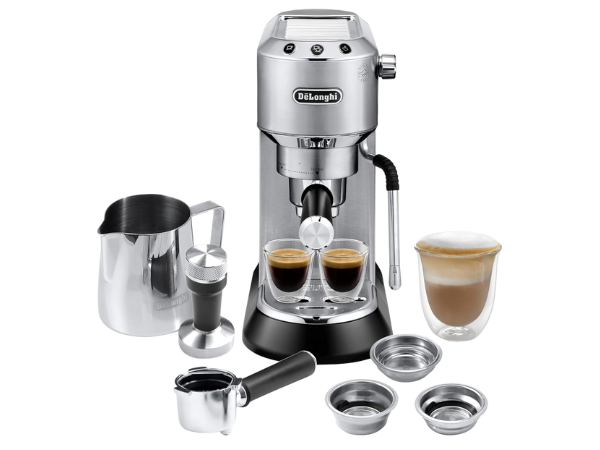
The De’Longhi Dedica Arte is a slim manual espresso machine designed for smaller kitchens. It uses ground coffee in a reusable filter basket and includes a steam wand for preparing milk-based drinks.
Key features:
- Width: Approximately 5.9 inches
- Pump pressure: 15 bar
- Water tank: 35 oz, removable
- Coffee dose: Filter basket accommodates up to 18 g
- Milk system: Manual My LatteArt steam wand
Its narrow design saves counter space, while the reusable filter basket helps avoid single-use capsule waste.
Gaggia Classic Pro E24
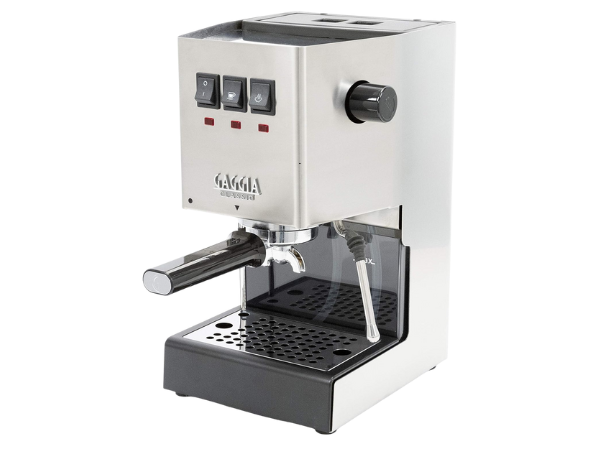
The Gaggia Classic Pro E24 is a traditional semi-automatic machine built around a stainless steel body, a lead-free brass boiler, and a commercial-style brewing group.
Key features:
- Body: 17-gauge stainless steel
- Boiler and group head: Lead-free brass
- Portafilter: 58 mm stainless steel
- Water reservoir: 72 oz
- Brewing pressure: Calibrated to 9 bar
Its brass boiler, metal construction, and availability of replacement components make it worth considering for a long-term coffee setup.
Rancilio Silvia M
The Rancilio Silvia M is a traditional home espresso machine with a brass brewing group, an insulated boiler, and a chrome-plated brass portafilter.
Key features:
- Dimensions: Approximately 9.3 × 11.4 × 13.4 inches
- Weight: About 30.8 lb
- Boiler: 0.3-liter insulated boiler
- Water reservoir: 2 liters, built in
- Brewing components: Brass group and chrome-plated brass portafilter
It costs more than many entry-level machines and requires a separate grinder, but its traditional construction is attractive for buyers prioritizing repair and maintenance.

CASABREWS CM5418
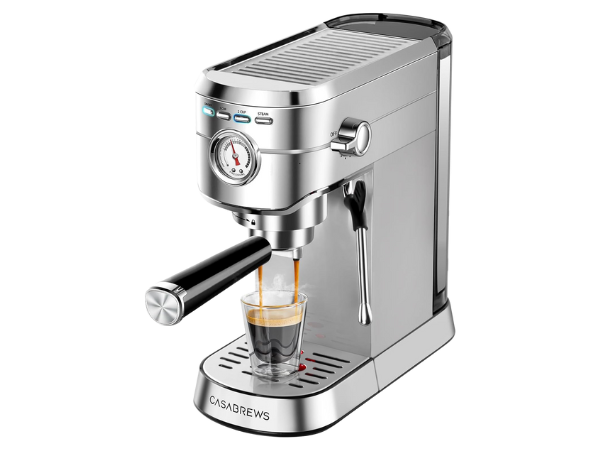
The CASABREWS CM5418 is a compact, budget-friendly espresso machine with a pressure gauge and manual milk frother.
Key features:
- Dimensions: Approximately 5.47 × 12.28 × 11.97 inches
- Pump: 20-bar Italian pump with temperature control
- Portafilter: 51 mm aluminum
- Water tank: 34 oz, removable
- Milk system: Stainless steel steam wand
Its construction includes mixed materials, so check replacement-part availability and warranty support before choosing it for long-term use.
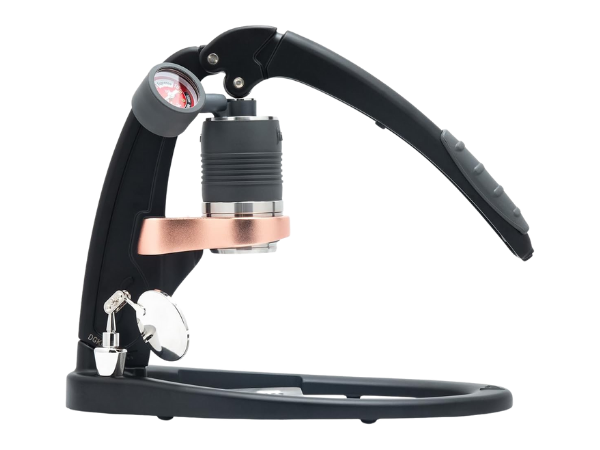
Flair 49 PRO Manual Espresso Maker
The Flair 49 PRO is a fully manual lever espresso maker with no electronic components or built-in heater. It provides hands-on control over extraction and includes both pressurized and bottomless brewing baskets for different experience levels.
Key features:
- Operation: Fully manual, no electricity required
- Portafilter: 49 mm
- Coffee dose: 12–20 g
- Water capacity: 90 ml input
- Espresso yield: Up to 55 ml
It requires separately heated water, but its replaceable parts and manual design make it a compelling option for a low-waste coffee setup.
Wacaco Nanopresso Portable Espresso Maker
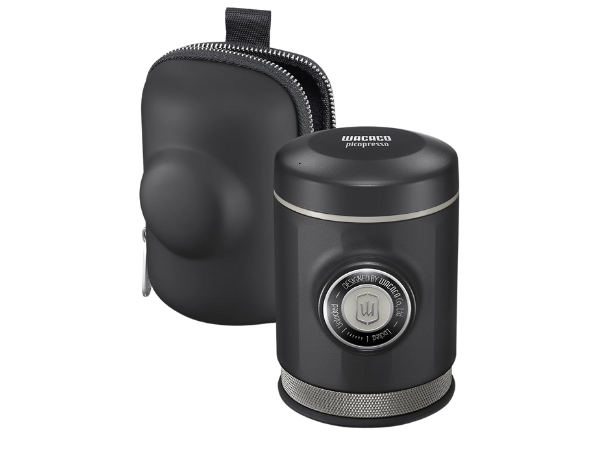
The Wacaco Nanopresso is a lightweight manual espresso maker designed for travel and small spaces. It uses hand-powered pressure to extract espresso from ground coffee, without electricity or disposable capsules.
Key features:
- Operation: Manual pump
- Maximum pressure: Up to 18 bar
- Water capacity: 80 ml
- Coffee capacity: 8 g per serving
- Weight: Approximately 336 g
- Dimensions: Approximately 2.44 × 2.8 × 6.14 inches
However, it does not heat water, and its construction includes BPA-free plastics, stainless steel, and silicone. It is a low-energy option, but not a fully plastic-free machine.
What Materials and Replaceable Parts Should You Check?
The materials used in an espresso machine affect durability, maintenance, and potential replacement needs. A metal exterior can be appealing, but the brewing system may still contain plastic fittings, seals, and other components.
Check these details before buying:
- Portafilter and basket: Choose reusable components.
- Boiler or thermoblock: Check materials and serviceability.
- Gaskets and seals: Ensure replacements are available.
- Water reservoir and tubing: Check water-contact materials.
- Replacement parts: Look for available pumps, baskets, and filters.
- Repair support: Check service options and maintenance guidance.
A machine that can be repaired rather than replaced may help reduce discarded appliances and material consumption.
Manual vs. Electric Espresso Machines: Which Should You Choose?
Both manual and electric espresso machines can support a lower-waste routine, but they differ in energy use, convenience, and maintenance.
| Feature | Manual Espresso Machine | Electric Espresso Machine |
|---|---|---|
| Electricity | No electricity needed for brewing | Requires electrical power |
| Water heating | Usually needs an external heat source | Often heats water internally |
| Control | More hands-on preparation | Usually easier and faster |
| Maintenance | Fewer powered components in many models | May have more components to service |
| Best for | Simplicity and portability | Convenience and frequent use |
Manual machines can reduce electricity use during brewing, but you still need to heat the water. Electric machines may suit daily use better, especially when they are maintained properly and used efficiently.
Reusable Pods vs. Ground Coffee: Which Is More Sustainable?
Ground coffee used in a reusable portafilter generally avoids the individual capsule waste associated with single-serve systems. Reusable pods are another option, but they still require cleaning and may have material or durability trade-offs.
| Option | Waste Considerations |
|---|---|
| Ground coffee and reusable portafilter | Avoids single-use capsules; used grounds may be compostable where suitable facilities exist |
| Reusable coffee pods | Reduce disposable pod use but require repeated cleaning and eventual replacement |
| Single-use capsules | Convenient, but create packaging waste unless an effective recycling or composting route is available |
| Compostable capsules | May reduce certain waste impacts, but disposal depends on the capsule’s certification and local facilities |
A comparative life-cycle study found that traditional brewing with ground coffee had lower environmental impacts than several single-serve formats under the scenarios examined. Results can vary with packaging, energy use, recycling, and disposal practices.