
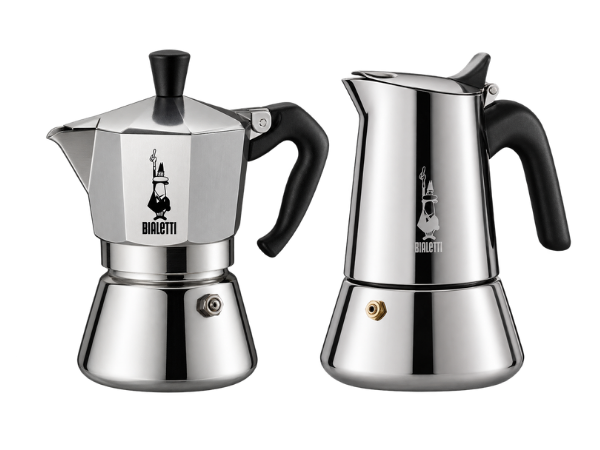
A moka pot is a simple way to make rich, concentrated coffee on the stovetop. However, choosing one for an induction cooktop requires a little more attention because tr
What Is a Moka Pot for an Induction Cooktop?
A moka pot is a stovetop coffee maker that uses pressure created by heated water to push water through ground coffee. The result is a strong, concentrated brew that is different from both drip coffee and espresso made by a pump machine.
How Does an Induction Moka Pot Work?
The brewing process is essentially the same as with a conventional moka pot:
- Fill the lower chamber with water.
- Place ground coffee in the filter basket.
- Assemble the upper and lower chambers.
- Put the moka pot on the induction burner.
- Heat causes pressure to push water through the coffee.
- Brewed coffee collects in the upper chamber.
Tip: Always check the manufacturer’s specifications for induction compatibility. A stainless steel moka pot is not necessarily induction compatible simply because it contains stainless steel.
Best 7 Moka Pots for Induction Cooktops to Consider
There is no single moka pot that is ideal for every kitchen. Capacity, construction, handle design, price, and stovetop compatibility can all influence the choice.
Bialetti New Venus
The Bialetti New Venus combines Bialetti’s traditional moka brewing method with a modern stainless steel body. It is designed for multiple stovetops, including induction, making it a convenient option for households that use more than one type of cooking surface.
Key features:
- Stainless steel construction
- Induction compatible
- Works with gas, electric, and glass-ceramic cooktops
- Bialetti safety valve
- Heat-resistant handle and knob
- Available in different capacities
Its stainless steel construction also makes it a practical choice for people who specifically need an induction-compatible Bialetti.
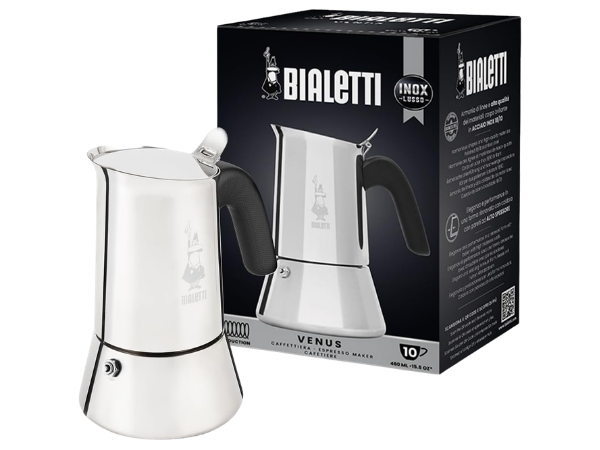
Bialetti Moka Induction
The Bialetti Moka Induction takes a different approach. Rather than making the entire brewer from stainless steel, it combines aluminum with a specially designed induction-compatible base.
Key features:
- Aluminum and stainless steel construction
- Bi-layer induction base
- Compatible with induction, gas, electric, and glass-ceramic cooktops
- Patented Bialetti safety valve
- Heat-resistant handle and knob
- Available in several sizes
This model is worth considering if you prefer the traditional appearance of a Bialetti moka pot but need compatibility with an induction burner.
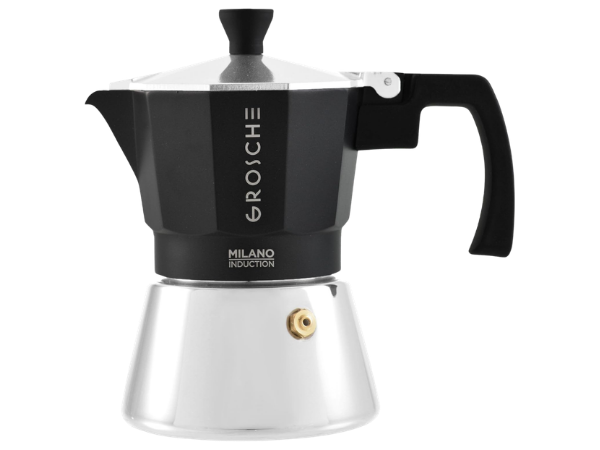
GROSCHE Milano Steel
The GROSCHE Milano Steel is a stainless steel version of the company’s moka pot design. It is made for induction as well as conventional stovetops and is available in several capacities.
Key features:
- 18/8 stainless steel construction
- Induction compatible
- Suitable for gas and electric stovetops
- Italian-made safety valve
- Dishwasher-safe design
- Multiple sizes available
The Milano Steel is a useful alternative to Bialetti for shoppers who want a stainless steel moka pot with broad stovetop compatibility.
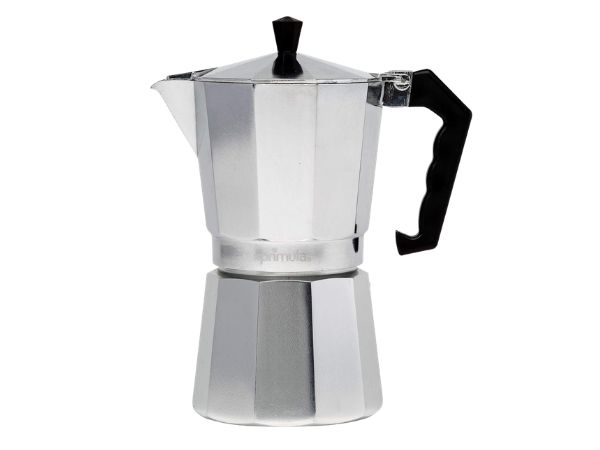
Primula Stainless Steel Moka Pot
Stainless steel construction can make a Primula a practical alternative to traditional aluminum brewers, but the exact model and size should be checked before buying for induction use.
Key features:
- Stainless steel construction
- Reusable filter basket
- Stovetop brewing design
- Compact construction
- Available in different capacities
- Simple disassembly for cleaning
If induction compatibility is essential, verify that the particular Amazon listing explicitly identifies the model as suitable for induction.
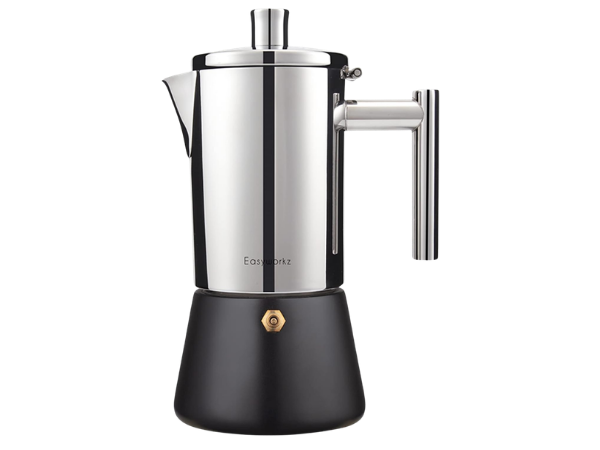
Easyworkz Diego
The Easyworkz Diego is a stainless steel moka pot with a magnetic base designed for induction cooking. It is available in several capacities, including larger options for households that brew multiple servings at once.
Key features:
- 18/8 stainless steel construction
- Magnetic induction base
- Compatible with induction, gas, and electric cooktops
- 4-, 6-, and 12-cup options
- Heat-resistant handle and lid grip
- Reducer for smaller batches
One useful feature is the reducer included with some Diego versions. It can make a larger-capacity moka pot more flexible when you want to prepare a smaller amount of coffee.
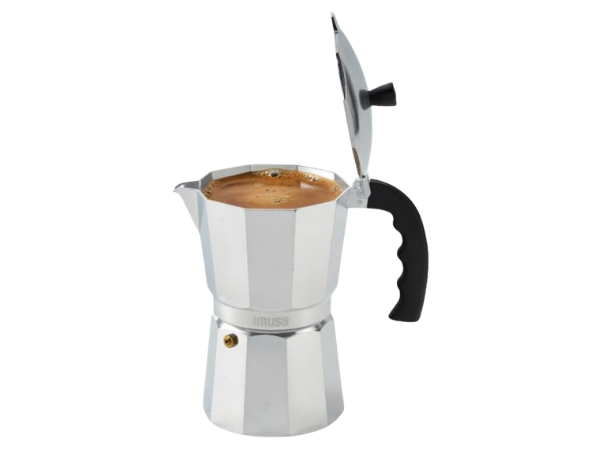
IMUSA Stainless Steel Stovetop Espresso Maker
The IMUSA Stainless Steel Stovetop Espresso Maker is a straightforward option for everyday moka-style coffee. Its stainless steel construction and compatibility with several cooking surfaces make it suitable for kitchens with induction, electric, or gas stoves.
Key features:
- Stainless steel construction
- Induction compatible models available
- Suitable for gas and electric stovetops
- Cool-touch handle and knob
- Flip-top lid
- Pouring spout
IMUSA also offers different capacities, allowing shoppers to choose a smaller brewer for individual servings or a larger model for multiple cups.
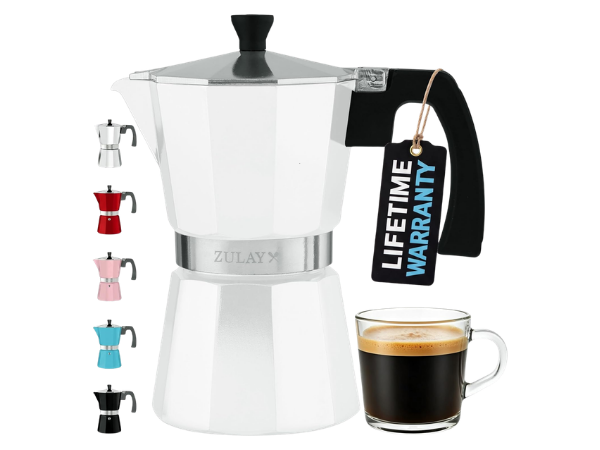
Zulay Kitchen Moka Pot
The Zulay Kitchen Traditional Espresso Maker uses a compact moka-style design and is available in several capacities. The manufacturer lists induction compatibility for the current version, although shoppers should still check the exact Amazon variant before ordering.
Key features:
- Cast aluminum construction
- Induction-compatible version available
- Pressure valve
- Heat-resistant handle
- Compact design
- Multiple capacity options
This makes checking the exact version especially important: aluminum itself does not provide induction compatibility, so the specific base and model designation matter.
Which Materials Work Best on Induction Cooktops?
Material is one of the most important things to check when choosing a moka pot for induction.
Stainless Steel
Stainless steel is one of the most common choices for induction-compatible moka pots. Many models use magnetic stainless steel throughout the body, while others use it primarily for the base.
Advantages include:
- Naturally suitable for many induction designs
- Durable construction
- Resistant to corrosion
- Easy to maintain
- Compatible with other stovetop types in many models
However, not every type of stainless steel is magnetic. Therefore, “stainless steel” alone does not guarantee induction compatibility.
Aluminum With an Induction Base
Aluminum is widely used in traditional moka pots because it heats efficiently and has been part of classic moka pot designs for decades.
The problem is that aluminum is not magnetic. Manufacturers can overcome this by adding a stainless steel induction plate or creating a layered base.
This is the approach used by hybrid designs such as the Bialetti Moka Induction.
What Should You Look For?
When shopping, look for one of these descriptions:
| Construction | Induction suitability |
|---|---|
| Magnetic stainless steel | Usually suitable |
| Stainless steel induction base | Suitable when specified by manufacturer |
| Aluminum only | Not suitable for direct induction |
| Aluminum + induction base | Suitable when manufacturer specifies compatibility |
| Unknown material/base | Check before buying |
The safest approach is to look for an explicit statement such as “induction compatible” in the manufacturer’s specifications rather than trying to determine compatibility from the material name alone.
How to Choose the Right Moka Pot Size
Moka pot sizes can be confusing because a “cup” does not usually mean a standard American 8-ounce coffee cup. Moka pot manufacturers generally use a small serving measurement based on concentrated coffee.
For that reason, choosing the right capacity depends more on how much coffee you normally brew than on the number printed on the box.
Common Moka Pot Sizes
| Moka pot size | Approximate brewed volume | Good for |
|---|---|---|
| 1–2 cup | Small serving | One person |
| 3 cup | About 4–5 oz | One larger serving or two small servings |
| 4 cup | About 6 oz | One to two people |
| 6 cup | About 8–10 oz | One large or two smaller servings |
| 9 cup | About 13–15 oz | Several servings |
| 12 cup | About 20 oz or more | Multiple coffee drinkers |
Actual capacity varies by manufacturer, so these figures should be treated as general guidance rather than exact measurements.
Choose Smaller Sizes for Individual Brewing
A 1-, 2-, or 3-cup moka pot can make sense if you normally prepare coffee for yourself. Smaller models also take up less space and can be convenient for kitchens where storage is limited.
Choose 4–6 Cups for Everyday Flexibility
A 4- or 6-cup moka pot is a useful middle ground. It can provide enough concentrated coffee for one generous serving or several smaller servings, depending on how you drink it.
These sizes are also widely available, so there are usually more choices when comparing materials, brands, and prices.
Choose Larger Sizes for Multiple People
If you regularly make coffee for several people, a 9- or 12-cup model can reduce the need to brew multiple batches.
Keep in mind that a moka pot is generally designed to be filled according to its intended capacity. Unlike a drip coffee maker, you should not simply fill a large moka pot halfway and expect the same brewing results. If you usually drink one small serving, buying a smaller model is often more practical.
What Size Is Right for You?
A simple way to choose is to consider your normal brewing routine:
- One person: 1–3 cups
- One or two coffee drinkers: 3–6 cups
- Several people: 6–9 cups
- Larger households or multiple servings: 9–12 cups
Also consider whether you drink moka coffee straight or use it as the base for drinks such as lattes and cappuccinos. Because moka coffee is concentrated, a relatively small brewed volume can go further when combined with milk.