
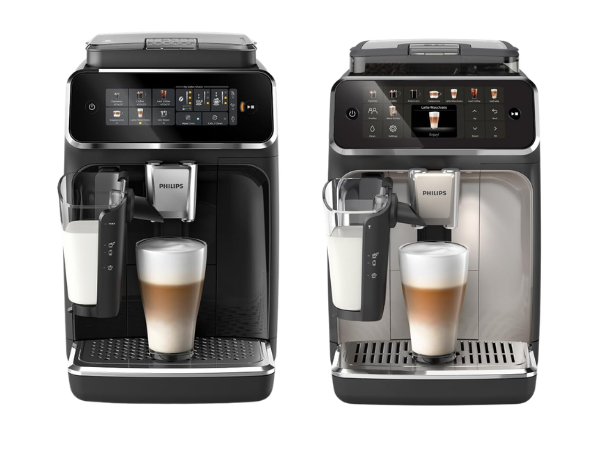
When choosing between the Philips 3300 and Philips 5500 espresso machines, many coffee lovers wonder which model offers the best balance of features, performance, and value.
Philips 3300 vs 5500: Quick Comparison
The Philips 3300 and 5500 share a similar foundation: both are automatic espresso machines with integrated grinders, one‑touch drink options, and compact designs. Yet, the 5500 is positioned as a more premium model, offering expanded drink menus and advanced usability features.
- Philips 3300 – Mid‑range model with essential espresso and milk drinks, straightforward controls, and reliable performance.
- Philips 5500 – Higher‑end model with more customization, larger drink variety, and upgraded display.
In short, the 3300 is ideal for users who want simplicity and affordability, while the 5500 caters to those seeking more versatility and refinement.
Key Difference #1: Design and Build Quality
The 3300 emphasizes practicality with a clean, compact body that fits easily on most countertops. The 5500, however, leans toward a more premium aesthetic, featuring sleeker lines, a polished exterior, and a slightly larger footprint to accommodate its expanded functionality.
- 3300 Build – Compact, matte finish, lightweight design.
- 5500 Build – Sleek, premium finish, slightly larger, sturdier feel.
- Durability – Both models use high‑quality plastics, but the 5500 feels more robust.
- Footprint – The 3300 is better suited for smaller kitchens.
Overall, the 5500 offers a more refined look and sturdier build, while the 3300 prioritizes space efficiency and simplicity.
Key Difference #2: Coffee Drinks and Customization
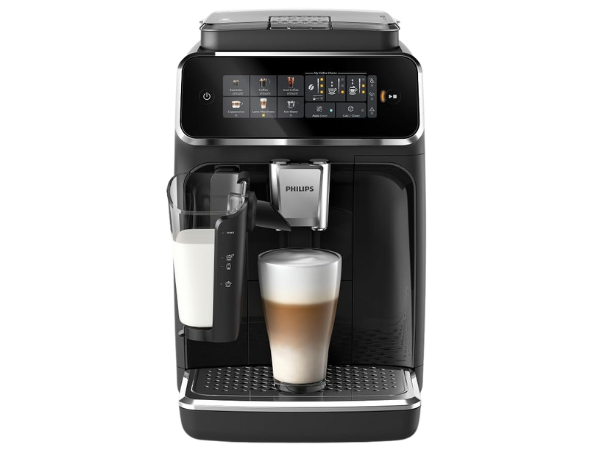
The Philips 3300 provides a solid range of core drinks, including espresso, cappuccino, latte macchiato, and Americano. The Philips 5500 expands this selection with additional specialty drinks and more flexibility in adjusting strength, volume, and temperature.
- 3300 Menu – Espresso, cappuccino, latte macchiato, Americano, hot water.
- 5500 Menu – Adds flat white, café crema, and more specialty drinks.
- Customization – 5500 allows deeper adjustments for strength, aroma, and serving size.
- Profiles – Some 5500 versions include user profiles for saving preferences.
For households with diverse coffee preferences, the 5500’s expanded menu and customization make it more versatile, while the 3300 remains reliable for everyday classics.
Key Difference #3: Milk Frothing System
The Philips 3300 uses a classic milk frother system, requiring manual placement of the milk tube into a container. The Philips 5500, on the other hand, integrates a more advanced LatteGo system, which is easier to clean and delivers consistent foam quality.
- 3300 Frother – Standard milk tube system, requires external container.
- 5500 LatteGo – Built‑in milk carafe, easy to attach and clean.
- Foam Quality – LatteGo produces smoother, more consistent froth.
- Convenience – 5500 is faster and less messy for milk drinks.
If milk‑based drinks are a priority, the 5500’s LatteGo system is a clear advantage, offering convenience and superior frothing performance.

Key Difference #4: Display, Controls, and User Experience
The Philips 3300 features a basic button interface with icons, making it straightforward but less intuitive for customization. The Philips 5500 upgrades to a full‑color display with touch controls, offering clearer navigation and easier adjustments.
- 3300 Controls – Button interface, simple icons, limited feedback.
- 5500 Controls – Color display, touch navigation, more intuitive menus.
- User Experience – 5500 feels more modern and user‑friendly.
- Learning Curve – 3300 is easier for beginners, while 5500 offers advanced control.
The 5500’s upgraded interface enhances usability, especially for households that enjoy experimenting with different drinks.
Key Difference #5: Grinder, Brewing Performance, and Coffee Quality
Both machines use ceramic grinders, known for durability and consistent grinding. However, the Philips 5500 offers more grind settings, allowing finer control over flavor extraction. Brewing performance is similar, but the 5500’s expanded customization helps optimize coffee quality.
- 3300 Grinder – Ceramic grinder with fewer grind settings.
- 5500 Grinder – Ceramic grinder with more adjustable settings.
- Brewing – Both deliver consistent espresso shots.
- Coffee Quality – 5500 allows more fine‑tuning for flavor balance.
For coffee enthusiasts who enjoy experimenting with grind size and strength, the 5500 provides more flexibility, while the 3300 delivers reliable results with less effort.
Key Difference #6: Cleaning and Maintenance
The Philips 3300 requires manual rinsing of the milk tube, while the Philips 5500’s LatteGo system simplifies cleaning with fewer parts. Both machines feature removable brew groups and automatic descaling programs.
- 3300 Cleaning – Manual milk tube rinsing, removable brew group.
- 5500 Cleaning – LatteGo system with fewer parts, easier to wash.
- Descaling – Both include automatic descaling alerts.
- Maintenance Effort – 5500 reduces daily cleaning time.
The 5500’s simplified cleaning system makes it more convenient for frequent milk drinkers, while the 3300 remains manageable for users who primarily enjoy espresso.
Key Difference #7: Price and Overall Value
The Philips 3300 is more affordable, making it attractive for budget‑conscious buyers who still want a reliable espresso machine. The Philips 5500, while more expensive, justifies its price with added features, better usability, and enhanced milk frothing.
- 3300 Price – Lower cost, strong value for essential features.
- 5500 Price – Higher cost, premium features and convenience.
- Value – 3300 suits casual coffee drinkers; 5500 suits enthusiasts.
- Investment – 5500 offers long‑term versatility and convenience.
Ultimately, the 3300 is a cost‑effective choice for everyday use, while the 5500 appeals to those willing to invest in a more advanced machine.
Philips 3300 vs 5500: Which Espresso Machine Should You Buy?
Deciding between the Philips 3300 and Philips 5500 ultimately comes down to how much you value convenience, customization, and variety in your daily coffee routine.
- Philips 3300 – Best for budget‑conscious buyers who prioritize simplicity, reliability, and compact design.
- Philips 5500 – Ideal for coffee enthusiasts who enjoy experimenting with different drinks, customizing flavors, and benefiting from the advanced LatteGo milk system.
While both machines deliver Philips’ hallmark ease of use and durability, the 5500 elevates the experience with a richer drink menu, intuitive touch display, and easier cleaning.