
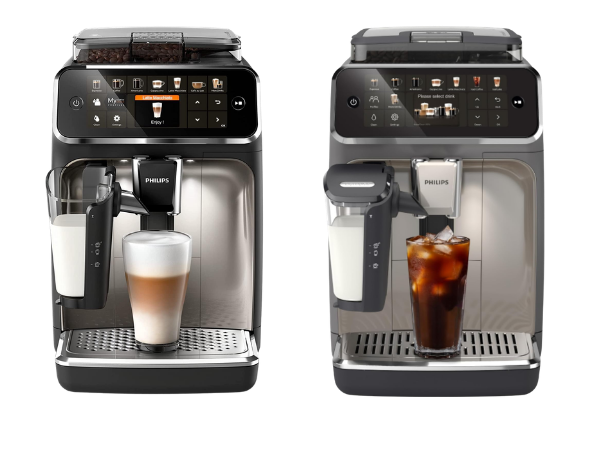
Choosing between the Philips 5400 and Philips 5500 espresso machines can feel overwhelming because both models are designed to deliver café‑style drinks at home.
Philips 5400 vs 5500: Quick Comparison
Both machines feature the LatteGo milk system, AquaClean filter compatibility, and intuitive controls. However, the Philips 5500 is positioned as a slightly more advanced model, offering additional beverage options and refined usability features.
- Philips 5400 – Balanced design, wide drink menu, strong value.
- Philips 5500 – Enhanced customization, more beverages, modern interface.
- Shared Features – LatteGo milk system, AquaClean filter, durable build, touchscreen controls.
- Target Audience – 5400 suits casual coffee lovers; 5500 suits enthusiasts who want more control.
Ultimately, the quick comparison shows that while both machines excel in convenience and quality, the Philips 5500 edges ahead in versatility, whereas the Philips 5400 remains a reliable, cost‑effective choice.
Key Difference #1: Design and Build Quality
The Philips 5400 features a classic black finish with chrome accents, giving it a professional yet approachable look. The Philips 5500, on the other hand, leans toward a more modern design with sleeker lines and a slightly more compact footprint, making it ideal for smaller kitchens.
- Philips 5400 design – Functional, durable, slightly bulkier.
- Philips 5500 design – Slimmer, modern lines, premium materials.
- Build Quality – Both use high‑grade plastics and stainless steel accents.
- Durability – Designed for daily use with long‑lasting components.
The Philips 5500’s refined design may appeal to users who prioritize aesthetics and space efficiency, while the Philips 5400 offers a more substantial presence that feels sturdy and reliable.
Key Difference #2: Drink Menu and Beverage Variety
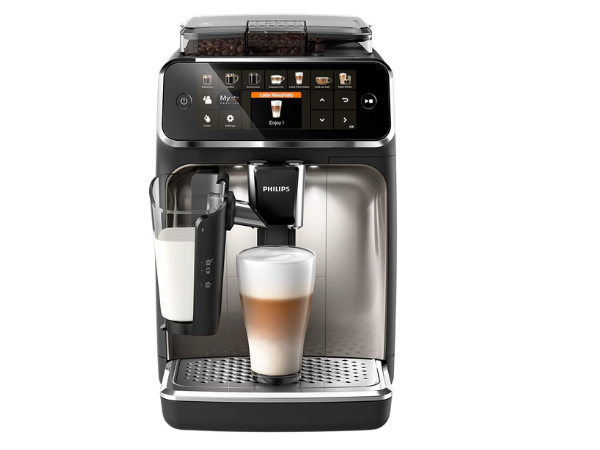
The Philips 5400 offers up to 12 beverage options, including espresso, cappuccino, latte macchiato, and Americano. The Philips 5500 expands this menu to 15 drinks, adding specialty beverages like cortado and flat white.
- Philips 5400 drinks – 12 beverages, strong variety for daily use.
- Philips 5500 drinks – 15 beverages, includes niche café favorites.
- Customization – 5500 allows deeper adjustments to strength, temperature, and volume.
- Milk Drinks – Both excel with LatteGo, but 5500 offers more presets.
- Tea & Hot Water – Both provide hot water options for tea drinkers.
This difference makes the Philips 5500 more appealing to adventurous coffee lovers who enjoy experimenting with different drinks, while the Philips 5400 provides all the essentials for everyday coffee enjoyment.
Key Difference #3: LatteGo Milk System and Milk Frothing
Both machines use Philips’ patented LatteGo milk system, which is designed for simplicity and hygiene. Unlike traditional frothers, LatteGo uses a two‑part system that mixes milk and air at high speed, creating a creamy froth without complicated tubes or parts.
- LatteGo system – Easy to clean, no tubes, dishwasher‑safe.
- Philips 5400 frothing – Consistent foam, ideal for cappuccinos and lattes.
- Philips 5500 frothing – Adds more control over foam density and temperature.
- Ease of Use – Both machines allow one‑touch milk drinks.
- Maintenance – LatteGo requires minimal cleaning compared to traditional frothers.
While both machines deliver excellent froth, the Philips 5500 provides slightly finer microfoam, making it better suited for latte art enthusiasts. The Philips 5400 remains dependable for everyday milk‑based drinks.

Key Difference #4: Customization and User Profiles
The Philips 5400 allows users to adjust strength, volume, and temperature, and it supports up to four user profiles. The Philips 5500 enhances this by offering more granular control over beverage parameters and also supports multiple profiles.
- Philips 5400 customization – Adjust strength, temperature, and volume.
- Philips 5500 customization – Save multiple profiles with personalized drink settings.
- Household Use – 5500 is ideal for families with different preferences.
- Advanced Control – More granular adjustments for enthusiasts.
- Convenience – Profiles save time by eliminating repeated adjustments.
This makes the Philips 5500 ideal for families or shared spaces where everyone wants their coffee exactly the way they like it. The Philips 5400 still provides excellent flexibility but with slightly fewer options.
Key Difference #5: Display, Controls, and Ease of Use
The Philips 5400 features a color display with touch buttons, offering clear navigation. The Philips 5500 upgrades this with a more responsive touchscreen and streamlined menu layout.
- Philips 5400 display – Simple icons, easy navigation.
- Philips 5500 display – Sleeker interface, faster response.
- Ease of Use – Both are beginner‑friendly.
- Controls – One‑touch drink selection.
- Learning Curve – Minimal, but 5500 feels more polished.
Both machines are easy to use, but the Philips 5500 feels more modern and intuitive, reducing the learning curve for new users. The Philips 5400 remains practical and straightforward, appealing to those who prefer tactile buttons.
Key Difference #6: Cleaning, Maintenance, and AquaClean Filter
Both machines are compatible with Philips’ AquaClean filter, which reduces the need for descaling up to 5,000 cups. The LatteGo system is also dishwasher‑safe, making cleaning effortless.
- Philips AquaClean filter – Extends machine life, reduces descaling.
- Philips 5400 cleaning – Easy access to brew group, dishwasher‑safe parts.
- Philips 5500 cleaning – Similar system, but slightly more streamlined.
- LatteGo advantage – No tubes, quick rinse.
- Maintenance frequency – AquaClean allows up to 5,000 cups before descaling.
The Philips 5500 provides clearer maintenance notifications, ensuring users never miss a cleaning cycle. The Philips 5400 remains highly convenient but with less advanced reminders.
Key Difference #7: Price, Value, and Long-Term Ownership Costs
The Philips 5400 is generally more affordable, making it a strong value option for those who want premium features without overspending. The Philips 5500, while more expensive, justifies its price with added beverage options, enhanced customization, and modern usability.
- Philips 5400 price – Lower upfront cost, strong value.
- Philips 5500 price – Higher cost, but more features.
- Ownership Costs – Both benefit from AquaClean, reducing maintenance expenses.
- Value Proposition – 5400 suits casual users; 5500 suits enthusiasts.
- Longevity – Both machines are built for years of use.
In terms of long‑term ownership, both machines benefit from AquaClean filters and durable build quality, minimizing maintenance costs. The Philips 5400 is the budget‑friendly choice, while the Philips 5500 is the premium investment.
Philips 5400 vs 5500: Which Espresso Machine Should You Buy?
When deciding between the Philips 5400 and Philips 5500, the choice ultimately comes down to your priorities as a coffee drinker. Both machines deliver excellent espresso quality, but they cater to slightly different audiences.
- Philips 5400 advantages – Affordable, versatile, easy to use, wide drink menu.
- Philips 5500 advantages – Sleeker design, more customization, user profiles, advanced beverage options.
- Household Fit – 5400 suits single users or casual households; 5500 suits families or enthusiasts.
- Budget Consideration – 5400 is more cost‑effective; 5500 requires a higher investment but offers more features.
- Long‑Term Value – Both benefit from AquaClean filters, reducing maintenance costs over time.
In summary, if you’re looking for a dependable machine that balances performance and affordability, the Philips 5400 is an excellent choice. If you want a more premium experience with advanced customization and modern aesthetics, the Philips 5500 is worth the extra investment.