
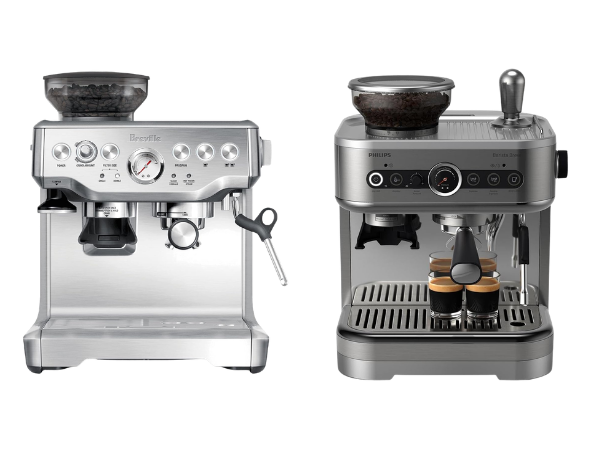
The world of home espresso machines has grown rapidly, and two models often compared by coffee enthusiasts are the Philips Barista Brew and the Breville Barista Express. Both machines promise café‑quality espresso at home, but they differ in design, functionality, and long‑term usability.
Philips Barista Brew vs Breville Barista Express: Quick Overview
The Philips Barista Brew emphasizes automation and simplicity, while the Breville Barista Express leans toward manual control and customization. This distinction makes them appealing to different audiences: beginners who want convenience versus enthusiasts who enjoy experimenting.
- Philips Barista Brew – Known for its sleek design and user‑friendly interface, it focuses on one‑touch brewing and consistency.
- Breville Barista Express – Offers semi‑automatic control, allowing users to adjust grind size, tamping pressure, and extraction time.
- Target Audience – Philips suits casual coffee drinkers, while Breville attracts hobbyists who want hands‑on involvement.
- Maintenance – Philips emphasizes easy cleaning, whereas Breville requires more upkeep but rewards with flexibility.
Ultimately, the quick overview shows that Philips prioritizes convenience, while Breville emphasizes craftsmanship. This sets the stage for the detailed differences explored below.
Difference #1: Design, Size, and Build Quality
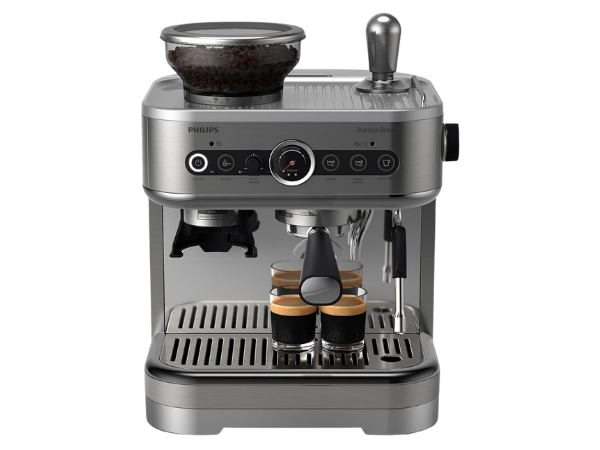
Philips Barista Brew is compact, modern, and designed to fit seamlessly into small kitchens. Breville Barista Express, on the other hand, has a more industrial look, with stainless steel components and a larger footprint that signals durability and professional appeal.
- Philips Design – Lightweight, minimalist, and space‑saving.
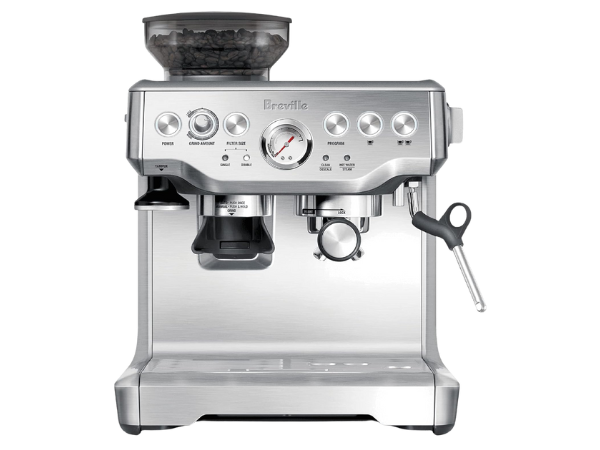
- Breville Design – Sturdy stainless steel build, larger size, and professional aesthetic.
- Dimensions – Philips is slimmer, while Breville requires more counter space.
- Durability – Breville’s heavier build suggests long‑term resilience, while Philips focuses on portability.
- Visual Appeal – Philips suits modern kitchens, Breville appeals to traditional coffee setups.
In conclusion, Philips wins for compactness and modern style, while Breville excels in durability and professional presence. Buyers should consider their kitchen space and design preferences before choosing.
Difference #2: Grinder Performance and Grind Settings
A grinder is the heart of any espresso machine, and here the two models diverge significantly. Philips Barista Brew integrates a simplified grinder with fewer settings, while Breville Barista Express offers a conical burr grinder with multiple grind adjustments, giving users more control over flavor extraction.
- Philips Grinder – Basic grinder with limited settings, designed for ease of use.
- Breville Grinder – Conical burr grinder with 16+ grind settings for precision.
- Consistency – Breville produces more uniform grounds, while Philips prioritizes speed.
- Customization – Breville allows fine‑tuning for different beans, Philips keeps it simple.
- Noise Levels – Philips grinder is quieter, Breville’s grinder is louder but more powerful.
This difference highlights Breville’s appeal to enthusiasts who want to experiment with grind size, while Philips caters to those who prefer simplicity and consistency.
Difference #3: Espresso Extraction and Brewing Technology
Brewing technology determines the quality of espresso shots. Philips Barista Brew uses automated brewing systems with pre‑programmed settings, while Breville Barista Express allows manual control over extraction, giving users the ability to adjust pressure and timing.
- Philips Brewing – Automated extraction with consistent results.
- Breville Brewing – Manual control over pressure and timing.
- Pre‑Infusion – Breville includes pre‑infusion for better flavor, Philips relies on automation.
- Shot Quality – Breville offers richer crema and nuanced flavors, Philips ensures reliability.
- Learning Curve – Philips is beginner‑friendly, Breville requires practice.
In short, Philips simplifies espresso making, while Breville empowers users to craft café‑style shots with more complexity.
Difference #4: Steam Wand and Milk Frothing Capabilities
Milk frothing is essential for lattes and cappuccinos. Philips Barista Brew includes an automatic frother, while Breville Barista Express features a manual steam wand that requires skill but delivers café‑quality microfoam.
- Philips Frother – Automatic frothing system, easy for beginners.
- Breville Steam Wand – Manual wand for microfoam, ideal for latte art.
- Ease of Use – Philips requires no technique, Breville demands practice.
- Texture Quality – Breville produces superior microfoam, Philips offers consistent but basic froth.
- Customization – Breville allows control over frothing temperature and texture, Philips is preset.
This difference makes Philips better for casual milk drinks, while Breville appeals to latte art enthusiasts and those who want café‑style frothing.
Difference #5: Ease of Use and Beginner-Friendliness
The Philips Barista Brew is designed with simplicity in mind, offering one‑touch functionality and guided prompts that make brewing straightforward. In contrast, the Breville Barista Express provides more manual control, which can be rewarding but requires practice and patience to master.
- Philips Ease – One‑touch brewing, minimal setup.
- Breville Ease – Semi‑automatic controls, requires learning curve.
- Interface – Philips has a digital display, Breville uses manual dials.
- Setup Time – Philips is faster, Breville requires calibration.
- User Experience – Philips suits casual users, Breville suits hobbyists.
For beginners, Philips offers a stress‑free experience that ensures consistent results without technical knowledge. Breville, however, rewards dedication with a more authentic barista feel, teaching users the craft of espresso making.
Difference #6: Included Accessories and Customization Options
The Philips Barista Brew focuses on simplicity, providing only the essentials needed to brew and maintain the machine. The Breville Barista Express, on the other hand, comes with a more extensive set of tools, allowing users to experiment and refine their technique like a professional barista.
- Philips Accessories – Standard tamper, cleaning tools, and water filter.
- Breville Accessories – Professional tamper, milk jug, cleaning kit, and filter baskets.
- Customization – Breville allows more experimentation with baskets and tamping.
- Value Add – Philips focuses on essentials, Breville provides professional extras.
- User Benefit – Breville accessories enhance skill development, Philips keeps it simple.
In practice, Philips is ideal for those who want a straightforward setup without worrying about extra tools. Breville, however, empowers users to explore advanced techniques, from latte art to experimenting with grind consistency.
Difference #7: Price, Value, and Long-Term Ownership Costs
The Philips Barista Brew is generally positioned as a more budget‑friendly option, appealing to casual coffee drinkers who want a reliable machine without a large upfront investment. The Breville Barista Express, however, comes at a higher initial cost but offers durability, flexibility, and professional‑grade features that can justify the expense over time.
- Philips Price – Lower upfront cost, budget‑friendly.
- Breville Price – Higher upfront cost, premium positioning.
- Maintenance Costs – Philips has lower maintenance, Breville requires more upkeep.
- Longevity – Breville’s build quality suggests longer lifespan.
- Value Proposition – Philips suits budget buyers, Breville suits long‑term enthusiasts.
In conclusion, Philips is cost‑effective for casual users, while Breville offers better long‑term value for serious coffee lovers.
Which Is Better: Philips Barista Brew or Breville Barista Express?
The answer depends on the buyer’s priorities. Philips Barista Brew is perfect for beginners who want convenience, affordability, and consistent results. Breville Barista Express is ideal for enthusiasts who enjoy experimenting, customizing, and achieving café‑quality espresso at home.
- Philips Strengths – Affordable, beginner‑friendly, compact design, easy cleaning, one‑touch operation.
- Breville Strengths – Professional build, customizable grinder, manual steam wand, richer espresso shots, long‑term durability.
- Best For Beginners – Philips offers simplicity and reliability.
- Best For Enthusiasts – Breville provides control, flexibility, and skill development.
- Ownership Costs – Philips is cheaper upfront, Breville offers better long‑term value.
In conclusion, Philips Barista Brew is the better choice for those who prioritize convenience, affordability, and ease of use. Breville Barista Express is the superior option for aspiring home baristas who want hands‑on control and café‑style results.