
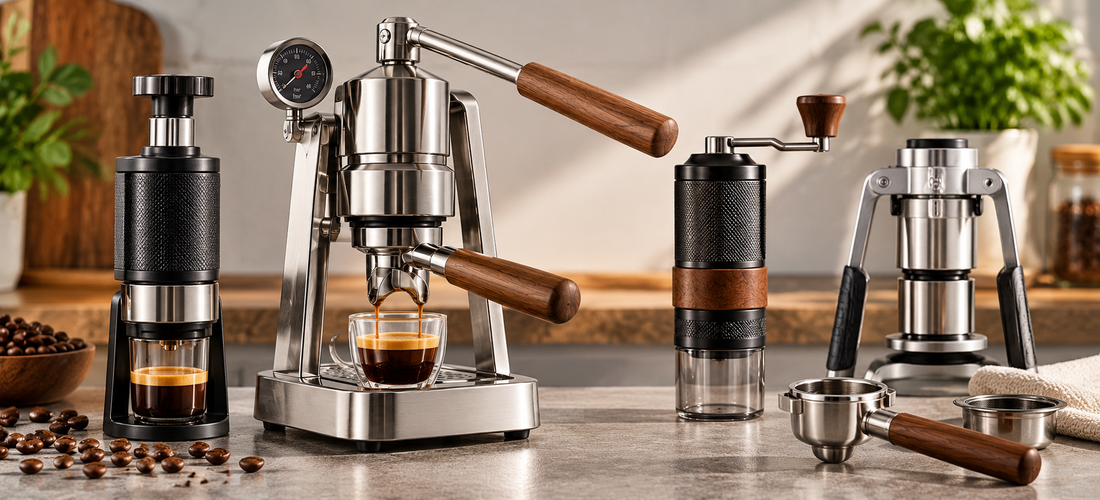
Choosing a low-plastic manual espresso maker means checking its materials, brewing method, and replacement parts. Stainless steel adds durability, while manual brewing requires no electricity.
Which Parts of a Manual Espresso Maker Should Be Stainless Steel?
Not every stainless steel espresso maker is plastic-free. Some models combine metal brewing components with plastic housings, silicone seals, or polymer water chambers.
Pay attention to these parts:
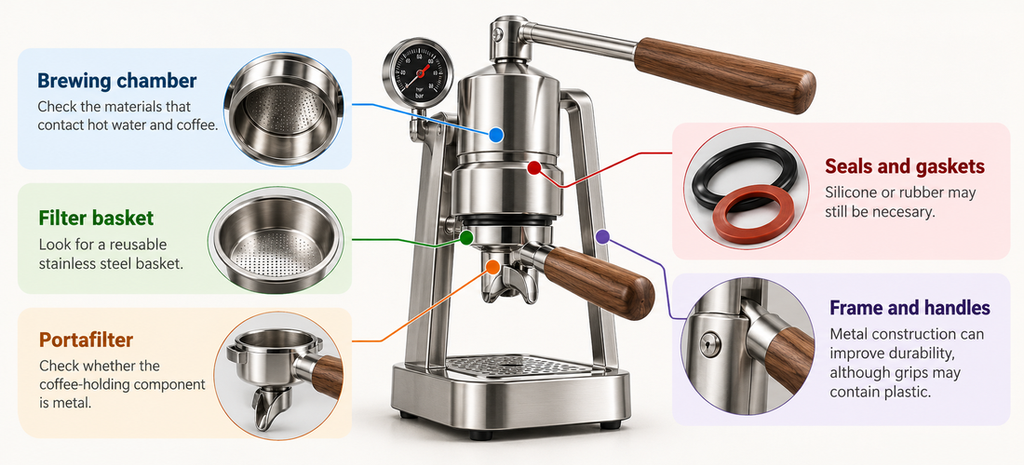
- Brewing chamber: Check the materials that contact hot water and coffee.
- Filter basket: Look for a reusable stainless steel basket.
- Portafilter: Check whether the coffee-holding component is metal.
- Seals and gaskets: Silicone or rubber may still be necessary.
- Frame and handles: Metal construction can improve durability, although grips may contain plastic.
The goal is to minimize unnecessary plastic rather than assume every component must be metal. Prioritize durable, reusable parts that contact hot water and coffee.
Best 5 Stainless Steel Manual Espresso Makers with Minimal Plastic in 2026
The best choices combine reusable brewing components, sturdy construction, and straightforward maintenance. Some use a lever to generate pressure, while others rely on a compact hand-operated pump.
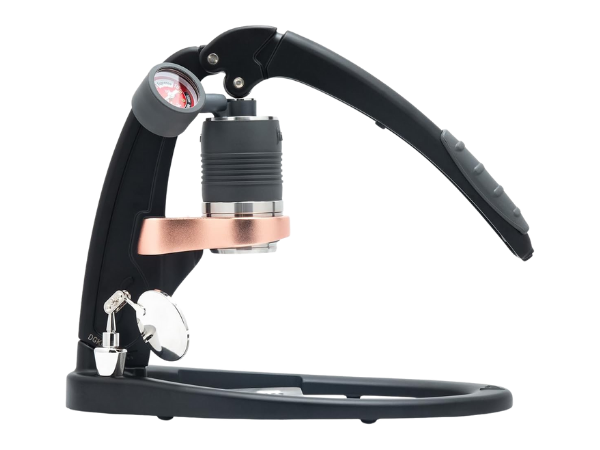
Flair 49 PRO (Updated Black)
The Flair 49 PRO is a manual lever espresso maker with a stainless steel brewing path that keeps plastic away from coffee and hot water. Its 49mm portafilter and pressure gauge offer control over extraction.
Key features:
- Materials: Stainless steel brewing path and redwood handle
- Portafilter: 49mm, with pressurized and bottomless baskets
- Plastic contact: No plastic in the brewing path
- Coffee dose: 12–20g
- Water capacity: 90ml
- Operation: Manual lever, no electricity required
The Flair 49 PRO is one of the strongest matches for this low-plastic guide because its manufacturer explicitly documents a plastic-free brewing path.
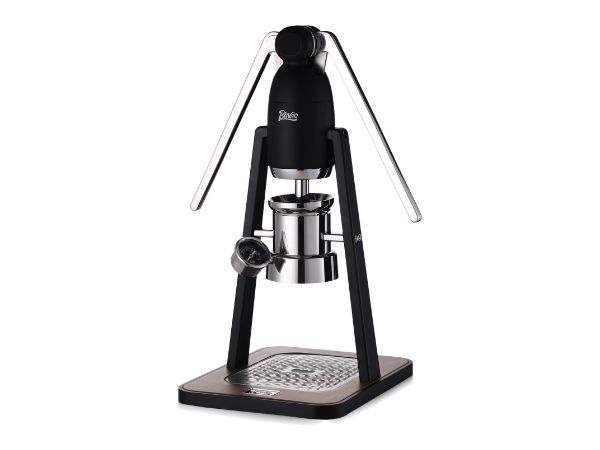
BINCOO S3 Manual Espresso Maker
The BINCOO manual espresso maker uses dual levers to adjust pressure and pre-infusion. A similar manufacturer listing specifies stainless steel and brass, but identifies the model as GYKF2164, not S3.
Key features:
- Materials: Stainless steel, brass, aluminum alloy, wood, and silicone
- Pressure control: Adjustable from 3 to 12 bar
- Portafilter: 58mm
- Water capacity: Approximately 80ml
- Water temperature: Recommended 92–98°C
- Operation: Manual dual-lever system
Its metal construction makes it a promising candidate for a low-plastic espresso setup, but silicone seals are still used.
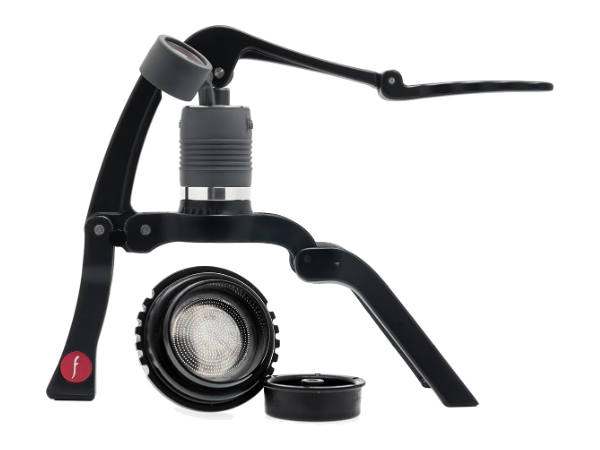
Flair 2GO Portable Lever Espresso Maker
The Flair 2GO is a collapsible manual espresso maker designed for travel and compact storage. It combines stainless steel brewing components with an aluminum frame and some plastic parts, making it portable but not entirely plastic-free.
Key features:
- Materials: Stainless steel brewing components, aluminum frame, polycarbonate, and silicone
- Portafilter: 40mm
- Coffee dose: 12–18g
- Water capacity: 60ml
- Espresso yield: Up to 45ml
- Folded dimensions: Approximately 3.5 × 7 × 3.25 inches
The Flair 2GO has a reusable brewing system and compact case, but its polycarbonate parts make it less suitable for minimizing plastic.
Superkop Manual Espresso Maker
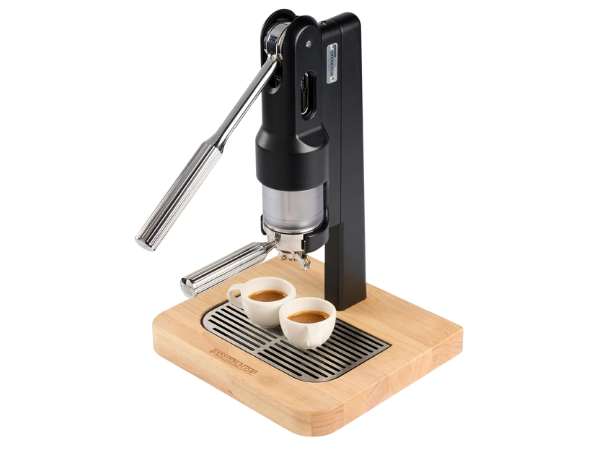
The Superkop is a manual lever espresso maker with stainless steel brewing components, an aluminum housing, and a transparent polycarbonate water chamber.
Key features:
- Materials: Stainless steel, aluminum, polycarbonate, and EPDM seals
- Portafilter: 58mm with a double filter basket
- Coffee dose: 18g
- Water capacity: 60ml
- Dimensions: Approximately 16.5 × 16.5 × 9 inches
- Power: No electricity required
The Superkop emphasizes durable construction and repairability, with replacement parts designed to be changed individually.
STARESSO PLUS Manual Espresso Maker
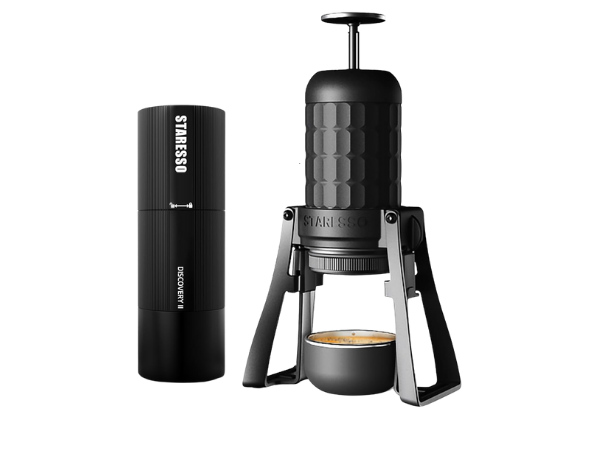
The STARESSO PLUS SP300 is a compact manual espresso maker that works without electricity. Its mixed-material construction includes stainless steel, aluminum, and food-grade plastic.
Key features:
- Materials: Stainless steel, aluminum, metal, and food-grade plastic
- Coffee capacity: Up to approximately 22g
- Water capacity: 180ml
- Maximum working pressure: 15–20 bar
- Dimensions: Approximately 3.2 × 4.3 × 7.4 inches
- Operation: Manual pumping, no electricity required
The STARESSO is compact and reusable, but its mixed-material design makes it a weaker fit for a stainless steel-focused article.
How to Check the Materials Before Buying
Product descriptions may emphasize stainless steel without identifying every internal component. Check the technical specifications, user manual, and manufacturer’s support information before purchasing.
Use this quick checklist:
- Read the materials list: Look for stainless steel grades and disclosed polymers.
- Check water-contact parts: Identify materials used in the chamber, reservoir, and tubing.
- Inspect the filter system: Confirm whether baskets and filters are reusable.
- Verify replacement parts: Look for available seals, gaskets, and other wear components.
- Ask the manufacturer: Request clarification when material details are missing.
Avoid assuming BPA-free means plastic-free. Stainless steel components also don’t guarantee an entirely metal construction.
Manual Lever vs. Portable Espresso Makers: What’s the Difference?
Manual lever machines and portable espresso makers can both prepare coffee without electricity during extraction, but their designs differ.
| Feature | Manual Lever | Portable Hand-Pump |
|---|---|---|
| Pressure | Generated with a lever | Generated with a hand-operated pump |
| Portability | Often larger and heavier | Usually compact and lightweight |
| Brewing control | Direct control over lever pressure | Depends on the pump design |
| Water heating | Usually external | Usually external |
| Construction | May feature metal brewing components | Often combines metal and plastic |
| Best for | Home brewing and hands-on control | Travel and limited storage space |
Neither category is automatically more sustainable. Compare the materials, expected lifespan, repair options, and replacement parts of the specific machine.
How to Clean and Maintain a Manual Espresso Maker
Regular cleaning helps maintain coffee quality and can extend the useful life of a manual espresso maker. Follow the manufacturer’s instructions, especially for seals and components that should not be immersed.
- Rinse after use: Remove spent grounds and rinse the basket and brewing chamber.
- Clean the filter: Clear coffee residue from the basket and screen.
- Wipe metal surfaces: Use a soft cloth and a suitable cleaner.
- Check seals: Inspect gaskets regularly and replace worn parts.
- Dry before storage: Prevent moisture from remaining in assembled components.
- Avoid harsh cleaners: Use products approved for the machine’s materials.
Replace individual worn components when practical instead of discarding the entire machine. A repairable design, reusable filter system, and careful maintenance can support a lower-waste coffee routine.